
Getting around Adelaide is refreshingly straightforward compared to many other Australian capital cities. Adelaide was designed with a visionary grid layout by Colonel William Light in 1836, and this elegant planning means the city centre is compact, walkable, and easy to navigate — even for first-time visitors. Whether you prefer public transport, driving, cycling, or simply walking, getting around Adelaide offers multiple options to suit every budget and travel style. The city’s extensive public transport network, free tram zone, affordable parking, and flat cycling terrain make it one of the easiest cities in Australia to explore without a car.
This comprehensive guide covers every transport option available for getting around Adelaide, from the airport transfer into the city to the tram, bus, and train networks that connect the metropolitan area, plus practical advice on rideshare services, car rental, cycling, and walking. Whether you are spending a few days exploring the city or using Adelaide as a base for day trips to the Barossa Valley, Adelaide Hills, and beyond, understanding your transport options will help you make the most of your time in South Australia’s vibrant capital.
Adelaide Airport to City: Every Transport Option Explained
One of the first things visitors need to know about getting around Adelaide is how to reach the city centre from Adelaide Airport. The good news is that Adelaide Airport is one of the most conveniently located airports in Australia, sitting just 7 kilometres west of the CBD — a journey that takes as little as 15 minutes by car outside of peak traffic. There are several transport options to choose from, each with different price points and convenience levels.
Bus (most affordable): The J1 and J2 Adelaide Metro bus routes connect Adelaide Airport directly to the city centre, stopping at key locations along the way. A one-way adult fare costs $4.25 during peak hours or just $2.40 off-peak when paying by metroCARD or contactless tap-and-pay. The journey takes approximately 25-30 minutes depending on traffic. Buses depart every 15-30 minutes during the day. The bus stop is located outside the terminal — follow the signs to ground transport. This is the most budget-friendly option for getting around Adelaide from the airport.
Taxi (most convenient): Taxis are available directly outside the terminal arrivals area to the left as you exit. A taxi fare from Adelaide Airport to the CBD typically costs $25-35, including the mandatory $4.50 airport service fee ($4.00 to the airport, $0.50 to the state government). The journey takes approximately 15 minutes in normal traffic. Taxis are the fastest and most straightforward option for getting around Adelaide from the airport, especially if you have heavy luggage or are arriving late at night.
Rideshare (best value): Uber and DiDi both operate at Adelaide Airport, with a dedicated rideshare pickup zone located near the terminal. A rideshare trip from the airport to the CBD typically costs $20-35 depending on demand, time of day, and service level. DiDi is often slightly cheaper than Uber for standard trips in Adelaide. Order your ride through the app once you have collected your luggage, then follow the signs to the rideshare pickup area. Rideshare offers an excellent balance of convenience and value for getting around Adelaide from the airport.
Car rental: All major car rental companies — including Avis, Budget, Enterprise, Europcar, Hertz, and Sixt — have desks at Adelaide Airport. If you plan to explore beyond the city and take day trips from Adelaide, picking up a rental car at the airport is the most efficient option. Expect to pay around $40-60 per day for a standard vehicle. Pre-booking online typically secures better rates than walk-up prices.
Adelaide’s Free Tram: The Best Way to Get Around the City Centre
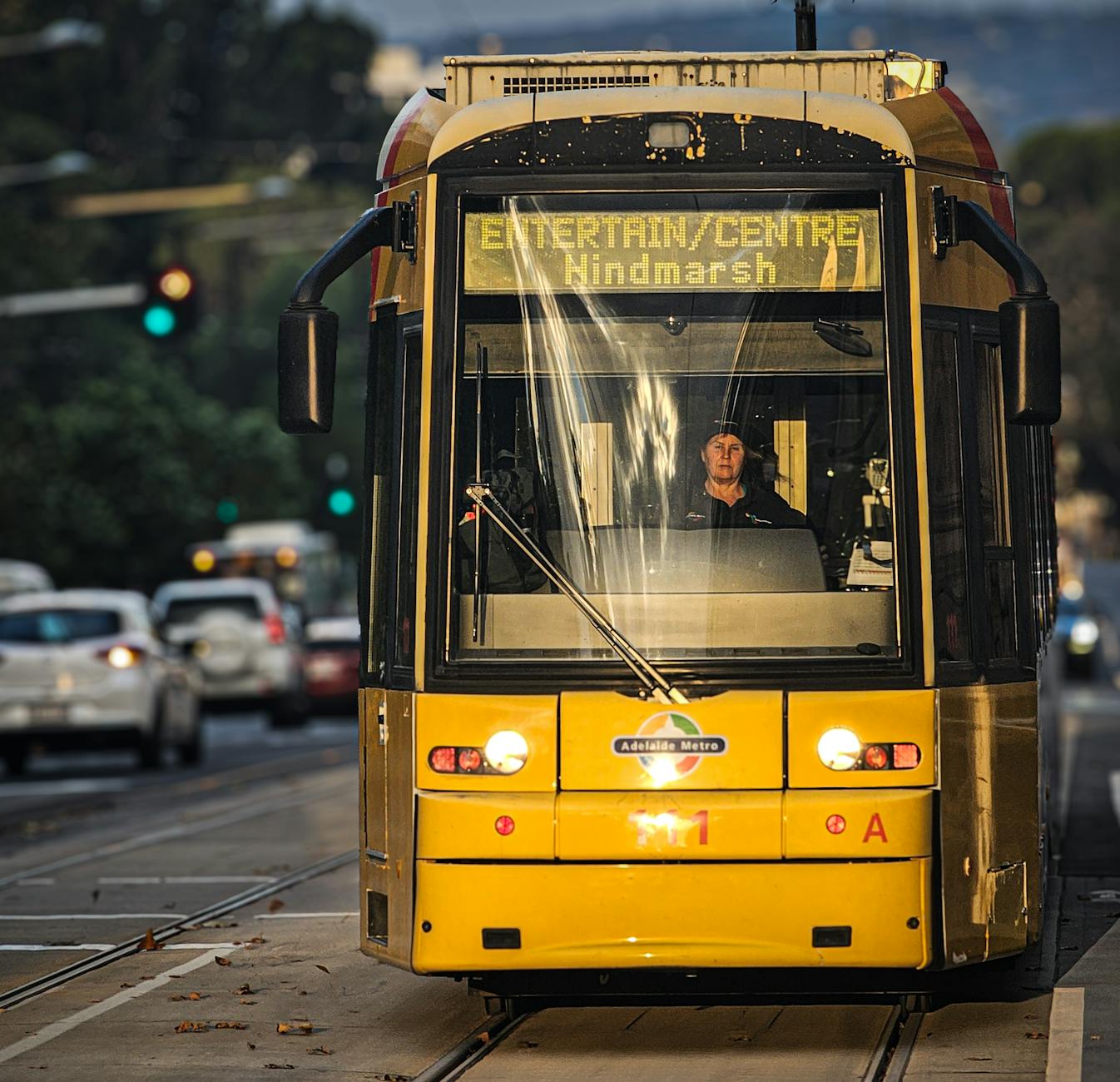
Adelaide’s tram network is arguably the single most useful tool for getting around Adelaide as a visitor, and it includes a generous free travel zone that covers the entire city centre. The free tram zone extends from South Terrace in the south, along King William Street and North Terrace, all the way to the Adelaide Entertainment Centre in the north. Within this zone, you can hop on and off the tram without paying a cent — no ticket, no card, no tapping required. Simply board and ride.
The tram line runs from the Adelaide Entertainment Centre in the north, through the CBD, and all the way southwest to the beachside suburb of Glenelg — a journey of approximately 30 minutes end to end. Trams run every 5-10 minutes during peak hours and every 10-15 minutes at other times, operating from approximately 6am to midnight. Beyond the free zone, fares are the same as bus and train fares when paid by metroCARD or contactless payment. The tram is the perfect way of getting around Adelaide between North Terrace (home to the Art Gallery, Museum, and University), Rundle Mall (shopping), Victoria Square (central hub), and the Central Market precinct.
For visitors wanting to reach Glenelg beach, the tram offers a scenic and stress-free journey from the heart of the CBD directly to the beachfront jetty. The tram passes through several inner-south suburbs including Goodwood and Plympton before arriving at the Moseley Square terminus in Glenelg, where the beach, restaurants, and shops are just steps away. A paid fare from the CBD to Glenelg costs $4.25 peak or $2.40 off-peak — significantly cheaper than a taxi or rideshare for getting around Adelaide to the beach.
Adelaide Metro Buses and Trains: Getting Around the Wider City
Beyond the tram, the Adelaide Metro network of buses and trains provides comprehensive coverage for getting around Adelaide’s wider metropolitan area. The bus network is the most extensive, with routes covering virtually every suburb and many key tourist attractions. The free City Connector bus is particularly valuable for visitors — this loop service runs clockwise and anticlockwise through the CBD and North Adelaide, stopping at key attractions including the Adelaide Oval, North Terrace cultural precinct, Rundle Mall, Central Market, and the Botanic Garden. The City Connector runs every 15-30 minutes on weekdays and Saturdays.
Adelaide’s train network consists of six lines radiating out from Adelaide Railway Station on North Terrace. For visitors, the most useful lines are the Glenelg line (tram, covered above), the Outer Harbor line (which passes through historic Port Adelaide and the seaside suburb of Semaphore), and the Belair line (which climbs into the Adelaide Hills through leafy suburbs). Trains run every 15-30 minutes during the day and hourly in the evenings, with reduced weekend services on some lines.
Payment options for getting around Adelaide by public transport: The easiest option for visitors is contactless tap-and-pay using your Visa, Mastercard, or American Express debit or credit card directly on the card reader. This charges the same fares as the metroCARD. Alternatively, the Visitor metroCARD costs $28.90 and provides three consecutive days of unlimited travel on all buses, trains, and trams — excellent value if you plan to use public transport frequently for getting around Adelaide. You can purchase one at the Adelaide Metro InfoCentre at Adelaide Railway Station or from participating retailers. The Adelaide Metro Buy & Go app is another convenient option, allowing you to buy tickets directly on your smartphone.
Taxis and Rideshare: Door-to-Door Transport in Adelaide
For convenient door-to-door getting around Adelaide, taxis and rideshare services are widely available throughout the city. Adelaide’s taxi industry is regulated, with three main companies: Adelaide Independent Taxis, Suburban Taxis, and 13cabs. Taxis can be hailed on the street in the CBD, found at designated taxi ranks (especially outside major hotels, the Casino, and Adelaide Railway Station), or booked by phone or app. Taxi fares in Adelaide are metered and generally reasonable compared to other Australian capital cities, with a typical CBD trip costing $10-20.
Rideshare services — primarily Uber and DiDi — have transformed getting around Adelaide in recent years and are now the preferred option for many visitors. Both services operate across the Adelaide metropolitan area and can be booked through their respective smartphone apps. DiDi is often the cheapest option for standard trips within the city, while Uber tends to have the widest driver availability, particularly during peak times and in outer suburbs. Other rideshare options include Shebah (a women-only service operated by female drivers for female passengers) and MyCar. Rideshare fares from the CBD to popular destinations include approximately $12-18 to North Adelaide, $18-25 to Glenelg, and $25-35 to Adelaide Airport.
For late-night getting around Adelaide, both taxis and rideshare services are available 24/7, though surge pricing can apply to rideshare during busy periods such as Friday and Saturday nights, after major Adelaide events, and on New Year’s Eve. Taxis offer fixed metered fares regardless of demand, making them sometimes cheaper than rideshare during peak periods.
Car Rental and Driving in Adelaide
Renting a car is one of the most popular choices for getting around Adelaide, particularly for visitors who plan to explore beyond the city centre and take day trips to wine regions, beaches, and the Adelaide Hills. Adelaide is widely regarded as one of the easiest Australian cities to drive in, with well-maintained roads, clear signage, and relatively light traffic compared to Sydney or Melbourne. The grid layout of the CBD is intuitive, and most major attractions outside the city are accessible via well-signed highways and expressways.
Key driving tips for getting around Adelaide: Australia drives on the left side of the road with right-hand-drive vehicles. International visitors should take particular care at roundabouts (give way to vehicles already in the roundabout, approaching from your right) and when turning at intersections. The default urban speed limit is 50 km/h unless otherwise signed, rising to 110 km/h on major rural highways. Adelaide has a unique road rule not found in other Australian states: the “right turn from the left lane” or “hook turn,” which applies at some CBD intersections with tram tracks. Watch for signs indicating where this rule applies.
Parking in Adelaide is significantly more affordable and accessible than in other Australian capitals. On-street metered parking in the CBD typically costs $3-5 per hour during business hours, with many streets offering free parking after 6pm and all day on Sundays. North Adelaide has free time-limited parking (usually 2 hours) in most areas. Multi-storey car parks in the CBD charge approximately $10-20 for a full day, with Wilson Parking and UPark among the major operators. When parking, always read the signs carefully — they display different rules depending on the day and time, and overstaying time limits can result in fines of $60-100.
Cycling: Getting Around Adelaide on Two Wheels
Adelaide is one of the most cycling-friendly cities in Australia, and getting around Adelaide by bicycle is a genuinely practical and enjoyable option. The city’s flat terrain (the CBD and inner suburbs sit on the Adelaide Plains with minimal hills), wide streets with dedicated bike lanes, and extensive network of shared paths and cycling routes make it ideal for two-wheeled exploration. The City of Adelaide has invested heavily in cycling infrastructure, including separated bike lanes on major roads, bicycle boulevards on quieter residential streets, and the Adelaide Park Lands cycling trail that loops around the entire city centre.
For visitors, the City of Adelaide offers free bike hire at several locations including the Adelaide Central Market and North Terrace. These bikes are available on a first-come, first-served basis and are ideal for short trips around the CBD and Park Lands. For longer rides or higher-quality bikes, commercial bike hire companies offer daily and weekly rentals. The Cycle Instead journey planner (available online) shows the entire metropolitan cycling network, helping you plan routes using bike lanes, shared paths, greenways, and bicycle boulevards for safe and enjoyable getting around Adelaide.
Popular cycling routes for visitors include the Linear Park Trail along the River Torrens (a scenic shared path running 30 kilometres from the Adelaide Hills to the coast), the coastal path from Glenelg to Outer Harbor (offering stunning sea views), and the Adelaide Park Lands loop around the CBD (approximately 12 kilometres of flat, well-maintained path). For more adventurous riders, the Adelaide Hills offer challenging climbing routes with spectacular views, though these are better suited to experienced cyclists with road bikes.
E-Scooters and Micro-Mobility: Modern Ways of Getting Around Adelaide
E-scooters have become an increasingly popular option for getting around Adelaide’s compact city centre. Two hire companies operate dockless e-scooter fleets across the CBD and inner suburbs, available through smartphone apps. You simply locate a nearby scooter on the app, scan the QR code to unlock it, ride to your destination, and leave it in a designated parking area. E-scooters are a fun and efficient way of getting around Adelaide for short trips of 1-5 kilometres, bridging the gap between walking and public transport.
E-scooter riders in Adelaide must follow South Australian road rules, including wearing a helmet (mandatory), riding on roads or bike lanes (not footpaths in the CBD), and obeying speed limits. Most hire e-scooters are speed-limited to 15-25 km/h. Pricing typically includes a $1 unlock fee plus $0.30-0.45 per minute of riding — a short trip across the CBD might cost $3-5. While e-scooters are a convenient option for getting around Adelaide, they are less practical in wet weather or for longer distances.
Walking in Adelaide: The Most Underrated Way to Explore
Getting around Adelaide on foot is arguably the most rewarding way to experience the city, and it is far more practical than many visitors initially expect. Adelaide’s CBD is remarkably compact — the entire city centre measures just one square mile (roughly 2.5 kilometres across in any direction), meaning you can walk from one side to the other in about 30 minutes. Colonel William Light’s original grid design features wide, tree-lined boulevards with generous pedestrian footpaths, and the surrounding Adelaide Park Lands provide a green belt of parks, gardens, and walking trails that encircle the city.
Key walking distances from the centre of the CBD (Victoria Square) include: Rundle Mall (5 minutes), Central Market (5 minutes), North Terrace cultural precinct (10 minutes), Adelaide Oval (15 minutes), Adelaide Botanic Garden (15 minutes), and Hutt Street restaurant strip (10 minutes). For visitors staying in accommodation in the city centre, most major attractions are within comfortable walking distance, making walking the simplest and most cost-effective way of getting around Adelaide during the day.
Self-guided walking tours are an excellent way to explore Adelaide’s history, architecture, and culture. The Adelaide City Council provides free downloadable walking tour maps covering heritage architecture, public art, street art laneways, and the Adelaide Park Lands. Guided walking tours are also available, including food tours through the Central Market precinct, ghost tours of historic North Adelaide, and Aboriginal cultural walks. The River Torrens Linear Park path is a beautiful walking and jogging route that follows the river through the city and out towards the coast.
Accessibility and Special Needs Transport in Adelaide
Adelaide has made significant strides in accessible transport, and getting around Adelaide with mobility challenges is generally well-supported. All Adelaide Metro trams are fully wheelchair accessible with low-floor boarding and designated wheelchair spaces. The majority of Adelaide Metro buses are also low-floor accessible vehicles, and accessibility information is displayed on timetables and the Adelaide Metro website for each route. Adelaide Railway Station and most suburban train stations have been upgraded with ramp access, tactile ground surface indicators, and accessible platforms, though some older stations may have limited access — check the Adelaide Metro website before planning your journey.
For visitors with mobility impairments who require more personalised getting around Adelaide services, the Access Cabs program provides wheelchair-accessible taxis that can be booked through 13cabs or Adelaide Independent Taxis. These vehicles are equipped with wheelchair ramps or hoists and can accommodate most wheelchair types. It is advisable to book Access Cabs in advance, particularly during peak periods and major Adelaide events, as availability can be limited. The City of Adelaide also provides accessible parking spaces throughout the CBD at reduced rates for vehicles displaying valid disability parking permits, and many attractions offer wheelchair-friendly pathways and facilities.
For visitors with vision impairments, Adelaide’s trams and many buses announce stops audibly, and the Adelaide Metro Buy & Go app provides accessible journey planning features. Guide dogs are welcome on all Adelaide Metro services. Most pedestrian crossings in the CBD are equipped with audio signals and tactile pavers to assist with getting around Adelaide safely on foot.
Getting Around Adelaide During Major Events and Festivals
Adelaide’s packed events calendar can significantly impact transport in the city, and planning your getting around Adelaide strategy during major festivals and events is important. During the Adelaide Fringe and Mad March period (February-March), the city centre becomes significantly busier, with pop-up venues, road closures for outdoor events, and increased demand for taxis and rideshare services. Adelaide Metro typically runs extended and additional services during major festivals — check the Adelaide Metro website or app for special event timetables.
The Adelaide 500 Supercars race in November causes significant road closures around the East End of the city centre, including parts of Wakefield Street, Dequetteville Terrace, and Bartels Road. During the event weekend, getting around Adelaide’s eastern CBD requires alternative routes, and Adelaide Metro provides special event buses to and from the circuit. Similarly, major events at Adelaide Oval (AFL matches, cricket internationals, concerts) generate heavy traffic around North Adelaide and the northern edge of the CBD — the tram and train are excellent alternatives for getting around Adelaide to and from the Oval.
On New Year’s Eve, Adelaide Metro provides free travel on all services from 6pm until the end of service to encourage safe getting around Adelaide. During the Santos Tour Down Under in January, road closures affect various routes through the Adelaide Hills, Barossa Valley, and city streets during race stages — detour information is published in advance. For any major Adelaide event, arriving by public transport, cycling, or walking is almost always faster and less stressful than driving and trying to find parking.
Getting Around Adelaide: Transport Comparison by Situation
With so many options for getting around Adelaide, choosing the right transport mode depends on your specific situation. Here is a practical guide to help you pick the best option for common visitor scenarios.
Exploring the CBD and inner city: Walk or take the free tram. The city centre is compact enough that walking is usually the fastest option for trips under 15 minutes. The free tram covers the main north-south axis, and the free City Connector bus loops around the CBD and North Adelaide. Getting around Adelaide’s city centre rarely requires paid transport.
Visiting Glenelg beach: Take the tram from the CBD — it is scenic, affordable ($2.40-4.25), and drops you right at the beachfront. Getting around Adelaide to the beach has never been easier than by tram.
Day trips to wine regions and Adelaide Hills: Rent a car for maximum flexibility, or book a guided tour if you want to enjoy wine tastings without a designated driver. Public transport does not serve most day trip destinations effectively, so getting around Adelaide for day trips essentially requires a car or tour.
Late-night getting around Adelaide: Use Uber, DiDi, or a taxi. Public transport services are limited after midnight (except during major events when extra services often run). Rideshare is usually more affordable than taxis outside of surge pricing periods.
Getting around Adelaide with children: The free tram is a hit with kids and covers most city attractions. For suburban destinations, the bus and train network is family-friendly, and children under 5 travel free on Adelaide Metro. Consider a Visitor metroCARD for unlimited family travel over three days.
Adelaide Transport Costs: What to Budget
Understanding transport costs helps you budget effectively for getting around Adelaide. Here is a breakdown of typical costs for the most common transport options.
Free options: Tram within the CBD free zone (South Terrace to Entertainment Centre), City Connector bus loop, City of Adelaide free bike hire, walking. Budget-friendly: Adelaide Metro bus/tram/train single trip $2.40 off-peak or $4.25 peak, Visitor metroCARD $28.90 for three days unlimited travel, e-scooter hire approximately $3-5 per short trip. Mid-range: Rideshare (Uber/DiDi) within the CBD $8-15, rideshare to Glenelg $18-25, taxi within the CBD $10-20. Premium: Car rental $40-60 per day plus fuel and parking, taxi from airport $25-35, private airport transfer $50-80.
For visitors spending three or more days in Adelaide and planning to use public transport frequently, the Visitor metroCARD at $28.90 offers exceptional value — it pays for itself in less than four peak-hour trips. Combine this with walking and the free tram zone, and getting around Adelaide can be remarkably affordable.
Frequently Asked Questions About Getting Around Adelaide
Is Adelaide easy to get around without a car? Yes, Adelaide is one of the easiest Australian cities to navigate without a car. The compact CBD is highly walkable, the free tram and City Connector bus cover the main tourist areas, and the Adelaide Metro network reaches most suburbs. You will only need a car for day trips to wine regions, the Adelaide Hills, and other regional destinations. For getting around Adelaide’s city centre, a car is more of a hindrance than a help.
How do I pay for public transport in Adelaide? The easiest method is contactless tap-and-pay using your Visa, Mastercard, or American Express debit or credit card. Simply tap on the reader when boarding and tap off when exiting. You can also purchase a metroCARD (reloadable smartcard) or use the Adelaide Metro Buy & Go smartphone app. All payment methods offer the same fare for getting around Adelaide.
Is the Adelaide tram really free? Yes, the tram is completely free within the designated free zone covering the CBD, from South Terrace to the Adelaide Entertainment Centre. You do not need any ticket or card — simply board and ride. Beyond the free zone (such as travelling to Glenelg), standard metroCARD or contactless payment fares apply.
What is the cheapest way to get from Adelaide Airport to the city? The J1 or J2 bus costs just $2.40 off-peak ($4.25 peak) and takes 25-30 minutes. Rideshare (Uber or DiDi) offers the best balance of price and convenience at approximately $20-30. Taxis cost $25-35 including the airport surcharge but are the fastest option at 15 minutes.
Can I use Uber in Adelaide? Yes, Uber operates extensively throughout the Adelaide metropolitan area and is one of the most popular options for getting around Adelaide. DiDi is also available and is often slightly cheaper for standard trips. Both services can be used at the airport, in the CBD, and throughout the suburbs.
Do I need an international driving licence in Adelaide? If your home country licence is in English, you can drive in South Australia on your overseas licence for the duration of your visit. If your licence is not in English, you need an International Driving Permit (IDP) in addition to your home licence. Remember that Australia drives on the left side of the road.
Getting around Adelaide is one of the genuine pleasures of visiting this well-designed city. Whether you choose to stroll along the tree-lined boulevards, glide through the CBD on the free tram, pedal along scenic bike paths, or use the excellent public transport network, Adelaide rewards exploration. The city’s compact layout, affordable transport options, and visitor-friendly infrastructure make it one of the most accessible and enjoyable cities to navigate in all of Australia. Plan your transport strategy using this guide, and you will find that getting around Adelaide is effortless, affordable, and part of the adventure itself.
1 note