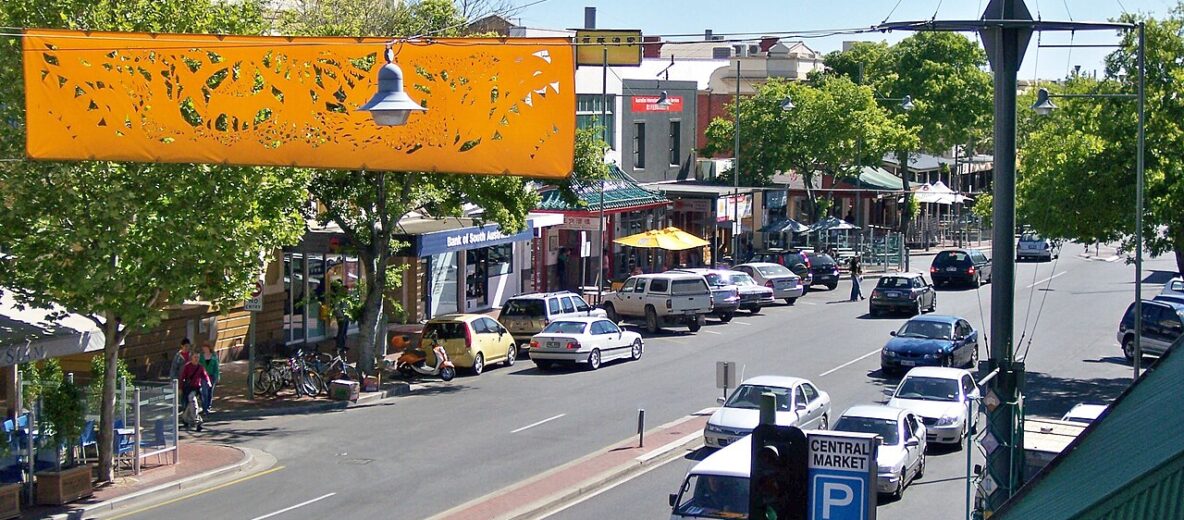
Walk out of the Central Market’s southern doors as the light goes and the air changes within a few steps: garlic and ginger hitting a wok, charcoal smoke from a Korean barbecue, the sweet steam of a dumpling kitchen. A few doors along, a red gate with green-tiled roofs and a pair of stone lions marks the way into Chinatown. This is the stretch of Gouger Street Adelaide diners mean when they say “let’s just go to Gouger” — a few hundred metres of Cantonese institutions, yum cha halls, Szechuan kitchens, izakayas and late-night noodle bars, with a seafood restaurant older than most of them still holding its corner.
This guide walks the precinct properly: how Chinatown grew up here, the restaurants worth queuing for and what to order, where to go for yum cha, dumplings, Szechuan heat, Korean barbecue and a 1am feed, how BYO works, and when the street closes for a party. Details were checked in September 2026. Restaurants on this street open, close and change hands more often than guidebooks admit, so confirm a place is trading, and its hours, before you set your heart on it.
Gouger Street and Chinatown at a glance
| What | The short answer |
|---|---|
| Where | Gouger Street runs 1.1km from King William Street (at Victoria Square) to West Terrace; the restaurant strip is the eastern half, beside the Central Market |
| Chinatown | Moonta Street, between Gouger and Grote streets, inside the Central Market precinct |
| Say it | “GOOJ-er”, with the short vowel of “good” |
| Best for | Cantonese, yum cha, dumplings, Szechuan, Korean barbecue, late-night eating |
| Getting there | Tram to Victoria Square (free within the city), then a five-minute walk |
| Latest kitchen | East Taste — open to 1am midweek and 2am at weekends |
| BYO | Common, especially at the older Chinese and Vietnamese places; ask about corkage |
| Big night | The Lunar New Year street party; the next Lunar New Year falls on 6 February 2027 |
| Budget | Dumpling houses and food courts are among the cheapest sit-down meals in the city centre; the modern Asian restaurants charge special-occasion prices |
How Gouger Street became Adelaide’s eat street
The street was named in 1837 after Robert Gouger, the colony’s first Colonial Secretary, and it is one of the grid of city streets laid out in that first year. The name trips up almost every visitor. It is not “gow-ger” but “GOOJ-er”, with the short vowel you hear in “good” — say “sugar” with a G and a J and you have it.
The food came with the market. The Adelaide Central Market has traded here since 1869, with its southern entrance on Gouger Street, and it was market gardeners selling produce there who first drew Asian grocers and cafés into the surrounding blocks. Chinese settlement in Adelaide goes back a long way — the first dozen Chinese labourers arrived from Singapore in 1847 — but Chinatown as a recognisable precinct is younger. It grew through the 1970s and 1980s with a wave of Asian migration, particularly from Vietnam, and the restaurants, grocers and food courts that followed turned the blocks around the market into the city’s densest place to eat.
The Adelaide City Council marked the precinct with two paifang, traditional Chinese gateways, one at each end of Moonta Street, and the People’s Republic of China donated the guardian lions that sit beneath them. Chinatown has hosted Adelaide’s official Lunar New Year celebrations on Moonta Street since 2003, and since 2013 the celebrations have spilled out onto Gouger Street, which closes to traffic for the street party.
Gouger Street has never been only Asian, and that is part of its character. Italian, French, Argentinian, Malaysian, Vietnamese and Thai restaurants share the strip with the Chinese dining rooms, and one of the city’s oldest seafood restaurants is still trading among them. But it is the Asian food, and the density of it, that makes the street worth crossing the city for.
Chinatown and Moonta Street
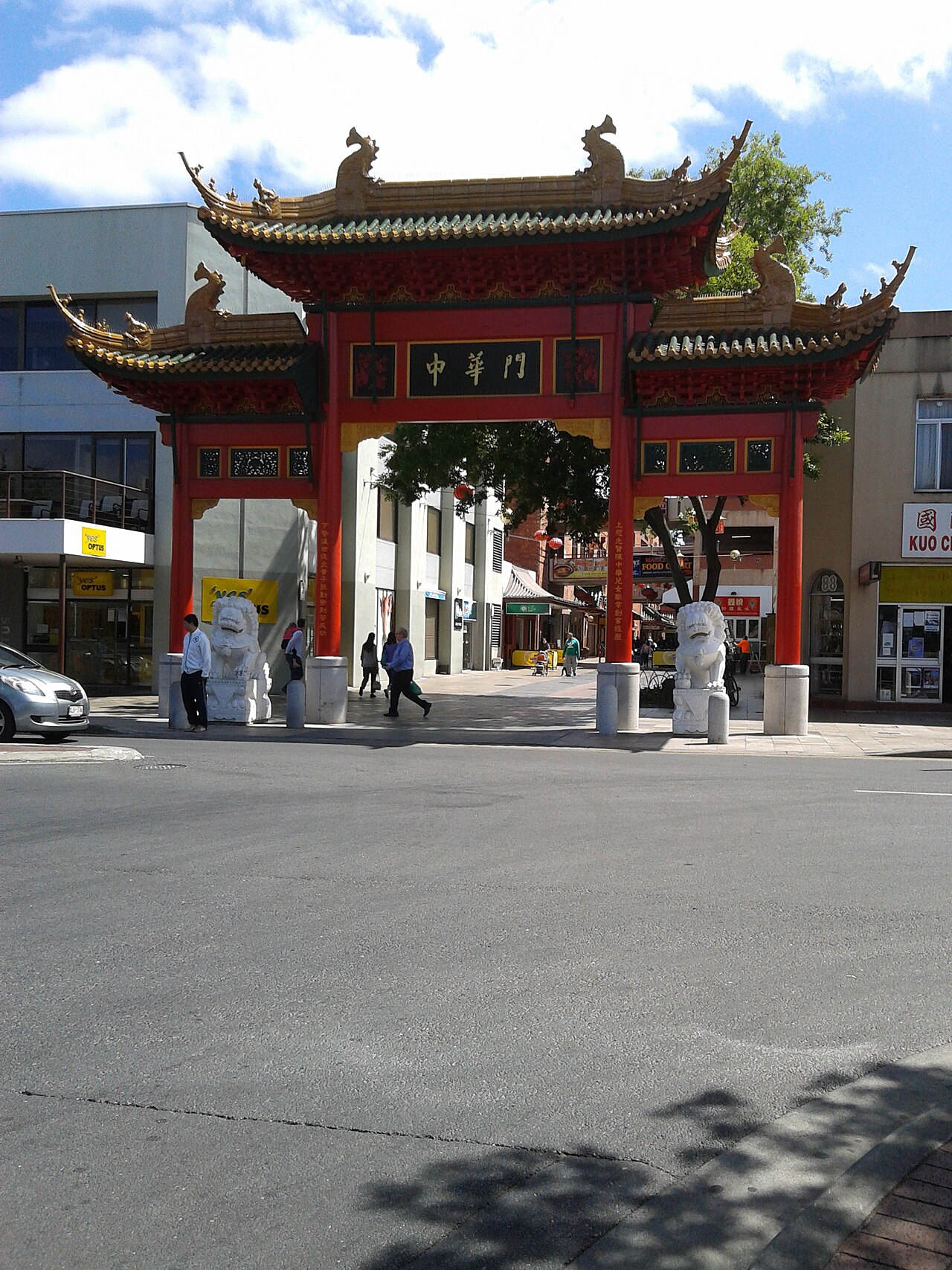
Chinatown itself is compact. Moonta Street is a short pedestrian lane running between Gouger and Grote streets, with a paifang at each end, and it sits so close to the Central Market that the two blur into one precinct. You can walk the whole thing in five minutes. The reason to slow down is what is packed along it: Asian grocers stocked with sauces, noodles, snacks and cooking gear, cheap eateries, bubble tea, and the food courts that have fed city workers and students for decades.
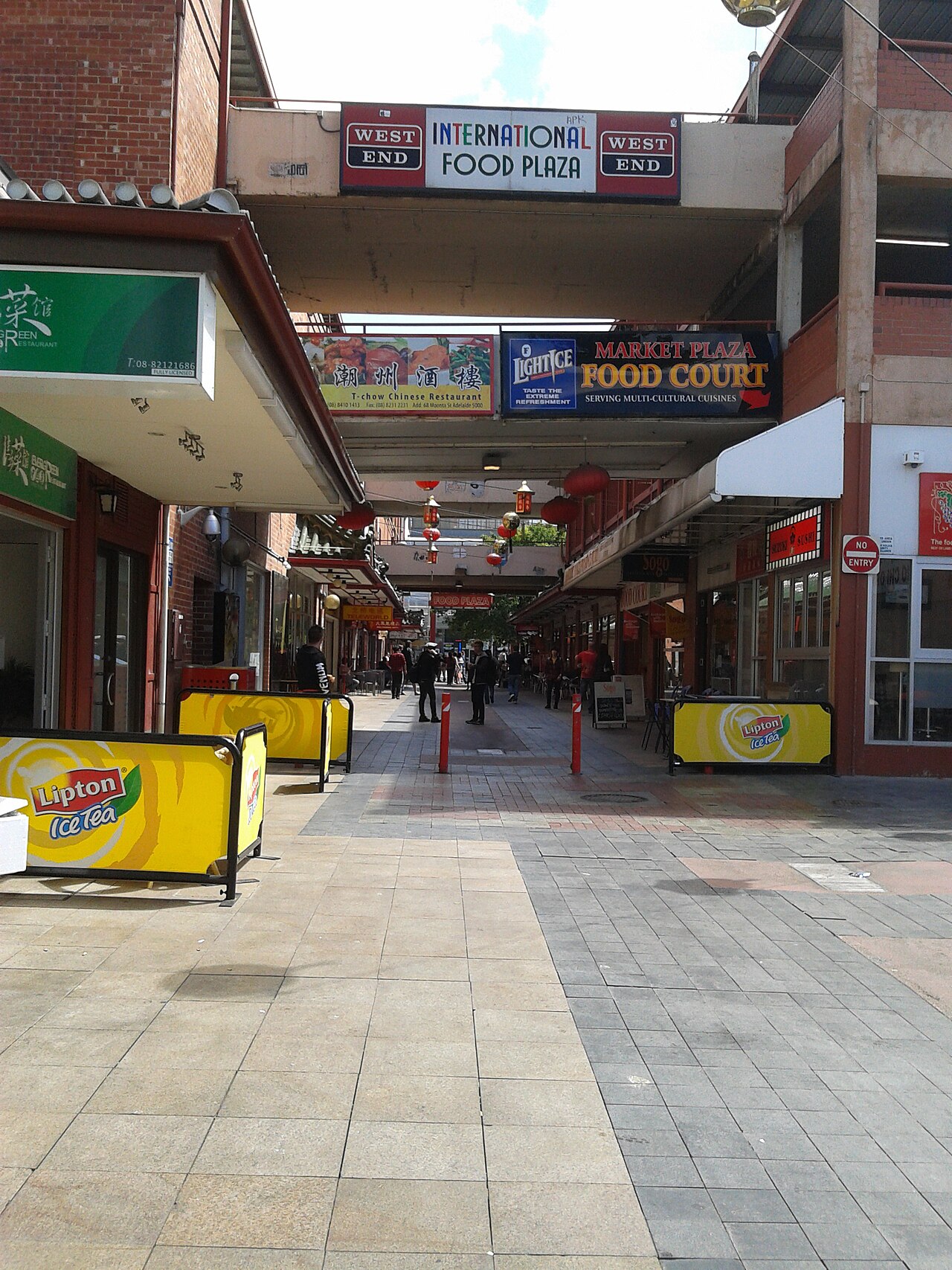
The range is wider than “Chinatown” suggests. As well as Chinese, you will find Indian, Japanese, Korean, Malaysian, Nepali, Thai and Vietnamese food within a few steps. The food courts are where that variety is cheapest and quickest: order from two counters and share. They are not glamorous, and on a weekday lunchtime you will be eating elbow to elbow with half the office workers in the city’s south-west, but the cooking is often more direct and more regional than at the bigger restaurants.
For shopping, the grocers are the thing. If you are self-catering, cooking in an apartment, or just want to take home a bottle of good chilli oil, Chinatown’s grocers and the Asian stalls inside the Central Market cover most of what you need. Our Adelaide Central Market guide covers the market side of the block.
The restaurants worth knowing
These are the names locals send visitors to, from the cult classics to the late-night saviours. None of them is a secret, and all of them get busy.
| Restaurant | Style | Go for | Honest note |
|---|---|---|---|
| Ying Chow | Cantonese institution | The classic Gouger Street dinner | Unfussy, loud and busy. That is the appeal. |
| Concubine | Contemporary, award-winning | A date or a celebration | More polish and higher prices than the street average |
| Star House | Yum cha, daily | A weekend yum cha session | Go before 11am at weekends or queue |
| Ding Hao | Dumplings | A cheap, fast dumpling lunch | Order more than you think |
| Ba Guo Bu Yi | Szechuan | Mala heat and numbing peppercorn | Ask for the spice level you actually want |
| Gyoza Gyoza | Japanese izakaya | Small plates and drinks with friends | A good change of pace mid-crawl |
| East Taste | Late-night Asian | Food after midnight | For hunger rather than gastronomy |
| Paul’s Seafood on Gouger | Seafood, fish and chips | King George whiting | Trading for more than sixty years |
Ying Chow: the one everyone mentions
If you ask ten Adelaideans where to eat on Gouger Street, most will say Ying Chow. It is a Cantonese dining room with a devoted following, unpretentious surroundings and a loud, happy crowd most nights. Regulars swear by the duck and a plate of greens with garlic. Do what the table next to you does and order to share. It is frequently BYO and it is often full, so go early or expect to wait. It is not a place for a long, quiet conversation, and that is rather the point.
Concubine: the dressed-up option
Concubine takes Asian flavours and South Australian produce and gives them a more polished, contemporary treatment. It has collected awards, and it is the one to book for a date, a birthday or a table of people who would rather not queue. The honest trade-off is that you pay noticeably more than the street’s average, and if you only have one night, some will argue the older places give you more of what makes Gouger Street distinctive.
Star House and yum cha
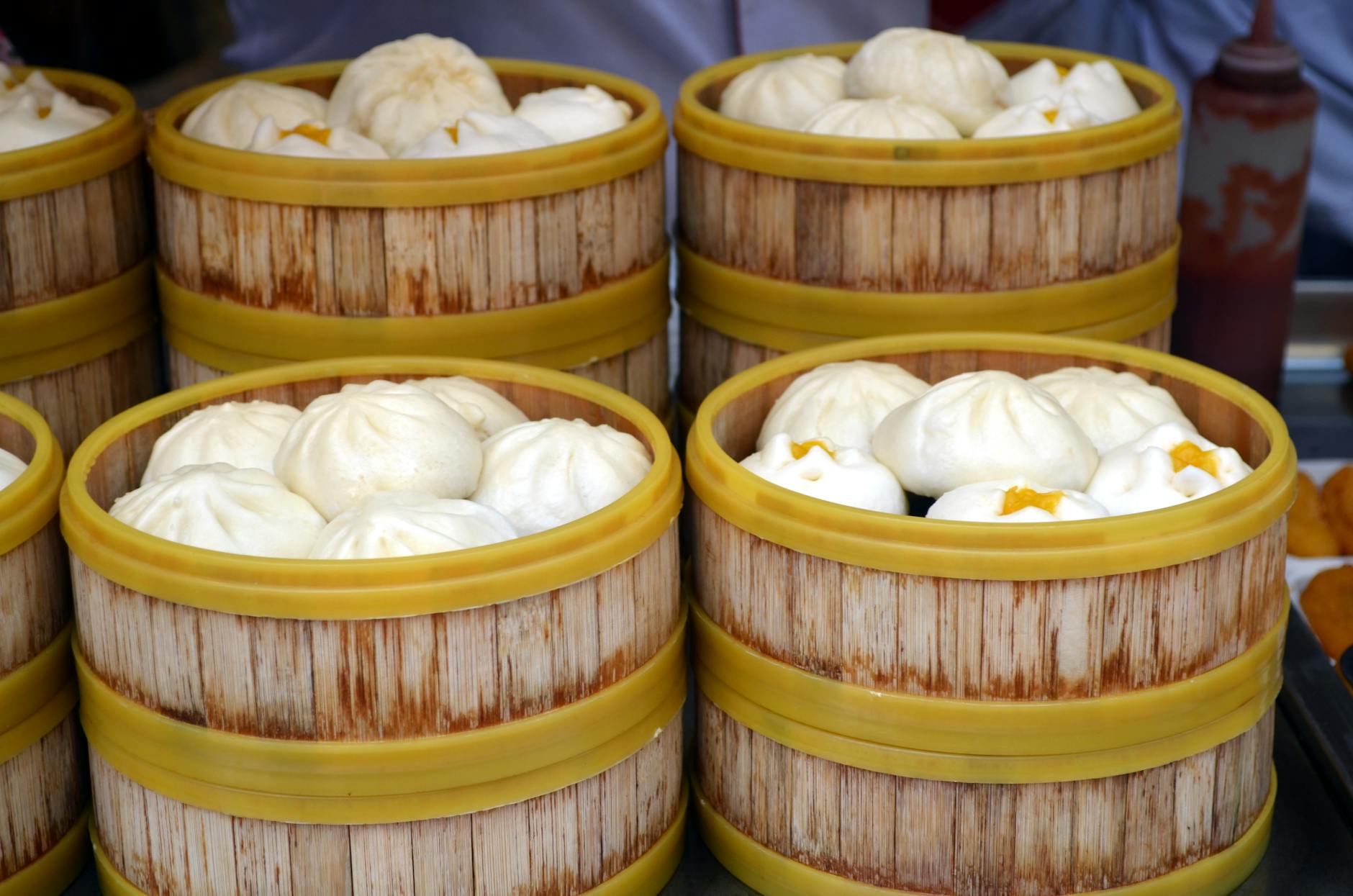
Star House has been serving yum cha daily since it opened in 2007, and at weekends it fills up fast. Yum cha is a daytime meal: small dishes of dumplings, buns, rice-noodle rolls, spare ribs and custard tarts, either wheeled past on trolleys or ticked off an order sheet, eaten with pots of tea. The trick is to arrive before 11am at weekends and to come with at least three people so you can try more. Pace yourself. The first round always looks too small and the fourth is always a mistake.
Dumplings, Szechuan and noodles
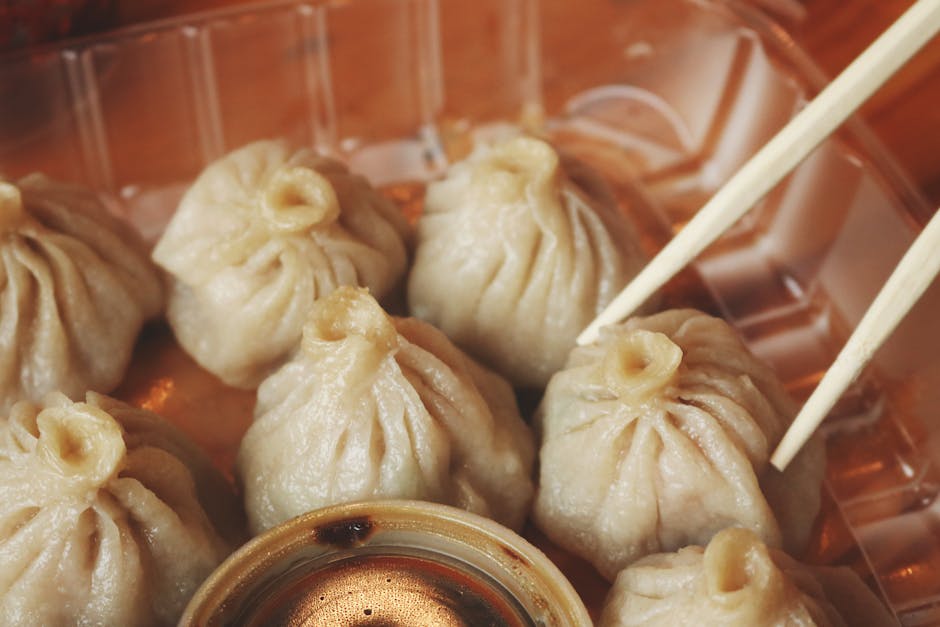
For a cheap lunch, a dumpling house beats almost anything else in the city centre. Ding Hao is the name most people know: steamed and pan-fried dumplings by the plate, fast turnover, low prices. If you want heat, Ba Guo Bu Yi cooks Szechuan food with proper mala — the combination of chilli and numbing Sichuan peppercorn that makes your lips tingle. Ask for the spice level you actually want, not the one you think you should be able to handle.
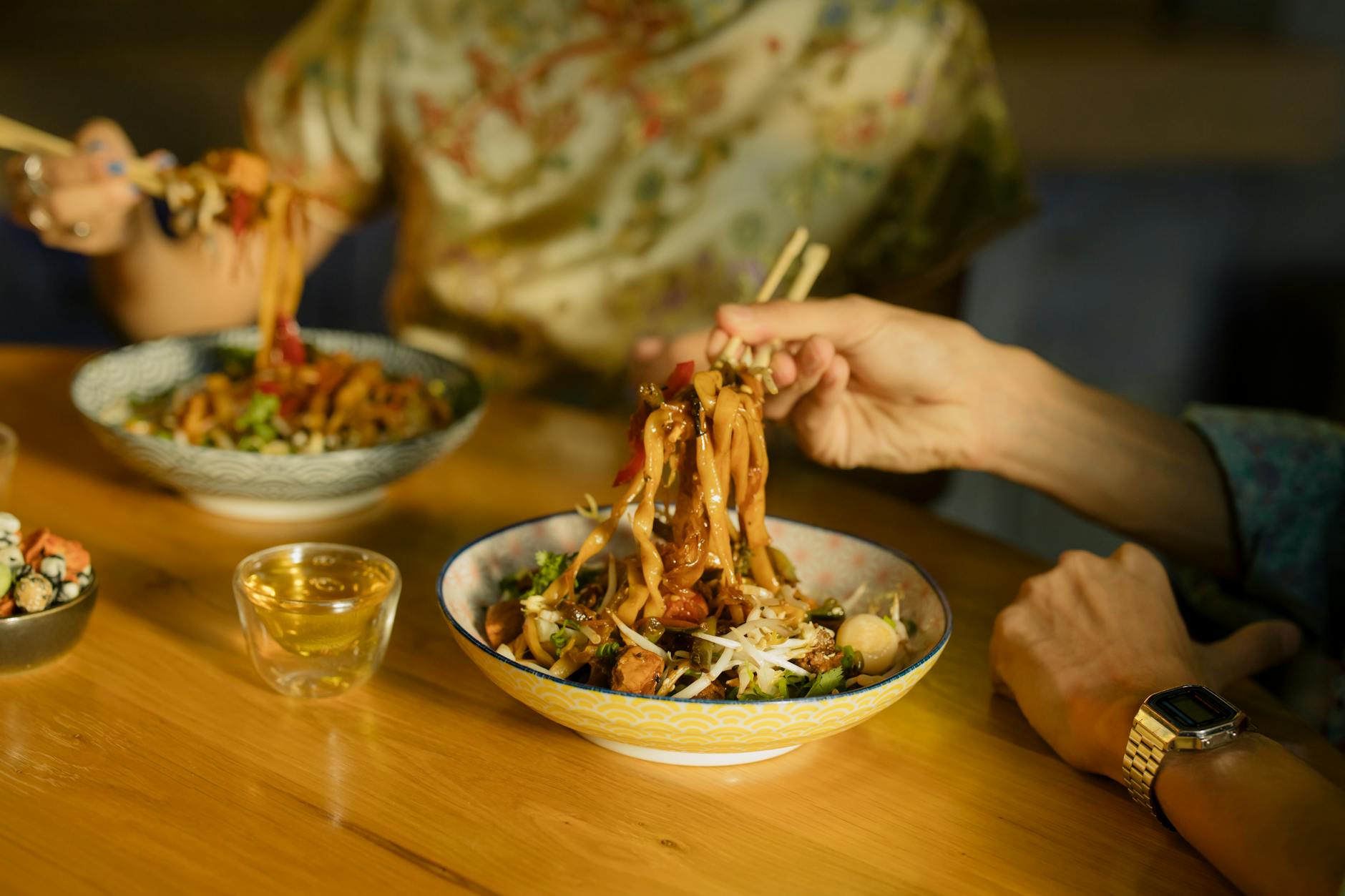
Noodles run through every cuisine on the street, from hand-pulled wheat noodles to pho and laksa. Adelaide takes its laksa seriously, and some of the best bowls in the city come from the food stalls in and around the market rather than from sit-down restaurants. Our Central Market food guide points you to the market’s stalls.
Korean barbecue
Gouger Street is the centre of Adelaide’s Korean barbecue scene: grill-topped tables, marinated beef and pork belly cooked in front of you, banchan side dishes and a lot of cold beer. It is the best group option on the street, and a good choice if you have teenagers to feed. Expect to smell of charcoal afterwards. Nobody minds.
Gyoza Gyoza and the izakaya end
Gyoza Gyoza works as a Japanese izakaya, with small plates to share and drinks, which makes it the right stop if you want to graze rather than sit through a full dinner. It suits a night with friends better than a date.
Paul’s Seafood on Gouger
Paul’s has been frying fish on Gouger Street for more than sixty years, which makes it older than Chinatown’s reputation. Order King George whiting, South Australia’s most prized eating fish, which is sweet, delicate and at its best simply battered or grilled. It is not an Asian restaurant, but it belongs on this page because it is part of the street’s history and because sometimes you just want fish and chips.
East Taste: the late-night saviour
When everything else has closed, East Taste is still going: until 1am midweek and 2am at weekends. It serves fast, filling Asian comfort food to people coming out of bars, shows and late shifts, and it is very good at that job. Do not come for a slow, elegant dinner. Come at 12:30am when you are starving, and it will feel like the best meal in Adelaide.
How to eat on Gouger Street: BYO, bookings and sharing
A few customs make the difference between a good night on Gouger Street and a frustrating one.
- BYO is common. Many of the older Chinese and Vietnamese restaurants let you bring your own wine or beer, usually for a corkage fee charged per bottle or per person. Ask when you book or as you sit down, and pick up a bottle on the way. South Australian riesling is a very good match for Cantonese food.
- Book where you can. Friday and Saturday from about 6:30pm are the peak. The modern restaurants take bookings, and the busiest casual places fill up with queues. If you cannot book, eat early — before 6:30pm there is usually a table somewhere.
- Share everything. Order a few dishes for the table, then order again once you see the portion sizes. Ordering a main each is the most common visitor mistake on the street.
- Check the days. Plenty of restaurants close one day a week, usually early in the week, so confirm before you build an evening around one.
- Expect card surcharges. Many Australian restaurants add a small fee for card payments, and some add weekend or public holiday surcharges too. It will be printed on the menu.
If you are eating on a budget, Chinatown’s food courts and the dumpling houses are among the best value in the city — see our cheap eats guide and Adelaide on a budget for more. For the wider picture of Asian food across the city, including the Vietnamese strips in the suburbs, our guide to Adelaide’s Asian food is the companion to this page.
Lunar New Year and street parties

The biggest night of Chinatown’s year is Lunar New Year. The official celebrations have run on Moonta Street since 2003, and since 2013 Gouger Street has closed to traffic for a street party, with traditional performances, lion dances, market stalls and pop-up food. In 2027 Lunar New Year falls on Saturday 6 February, and the celebrations are usually held on a weekend close to the date. Watch the City of Adelaide’s events listings for the confirmed day.
It is crowded, loud and brilliant. Arrive in the late afternoon to eat before the peak, give the lion dancers plenty of room, and do not plan on driving anywhere nearby. The street also closes for other events from time to time — in February 2026 it hosted a street party for the Adelaide Motorsport Festival — so if you find barriers across Gouger Street, it is usually worth finding out why.
For more Asian arts and food on the calendar, the OzAsia Festival takes over parts of the city in spring. Our events and festivals calendar lists the rest of the year.
Getting there and parking
- Tram: ride to Victoria Square, which is free within the city section, then walk a few minutes west along Gouger Street. Our free tram guide explains the stops.
- On foot: from Rundle Mall it is a flat ten to fifteen minutes south, straight down King William Street — pair it with our Rundle Mall guide for a full city day.
- Bus: the free City Connector buses loop the city and stop near the Central Market. The public transport guide has the routes.
- Car: the Central Market’s car park is the obvious option. Check its current rates and time limits, and expect it to be busy on Friday nights and Saturdays. On-street parking along Gouger Street turns over quickly but is hard to find at peak times.
Staying close by makes a Gouger Street night easy. Several CBD hotels are within a ten-minute walk — see our best hotels in the Adelaide CBD.
When to go
The same street feels completely different depending on the day and the hour, and picking the right slot matters more here than almost anywhere else in the city.
- Weekday lunch is the cheapest and fastest time to eat. The food courts and dumpling houses are full of office workers, turnover is quick, and you can eat well for very little. Go at 12:30pm and you will queue; go at 1:30pm and you will not.
- Friday night is the street at its best. The market trades late, the restaurants are full, and the whole precinct has a buzz. It is also the hardest night to get a table, so book or eat early.
- Saturday is a yum cha morning and a busy night. Do the market early, yum cha late morning, and come back for dinner if you still have room.
- Sunday is quieter. The market is closed, but most restaurants trade and yum cha is at its most relaxed.
- Monday is the day most likely to find a favourite closed. Check before you set out.
Seasonally, Gouger Street is busiest in February and March, when the Fringe, the Adelaide Festival and the rest of the late-summer festival season bring crowds to town and every restaurant in the city fills up. Book further ahead then. In winter the street is at its cosiest, with steamed-up windows and hot soup, and it is easier to walk in without a booking. Our best time to visit Adelaide guide lays out the year.
Gouger Street with kids, vegetarians and allergies
With children, yum cha is the easy win. Small dishes arrive quickly, everyone can try something, nobody minds a bit of noise, and a noisy dining room is exactly where a restless toddler blends in. Dumpling houses work for the same reasons. Eat early — 5:30pm to 6pm — and you will have more space and faster service. Korean barbecue is fun with older kids but needs care around the hot grills at the table. Our Central Market with kids guide covers the market next door, and Adelaide with kids has the rest of the city.
Vegetarians eat well here, but it pays to ask. Chinese menus have plenty of tofu, eggplant and greens, but oyster sauce, fish sauce, shrimp paste and meat stocks turn up in dishes that look vegetarian on the menu. Say clearly that you do not eat meat or seafood, including in the sauce. The Indian and Nepali kitchens in Chinatown are the most straightforwardly vegetarian-friendly options. Vegans should read our vegan Adelaide guide, which covers the city’s dedicated plant-based kitchens.
With allergies, be specific and be early. Peanuts and sesame are common in Szechuan, Thai and Malaysian cooking, shellfish turns up in stocks and pastes, and many small kitchens share woks and fryers. Tell staff before you order, not after the food arrives, and if the answer sounds uncertain, choose a different dish.
What is worth it, and what is not
- Worth it: weekend yum cha at Star House before 11am, a classic dinner at Ying Chow, a dumpling lunch, and East Taste at midnight when nothing else is open.
- Worth it for the occasion: Concubine, when the night matters more than the bill.
- Worth it once: the Lunar New Year street party. Go early and eat well before the crowds peak.
- Not worth it: turning up at 7pm on a Friday or Saturday without a booking and hoping. Either book or eat early.
- Not worth it: choosing a restaurant by the photos in its window. The queue outside and what locals are eating inside tell you far more.
- Not worth it: the non-Asian restaurants, if you only have one night. They are fine, but they are not why you came to Gouger Street.
A night on Gouger Street
On a Friday, start at the Central Market, which trades late that night, for a wander past the stalls and a snack. Walk out the Gouger Street doors and through the paifang into Chinatown for a lap of Moonta Street and the grocers. Then go to dinner — Ying Chow for the classic, Concubine for the occasion, Korean barbecue if you are a group — having booked, or having arrived before 6:30pm. Finish with bubble tea or a dessert in Chinatown. If the night goes long, you know where East Taste is.
Our Adelaide food guide covers the rest of the city’s restaurants, and Adelaide nightlife covers where to go afterwards.
Gouger Street FAQ
How do you pronounce Gouger Street?
“GOOJ-er”, with the short vowel of “good” — say “sugar” with a G at the front and a J in the middle. The street is named after Robert Gouger, South Australia’s first Colonial Secretary.
Where is Chinatown in Adelaide?
On Moonta Street, a pedestrian lane between Gouger and Grote streets inside the Central Market precinct in the city centre. A paifang gate marks each end.
What is Gouger Street known for?
Asian restaurants, especially Chinese, yum cha, dumplings and Korean barbecue, plus late-night eating and the Central Market next door. It also has long-running seafood, Italian, Argentinian, Malaysian, Vietnamese and Thai restaurants.
Where is the best yum cha on Gouger Street?
Star House serves yum cha daily and is the street’s best-known yum cha room. Arrive before 11am at weekends to avoid the longest wait.
Is Gouger Street open late?
Yes, more than most of the city. East Taste stays open until 1am midweek and 2am at weekends, and many restaurants serve until late on Friday and Saturday nights.
Can you BYO on Gouger Street?
At many places, yes, particularly the older Chinese and Vietnamese restaurants. Expect a corkage charge and ask before you open anything.
When is Lunar New Year in Adelaide’s Chinatown?
Lunar New Year falls on 6 February in 2027, and Chinatown’s celebrations and the Gouger Street street party are usually held on a weekend around that date. Check the City of Adelaide’s event listings for the confirmed day.
How do I get to Gouger Street from the city centre?
Take the tram to Victoria Square, which is free within the city, and walk a few minutes west. From Rundle Mall it is a flat ten-to-fifteen-minute walk south.
Related Adelaide Guides
- Adelaide Asian Food — the city-wide guide, including the suburban Vietnamese strips.
- Adelaide Central Market — the market next door, stall by stall.
- Central Market Food Guide — what to eat inside the market.
- Cheap Eats Adelaide — more good meals for very little.
- Adelaide Food Guide — the best restaurants across the city.
- Rundle Mall — ten minutes’ walk north.
- OzAsia Festival — Asian arts and food each spring.
- Adelaide Nightlife — where to go after dinner.
Photo Credits
The Chinatown paifang at the Gouger Street entrance: “Chinatown, Adelaide paifang 1.jpg” by Ydjames, via Wikimedia Commons, CC BY-SA 3.0.
Moonta Street in Chinatown: “Chinatown, Adelaide 1.jpg” by Ydjames, via Wikimedia Commons, CC BY-SA 3.0.
The Gouger Street party during the 2026 Adelaide Motorsport Festival: “2026 Adelaide Motorsport Festival Gouger Street Party – 04.jpg” by Yu Chu Chin, via Wikimedia Commons, CC BY-SA 4.0.
Gouger Street looking west from the Central Market (featured image): “Gouger Street.jpg” by Scott W., via Wikimedia Commons, CC BY 2.5.