Navigating a new city can be daunting, but Adelaide’s public transport system is refreshingly straightforward, affordable, and efficient. Whether you’re a visitor exploring for a few days or a new resident finding your feet, this comprehensive guide covers everything you need to know about getting around Adelaide by bus, tram, and train in 2026.
Adelaide’s public transport network is operated by Adelaide Metro, covering the greater metropolitan area with an integrated system of buses, trams, and trains. The system is designed around a central hub model, with most services radiating from the CBD. With a MetroCard in hand and a bit of insider knowledge, you can reach virtually every corner of the city and its suburbs quickly and cheaply.
The MetroCard System: Your Key to Affordable Travel
The metroCARD is Adelaide’s reloadable smartcard. A regular card costs $5 (concession and student cards $3.50) and needs at least $5 of credit before its first trip. You can buy one from metroCARD retailers and vending machines across Adelaide, online, or at the Adelaide Metro InfoCentre in Adelaide Railway Station on North Terrace.
Since Adelaide Metro introduced Tap and Pay, you no longer need a metroCARD to get the standard fare: a metroCARD, a contactless Visa, Mastercard or American Express card or phone, and the Buy & Go app all charge the same $4.75 at peak times and $2.70 off-peak (fares checked November 2026). Each fare covers two hours of travel on any combination of buses, trains and trams, for any distance. Paper Singletrip tickets cost more, and buses are cashless. Our Adelaide metroCARD and fares guide has every fare, the peak and off-peak times, and when a Daytrip or the 3-Day Visitor Pass pays for itself.
metroCARDs come in regular, concession and student versions, and South Australian Seniors Card holders travel free at all times. Visitors can buy a 3-Day Visitor Pass ($29.90) as a Visitor metroCARD or in the Buy & Go app, and for longer stays the 14-day and 28-day passes give unlimited travel. Children under 5 travel free at all times with an adult.
FREE Travel Options in Adelaide
One of Adelaide’s best-kept secrets is the amount of free public transport available right in the heart of the city. Savvy visitors can explore extensively without spending a cent on transport.
Free Tram Zone
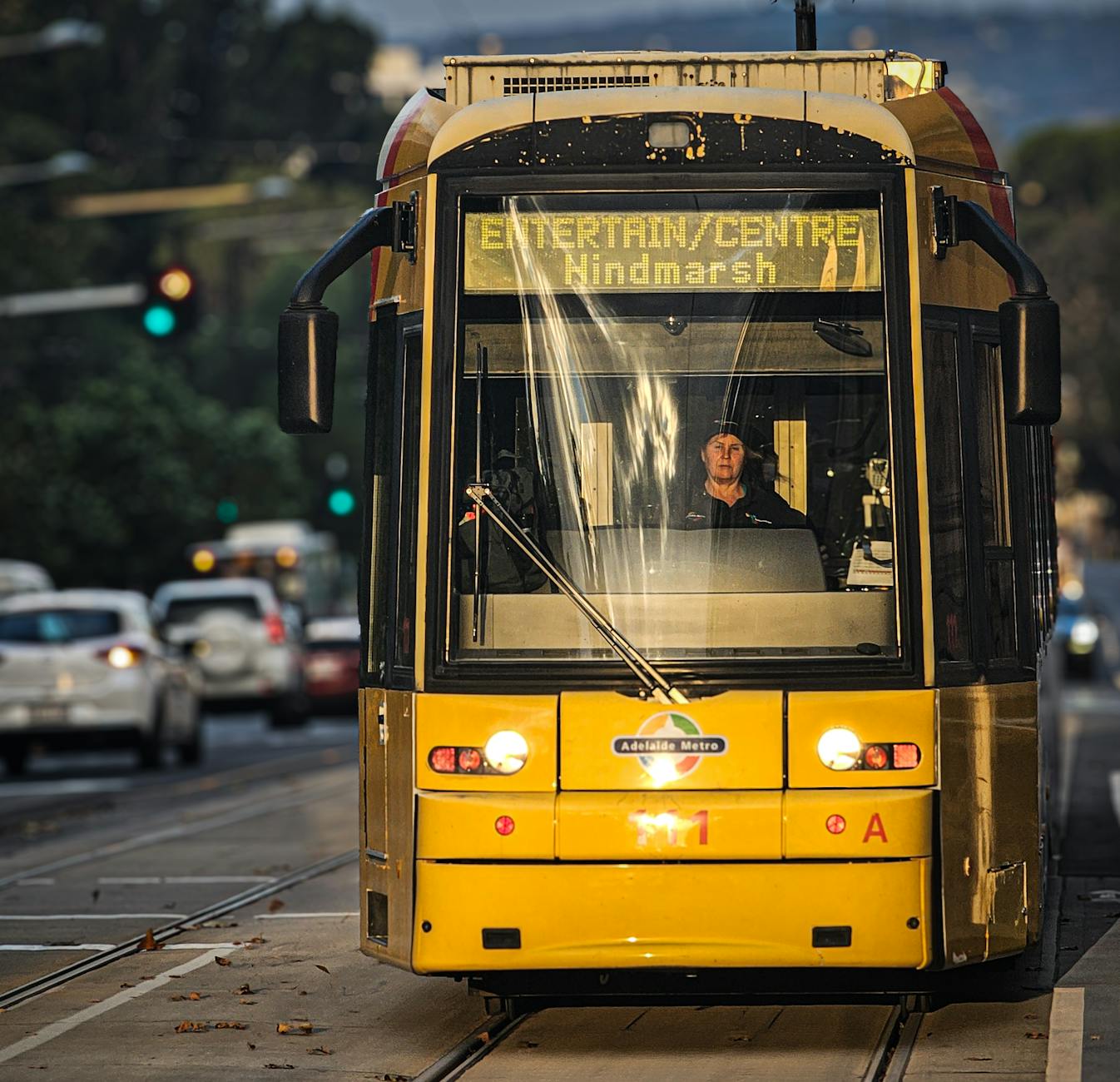
The Adelaide tram network offers completely free travel between the Entertainment Centre stop (at the northern end) and South Terrace (at the southern end). This free zone covers the entire CBD stretch, passing through key stops including Adelaide Railway Station, Rundle Mall, Victoria Square, and the Central Market precinct. You simply hop on and off without tapping any card — no ticket required within this zone. The trams run frequently, making them incredibly convenient for moving around the city centre.
99C Free City Connector Bus
The free City Connector buses run two loops, each in both directions. The 98A and 98C cover the city and North Adelaide every day; the 99A and 99C run a smaller inner-city loop on weekdays only. Each loop runs about every 30 minutes, and on weekdays, where the 98 and 99 share the central-city section, a free bus comes along about every 15 minutes. They run from just before 7am until 7:15pm (9:15pm on Fridays), linking the Central Market, Rundle Mall, Adelaide Oval, the Botanic Gardens, the Art Gallery and North Terrace’s cultural institutions. It’s an excellent way to cover ground between attractions without walking in the summer heat or winter chill.
The Glenelg Tram: Adelaide’s Iconic Beach Connection
The tram to Glenelg is perhaps Adelaide’s most famous public transport route, and for good reason. Running from the CBD’s Victoria Square directly to the golden sands of Glenelg Beach, this 30-minute journey is both practical transport and a scenic experience. How often the trams run depends on the time and day, and evening gaps can stretch to 20 minutes, so check the timetable for your trip. The line follows a dedicated corridor through the southwestern suburbs.
Remember that travel within the CBD free zone is free, but once you pass South Terrace heading towards Glenelg, standard MetroCard fares apply. The route passes through several residential suburbs including Goodwood, Plympton, and Morphettville before reaching the best beaches Adelaide at Glenelg terminus, just steps from Moseley Square and the beachfront.
Pro tip: Sit on the left side heading to Glenelg for the best views as you approach the coast. Before you settle in for a beachside dinner, check the timetable for the last tram back to the city, as it changes with the day and direction.
Adelaide’s Train Network: Lines and Destinations
Adelaide’s train network consists of six lines radiating from the Adelaide Railway Station on North Terrace. Trains are modern, air-conditioned, and frequent at peak times; check the timetable for your line. Here’s your complete guide to each line:
Seaford Line (Southern Beaches)
The Seaford line runs south through Brighton, Hallet Cove, and down to Seaford. This is your gateway to Adelaide’s stunning southern beaches. Key stops include Brighton (close to the beach and jetty), Seacliff (beautiful beach with historic cliffs), and Hallett Cove (stunning geological formations and boardwalk). The line was fully electrified and modernised, offering fast and smooth travel.
Belair Line (Adelaide Hills)
The Belair line takes you into the picturesque Adelaide Hills, climbing through leafy suburbs like Mitcham, Blackwood, and finally Belair. The line runs from the city to Belair National Park — perfect for bushwalking and picnics. This line operates with diesel trains due to the hilly terrain and is popular with commuters living in the hills. On weekends, it’s a great way to access hiking trails without needing a car for your Mt Lofty waterfall gully hike.
Gawler Line (Northern Suburbs)
Running north through Elizabeth and into the historic township of Gawler, this is Adelaide’s longest train line. Gawler itself is a charming heritage town with cafes, antique shops, and the gateway to the Barossa Valley wineries — catch a connecting bus from Gawler to the Barossa for your Barossa Valley day trip.
Outer Harbor Line (Port Adelaide & Semaphore)
The Outer Harbor line services Adelaide’s historic port district, with stops at Port Adelaide (maritime heritage precinct, museums, and antique shops) and continuing to Outer Harbor/Semaphore. This line is essential for visitors wanting to explore Port Adelaide’s Maritime Museum, the famous Fishermen’s Wharf Market (Sundays), or the charming beachside suburb of Semaphore with its Art Deco cinema and seaside promenade.
Flinders Line
The Flinders line, formerly the Tonsley line, serves the southern suburbs, running to the city via Tonsley, Woodlands Park and Goodwood.
The Bus Network: Connecting Every Corner
Adelaide’s bus network is extensive, with hundreds of routes covering virtually every suburb in the metropolitan area. Buses are the backbone of the public transport system, filling gaps between train lines and providing direct routes to destinations not served by rail. Operating hours vary by route and day, so check the timetable for the route you need.
Key bus routes for visitors include the O-Bahn Busway, where buses run on a dedicated guided track through the northeast towards Tea Tree Plaza, and various routes connecting to Adelaide’s shopping centres, hospitals, and entertainment venues.
Bus stops are well-marked throughout Adelaide, and most major stops have electronic display boards showing real-time arrival information. On-board announcements and displays help you identify your stop. All metropolitan buses accept metroCARD, Tap and Pay and Buy & Go tickets; you tap on as you board and do not need to tap off.
Travelling After Midnight: Saturday Night Buses
When Adelaide’s regular services wind down varies by route, so check the timetable for your last bus, train or tram home. For those enjoying Adelaide’s vibrant nightlife, After Midnight buses run on Saturday nights only (technically early Sunday morning). These limited services run to selected areas between midnight and 6am Sunday.
After Midnight routes cover major corridors including routes to the north (Salisbury/Elizabeth), south (Marion/Noarlunga), east (Norwood/Burnside), and west (Henley Beach). Standard MetroCard fares apply, though these services run less frequently than daytime buses — typically every 30-60 minutes. Plan ahead and check the Adelaide Metro website for current After Midnight timetables, as routes can change seasonally.
For nights when the After Midnight buses don’t suit your plans, rideshare services like Uber and DiDi operate in Adelaide, with typical CBD-to-suburbs fares ranging from $20-$50 depending on distance and surge pricing.
Accessibility on Adelaide’s Public Transport
Adelaide’s public transport system is increasingly accessible for passengers with disabilities, mobility challenges, and parents with prams. Trams carry boarding ramps for when they are needed: wait at the marked accessible boarding point and ask the driver for assistance. All tram stops have tactile ground surface indicators for vision-impaired passengers.
The majority of Adelaide’s bus fleet is wheelchair-accessible, equipped with retractable ramps and designated wheelchair spaces. Drivers are trained to assist passengers who need help. When waiting at a stop, signal clearly to the driver that you need the ramp deployed. Priority seating near the front is reserved for elderly, disabled, and pregnant passengers.
Train stations vary in accessibility — most major stations have ramp or lift access to platforms, but some older suburban stations may have stairs only. The Adelaide Metro website provides detailed accessibility information for every station. Companion Card holders travel free when accompanying a person with a disability.
Essential Apps and Planning Tools
The Adelaide Metro app is your most valuable tool for navigating the public transport system. Available for both iOS and Android, it provides real-time vehicle tracking (see exactly where your bus or train is), trip planning (enter your start and end point for route suggestions), timetable access, and service disruption alerts. The app also shows live departures from your nearest stop using GPS.
Google Maps also integrates Adelaide Metro data, offering public transport directions with real-time information. For many visitors, this is the easiest option as it’s already familiar. Simply enter your destination and select the public transport option for route suggestions including walking directions to stops.
The Adelaide Metro website (adelaidemetro.com.au) is the official source for timetables, fare information, service changes, and MetroCard purchase locations. You can also plan trips, check accessibility information, and find details about special event services.
Tourist Tips and Money-Saving Strategies
For visitors to Adelaide, here are the best strategies to maximise your public transport experience while minimising costs:
Short visits (1-3 days): Tap and Pay with your own contactless card or phone is the simplest option, and with the free tram zone, the free City Connector buses and the 2-hour transfer window, it will cover most tourist needs. If you will pay three or more peak fares in a day, or five or more off-peak ones, buy a Daytrip ($12.90) instead; trips within the same two-hour window count as one fare.
Longer visits (4+ days): Consider the 28-day MetroCard for unlimited travel. This is particularly valuable if you plan to explore suburbs, beaches, and surrounding areas by train. At $123, the 28-day pass pays for itself once you would otherwise pay 26 peak fares, 46 off-peak fares or 10 Daytrips within the 28 days.
Travel off-peak when possible: Off-peak fares apply from 9:01am to 2:59pm on weekdays, from 4am to midnight on Sundays and all day on public holidays, and cost $2.70 compared with $4.75 at peak times. Note that Saturday is charged at peak rates all day, right through to 4am Sunday, and so are weekday evenings from 3pm.
Zones: Adelaide operates a simple zone system. The standard metropolitan zone covers virtually all tourist destinations including Glenelg, Port Adelaide, and most suburbs. Only travel to distant satellite cities (like the Barossa or Adelaide Hills beyond Belair) requires additional zone fares or separate regional services.
For a comprehensive overview of planning your Adelaide visit, see our Adelaide travel guide which covers accommodation, dining, and more alongside transport options.
Getting From the Airport to the City
Adelaide Airport is conveniently located just 7km from the CBD. The JetBus service (routes J1 and J2) connects the airport to the city centre; check the timetable for journey times and how often they run. A standard MetroCard fare applies. The J1 runs to the city via Henley Beach Road and Sir Donald Bradman Drive.
Alternatively, taxis and rideshare services are readily available from the airport terminal, with fares to the CBD typically $25-35.
Cycling and Active Transport Integration
Adelaide is one of Australia’s most bike-friendly cities, with an extensive network of cycling paths and on-road bike lanes. Public transport integrates well with cycling — you can take your bicycle on trains at any time for free (space permitting), and most bus routes have bike racks on the front of the vehicle (holds two bikes). Trams allow bikes in designated areas during off-peak times.
The Adelaide Free Bikes program (located at various points around the city) provides free bicycle loans for short trips. Additionally, shared e-scooters operate in the CBD and North Adelaide within designated service areas (check the operator’s app map before you ride), offering another option for the first/last kilometre of your journey.
Seasonal Considerations and Special Events
During major events like the Adelaide Fringe (February-March), Adelaide Festival, and major sporting events at Adelaide Oval, Adelaide Metro runs extended services and additional routes. Special event buses often operate from dedicated stops near venues, and tram services are typically extended to run later into the night. Check the Adelaide Metro website or app before attending major events for service details.
Summer weekends see increased services to beach suburbs, particularly Glenelg and Semaphore, reflecting demand. On very hot days, check Adelaide Metro’s service updates before you set out. Air-conditioning on modern fleet vehicles makes public transport a comfortable option even in Adelaide’s hot summers.
Practical Tips for a Smooth Journey
Here are final practical tips to ensure your Adelaide public transport experience is seamless:
- Tap on every time you board a bus, train or tram; there is no need to tap off when you get off
- Keep your MetroCard away from mobile phones and other cards to prevent interference
- Arrive at bus stops 2-3 minutes before scheduled departure — buses aim to leave on time and won’t wait
- Allow extra time during weekday commuter peaks, when services can be crowded
- Signal the bus driver with a raised hand as the bus approaches your stop — drivers may not stop if no one signals
- Press the stop button on buses and trams well before your stop to alert the driver
- Regional services to the Barossa, Fleurieu Peninsula, and Adelaide Hills operate separately through LinkSA — different fares apply
- Wi-Fi is available on some newer trains and trams, though coverage can be patchy
With this knowledge in hand, you’re ready to navigate Adelaide like a local. The public transport system offers excellent coverage, remarkable value (especially with those free CBD options), and a relaxed way to explore one of Australia’s most liveable cities. For more on planning your perfect Adelaide visit, explore our guides to things to do in Adelaide and the best time to visit Adelaide.
Tips for Tourists Using Adelaide Public Transport
Visitors to Adelaide often underestimate how efficiently the public transport system can serve their sightseeing needs, particularly when armed with a few insider strategies. Tapping a contactless bank card or phone, or using a metroCARD from the InfoCentre at Adelaide Railway Station or a retailer, gives you much cheaper fares than paper Singletrip tickets, and works seamlessly across buses, trains, and trams. For stays of three days or more with plenty of travel, the 3-Day Visitor Pass can save money, and tap-on travel (there is no need to tap off) means you never need cash or a ticket machine.
The best routes for sightseeing follow Adelaide’s major cultural and scenic corridors. The free City Connector bus service loops through the CBD, passing major attractions including the Central Market, North Terrace cultural precinct, and Rundle Mall. Beyond the free zone, the Glenelg tram provides a scenic 30-minute journey from the city centre to the beach, passing through leafy suburban streets and terminating at the popular seaside precinct. For those exploring the Adelaide Hills, the 864 bus service from Currie Street runs via Crafers and Stirling to Hahndorf and Mount Barker, and route 823 from Crafers climbs to the Mount Lofty Summit stop, so you can reach the Hills without a rental car.
Combining the free tram with paid services creates an efficient Adelaide public transport strategy for tourists covering multiple attractions in a single day. Start with the free tram to reach North Terrace museums, then transfer to a bus heading to the Botanic Gardens or Adelaide Oval precinct. Understanding that Adelaide Metro operates on a zone-based system helps visitors plan economical routes, with most tourist attractions falling within the metropolitan zone one area that offers the cheapest fare structure.
Weekend versus weekday differences significantly impact the tourist experience on Adelaide public transport. Weekend services run less frequently on most routes, typically every thirty minutes rather than the fifteen-minute weekday frequency on major corridors. Fares differ too, and not in the way many visitors expect: Saturday is charged at peak rates all day, while Sunday and public holidays are off-peak. Smart visitors save the long outer-suburban excursions for a Sunday, and buy a Daytrip on any day they expect to pay three or more peak fares.
Using transport apps transforms the Adelaide public transport experience from confusing to effortless. The Adelaide Metro app provides real-time arrival information, journey planning, and service alerts that prevent frustrating waits at stops. Google Maps integration means visitors can plan door-to-door journeys combining walking, bus, train, and tram segments with accurate timing. Setting up both apps before departure ensures connectivity issues at unfamiliar stops never derail a carefully planned sightseeing day.
Accessibility and Inclusive Transport Features
Adelaide’s public transport network has made considerable strides in accessibility, ensuring that visitors and residents with mobility challenges can navigate the city with confidence. All tram services operate low-floor vehicles with level boarding at every stop, eliminating the barriers that older public transport systems present to wheelchair users and those with mobility aids. The modern bus fleet increasingly features kneeling capability and dedicated wheelchair spaces, while railway stations on the main suburban lines have undergone progressive upgrades to include lifts, tactile indicators, and accessible toilet facilities.
The Adelaide Metro accessibility information service provides detailed guidance for passengers with specific needs, including companion card arrangements that let the carer travelling with an eligible cardholder ride free of charge. For visitors with vision impairments, the Adelaide public transport system offers talking bus stops at key locations, while the official app includes screen-reader compatibility that enables independent journey planning. These inclusive features reflect South Australia’s commitment to ensuring that public transport serves every member of the community regardless of ability.
All of Adelaide’s trains and trams and most of its buses are accessible. For ramps, companion travel, access taxis and the most accessible attractions, see our guide to accessible Adelaide.