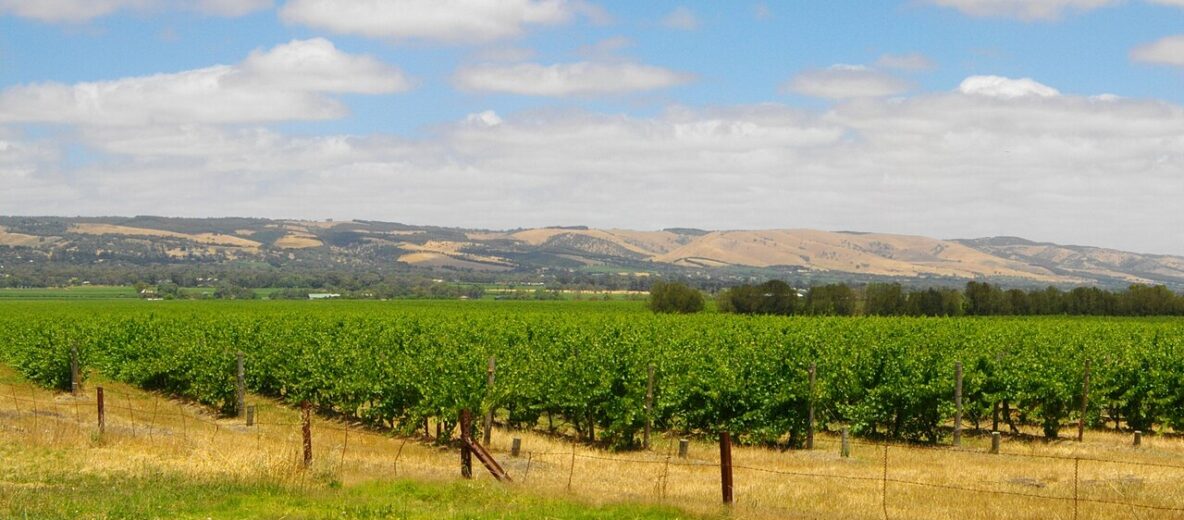
You see it long before you reach it. Drive up Osborn Road through the vines on the edge of McLaren Vale and a five-storey block of tilted glass cubes appears above the rows, looking as if someone left a half-solved puzzle in a paddock. The d’Arenberg Cube is the most talked-about building in South Australian wine: a cellar door, a museum of sensory oddities, a restaurant and a tasting bar with a view down the valley to the sea, all dreamed up by a winemaker famous for his shirts.
This guide covers what the Cube actually is, what the A$20 ticket includes, the Alternate Realities Museum and the Salvador Dalí collection, which tasting is worth paying for, the Blending Bench, the restaurant, how to get there without driving yourself, and an honest answer to whether it is worth the fuss. Prices and hours come from d’Arenberg’s own website and were checked in September 2026. They change, so confirm before you book.
d’Arenberg Cube at a glance
| What | Detail | Price (A$) |
|---|---|---|
| General admission | Alternate Realities Museum plus a wine tasting at the Tasting Room Bar | $20 adults · $10 under 18 · free under 2 |
| Refund on entry | $5 back if you buy two or more bottles in the Tasting Room | — |
| Wine flights | Paid tasting flights beyond the included pour | From $20 |
| The Dead Arm Distinction | About 30 minutes, built around the flagship shiraz | $60 |
| The Blending Bench | About 75 minutes; blend and bottle your own wine to take home | $120 |
| Blending Bench and d’Arry’s Verandah degustation | About 3.5 hours, with an eight-course food and wine degustation | $420 |
| Helicopter and scenic-flight packages | Flights combined with blending, some with the degustation | $1,850–$4,450 per couple |
| Opening hours | Daily, 10:30am–4:30pm; arrive by 3:30pm | — |
| Where | Osborn Road, McLaren Vale — about 45 minutes’ drive south of Adelaide | — |
What the Cube actually is
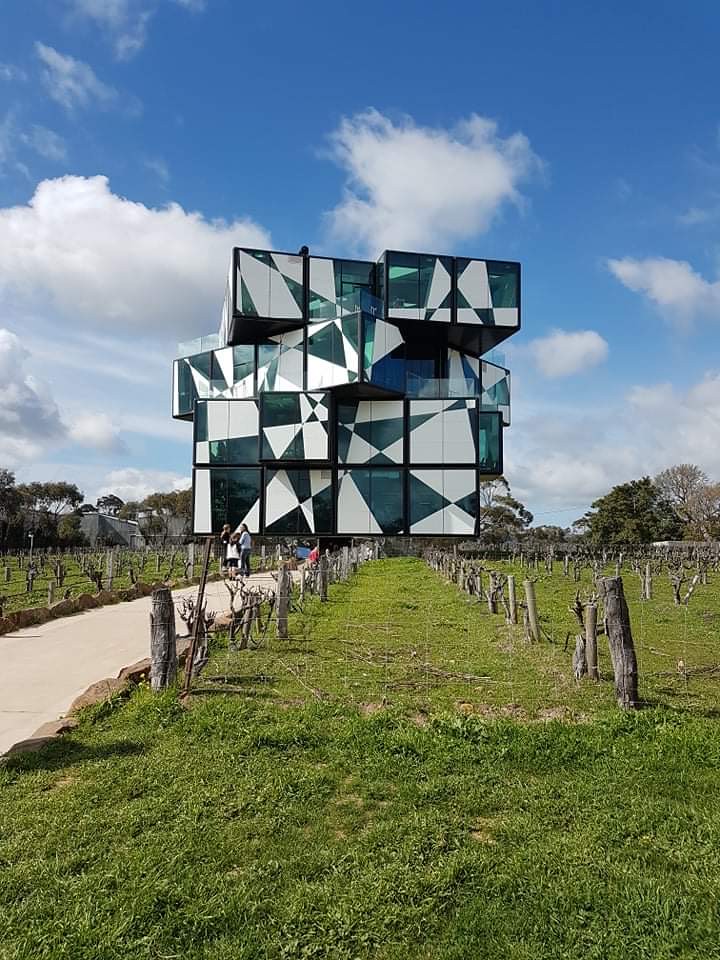
The Cube opened in December 2017 among d’Arenberg’s own vineyards. Its design concept came from Chester Osborn, the family’s fourth-generation chief winemaker, who is as well known in Australian wine for his loud shirts as for his shiraz. The idea behind the shape is the puzzle of winemaking: five levels of offset cubes, like a Rubik’s cube caught mid-twist, wrapped in glass printed with a black-and-white geometric pattern. It is deliberately odd. Some people love it on sight, some think it is a gimmick, and almost nobody drives past without pulling over for a photograph.
Inside, the building stacks up the visitor experience floor by floor. The ground floor holds the Alternate Realities Museum. Higher up are the tasting room and the bar, with windows looking out over McLaren Vale, the Willunga Hills and Gulf St Vincent, and the rest of the building houses dining and function spaces. The views from the upper floors are the part even the sceptics come round to. On a clear afternoon you look down across rows of vines to the blue line of the gulf.
The family behind it has been in McLaren Vale for more than a century, since the Osborns bought vineyard land here in 1912. The d’Arenberg name, and the diagonal red stripe on every label, have been the brand’s calling cards for decades, and d’Arenberg has become one of the region’s best-known producers, with wines exported around the world. The Cube was the family’s bet that a winery could also be an attraction — and on a busy Saturday, with tour buses in the car park, it is hard to argue the bet did not come off.
Tickets and entry: what A$20 gets you
General admission is A$20 for adults, A$10 for under-18s and free for children under two. d’Arenberg club members and people who have booked one of the experience packages get in free. The ticket covers two things: a self-guided tour of the Alternate Realities Museum on the ground floor, and a wine tasting at the Tasting Room Bar upstairs.
The fee is not refundable as such. The one concession is that A$5 is redeemable if you buy two or more bottles in the Tasting Room. That is less generous than the common McLaren Vale arrangement, where many cellar doors charge a modest tasting fee and waive it when you buy. It is fair enough, though, once you remember that you are also paying for the museum and the building.
Practicalities:
- Hours: the Cube is open daily from 10:30am to 4:30pm. d’Arenberg recommends arriving by 3:30pm to leave enough time for the visit, and that is sound advice. An hour is the minimum to enjoy it without rushing.
- Booking: advance reservations are recommended, and groups of five to ten must book ahead. Groups larger than ten need to give prior notice. Couples and small groups can usually walk in on weekdays, but weekends and school holidays are much busier.
- Accessibility: d’Arenberg asks visitors with accessibility requirements to call its reservations team so it can plan for them. Do that before you go rather than on arrival.
- Time needed: allow around one and a half to two hours for general admission — the museum, the tasting and a slow look at the views. Add 75 minutes if you book the Blending Bench, and a whole afternoon for the degustation package.
The Alternate Realities Museum
The ground floor is where the Cube earns its reputation for strangeness. The Alternate Realities Museum is a self-guided sequence of rooms that play with your senses and with the idea of wine itself — aromas to sniff and identify, projections, visual tricks and installations that are more art gallery than winery. It takes most people somewhere between twenty minutes and three-quarters of an hour, depending on how long they linger.
Be clear about what it is: a playful, slightly surreal warm-up before the tasting, not a serious museum of wine history. Older children and teenagers often like it more than their parents expect, which makes the A$10 under-18 ticket easy to justify on a family day in McLaren Vale. Wine purists sometimes find it silly. Both reactions are fair, and both groups usually agree the view upstairs was worth the climb.
The Salvador Dalí collection
Surrealism suits the Cube, and d’Arenberg has leaned into it. The winery has billed its Dalí collection, shown as part of the Alternate Realities experience, as the largest Salvador Dalí exhibition outside Europe. It has also run surrealist-themed programming, promoted in recent years as “Surreal April”. For a building designed to look like a puzzle, the pairing makes sense. Dalí’s melting clocks and dreamlike objects are the logical art-world relatives of a winery shaped like a Rubik’s cube.
One honest caution. Exhibitions move, rotate and change format, and the d’Arenberg pages we checked in September 2026 focused on admission and tastings rather than listing what Dalí material was on display. If the Dalí works are your main reason for making the trip, confirm with d’Arenberg what is showing before you go, rather than relying on older articles, including this one. If you are coming for the building, the views and the wine, the Dalí is a bonus.
Tastings: which one to choose
Everyone with a general admission ticket gets a tasting at the Tasting Room Bar. Beyond that, there are two main paid options:
- Wine flights, from A$20: a set selection poured side by side. This is the easy upgrade if you want to compare wines properly without committing to a long session.
- The Dead Arm Distinction, A$60: a focused tasting of about 30 minutes built around the Dead Arm, d’Arenberg’s flagship shiraz. This is the one for serious shiraz drinkers.
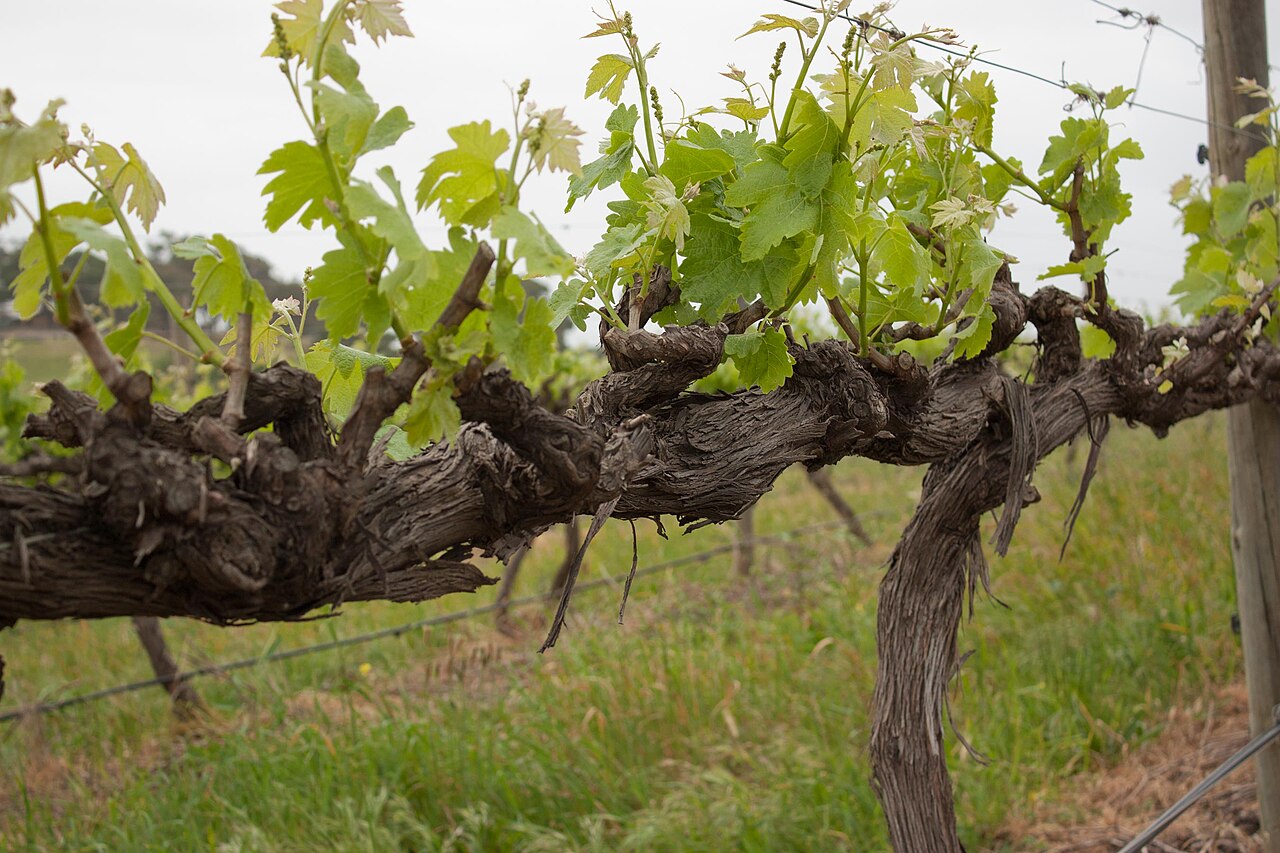
The Dead Arm is worth understanding before you taste it. The name comes from a vine disease, “dead arm”, which kills one arm of a grapevine. The surviving arm carries a small crop of very concentrated fruit, and d’Arenberg built its most famous shiraz around vines like that. It is a big, structured McLaren Vale shiraz, the sort of wine that shows its best after years in the cellar, and tasting it alongside younger wines is the clearest lesson the Cube offers in what old vines do.
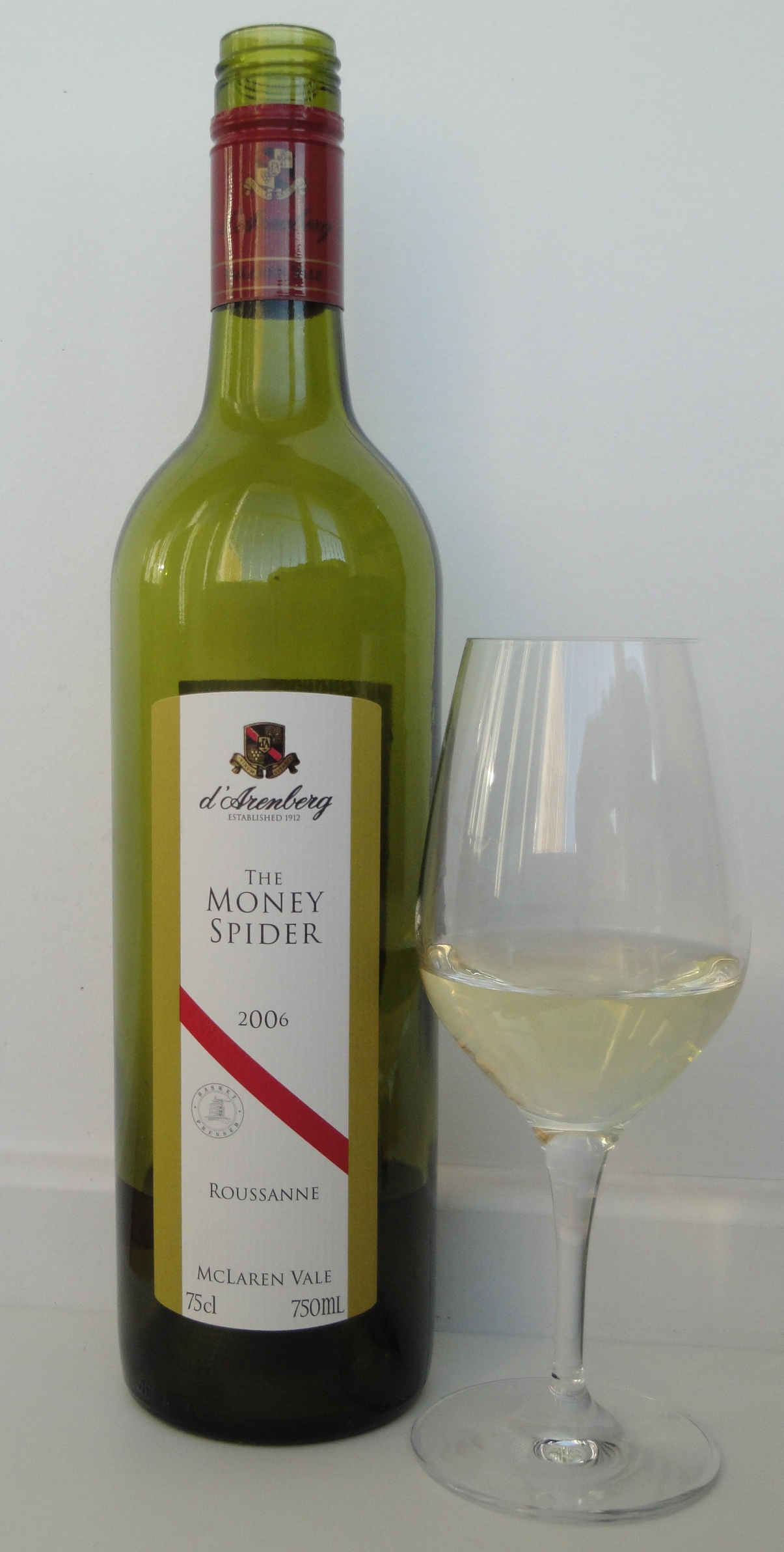
The wine names are half the fun. d’Arenberg gives its bottles names like the Footbolt, the Stump Jump, the Laughing Magpie, the Hermit Crab and the Money Spider, most with a story from the family or the vineyard behind them. Ask at the bar. The staff enjoy telling them, and the stories make the wines easier to remember when you are standing in a bottle shop back home.
Whatever you choose, do not skip the grenache. McLaren Vale has some of the oldest grenache vines in Australia, and the region’s grenache has turned from an unfashionable blending grape into one of its proudest wines. Our McLaren Vale wine guide explains why, and where else to taste it.
The Blending Bench: make your own wine
The Blending Bench is the Cube’s best experience for anyone who actually likes wine. For A$120 per person and about 75 minutes, you sit down with a set of component wines and work out your own blend, adjusting proportions until it tastes the way you want. Then you bottle it, name it and label it, and take the 750ml bottle home.
It sounds like a novelty, and it is fun, but it is also genuinely educational. Twenty minutes of adding a little more of one grape and a little less of another teaches you more about how a blend is built than any number of tasting notes. Couples tend to end up competing. Groups of friends end up arguing. Both outcomes make for a good afternoon.
If you want to go all in, the Blending Bench and d’Arry’s Verandah degustation package costs A$420 per person and runs for about three and a half hours, combining the blending session with an eight-course food and wine degustation. That is special-occasion money, and it is the whole afternoon — plan nothing else for the day and make sure somebody else is driving.
Eating at d’Arenberg
d’Arry’s Verandah is d’Arenberg’s restaurant, named after d’Arry Osborn, who ran the family business for decades before handing the winemaking to his son Chester. The degustation format suits a celebration, and the setting among the vines is lovely. It is not a quick lunch. If you want to eat well but more casually, McLaren Vale has plenty of cellar-door restaurants, bakeries and cafés within a few minutes’ drive, and the coast at Port Willunga is close enough for fish and chips on the beach. Our McLaren Vale day trip lists the good options.
The helicopter packages
At the top end, d’Arenberg sells packages that combine a helicopter or scenic flight with the blending experience, some with the degustation too. In September 2026 they were priced at A$1,850 per couple for a helicopter tour and blending, A$2,590 per couple for a scenic flight with blending and degustation, and A$4,450 per couple for the helicopter tour, blending and degustation together.
These are indulgences, and they are priced like it. For a proposal, a milestone birthday or a once-in-a-lifetime trip, arriving over the vines by air makes a memorable day. For everyone else, the A$120 Blending Bench gives you most of the hands-on experience for a small fraction of the price, and a driver or a tour covers the transport.
Getting there
The Cube is on Osborn Road, McLaren Vale, about 45 minutes’ drive south of Adelaide. Public transport does not realistically reach the cellar doors, so you have three sensible choices:
- A tour. Many McLaren Vale day tours from Adelaide stop at d’Arenberg or can add it. Check whether the Cube’s entry fee is included in the tour price before you book. Our wine tours from Adelaide guide explains what to look for.
- A designated driver. South Australia’s blood-alcohol limit is 0.05 for fully licensed drivers and zero for learners and provisional drivers, and random breath tests on the roads back to Adelaide are common. The driver can still do the museum and the view.
- A hire car and an overnight stay. McLaren Vale has good accommodation among the vines, and staying the night takes the pressure off everyone. Our car rental guide covers hiring in Adelaide.
Building a day around the Cube

The Cube works best as the anchor of a McLaren Vale day rather than the whole of it. A good plan: arrive at 10:30am when it opens, before the tour buses, and do the museum and the tasting while it is quiet. Book the Blending Bench for late morning if you want it. Then head to one or two smaller cellar doors for a very different, more personal kind of tasting, have lunch, and finish at the beach at Port Willunga or Maslin as the afternoon cools. If gin is more your thing, Never Never Distilling is also in McLaren Vale — see our breweries and distilleries guide.
If you are deciding between regions for a single wine day, our Barossa vs McLaren Vale comparison will help. McLaren Vale’s advantages are that it is closer to Adelaide, it is near the sea, and it has the Cube.
When to go
The Cube is open every day, but the experience changes a lot with the calendar and the clock.
- Time of day: 10:30am opening is the calm window, before the tour groups. Mid-afternoon on a weekend is the busiest. The last hour before closing is quieter again, but it leaves little time. That is why d’Arenberg asks for arrival by 3:30pm.
- Weekdays vs weekends: Tuesday to Thursday is noticeably calmer than Saturday. If you can only come at the weekend, arrive at opening.
- Vintage (roughly February to April): harvest season, when the vineyards are busy and the region is at its most alive. It is also peak season for visitors, so book experiences ahead.
- Winter: the quietest months, often with crisp, clear days that make the view from the top floors sharper. A good time for an unhurried visit. Our Adelaide in winter guide has more ideas for the season.
- Spring: new green growth on the vines, mild weather and the best conditions for combining the Cube with a walk on the coast.
Tips for a better visit
- Eat before you taste. Even a modest tasting on an empty stomach catches up with you, especially if you add a flight or the Blending Bench.
- Use the spittoon. Spitting is completely normal at a cellar door, and nobody at the bar will think twice. It is the only way to taste a range of wines properly and still enjoy the rest of the day.
- Bring ID if you look young. Australian venues serving alcohol routinely ask younger-looking customers for proof of age.
- Do the museum first. It sets up the building’s sense of humour and works better before a glass than after one.
- Ask for the stories. The staff know the family history and the reasons behind the wine names. A question or two turns a standard tasting into a much better one.
- Think about the bottles you buy. If you are flying home, check your airline’s rules on carrying wine, and remember that the A$5 entry refund only applies when you buy two or more bottles.
Is the d’Arenberg Cube worth it?
For most first-time visitors to McLaren Vale, yes — once. The building is unlike anything else in Australian wine, the view from the top is excellent, the museum is a fun half-hour, and the Blending Bench is one of the best hands-on wine experiences in the state. At A$20 including a tasting, the entry fee is not outrageous for what you get.
It is less essential if you are a serious wine drinker who has been before, or if what you really want is a quiet conversation with a winemaker. For that, the smaller family cellar doors nearby do better, and usually charge less. It is also worth avoiding at peak weekend lunchtimes, when the tour groups arrive and the tasting bar gets crowded. And if the Dalí collection is your only reason to go, check what is on display first.
| You are… | Verdict |
|---|---|
| A first-time visitor to McLaren Vale | Go, and arrive at opening time |
| A wine lover | Book the Blending Bench or the Dead Arm Distinction |
| A family with older kids | Worth it — the museum is the highlight for them, and under-18s pay A$10 |
| Celebrating something big | The degustation or a flight package |
| A repeat visitor who wants a quiet tasting | Skip it and try smaller cellar doors nearby |
d’Arenberg Cube FAQ
How much does it cost to visit the d’Arenberg Cube?
General admission is A$20 for adults, A$10 for under-18s and free for children under two. It includes the Alternate Realities Museum and a wine tasting, and A$5 is redeemable if you buy two or more bottles.
What are the d’Arenberg Cube’s opening hours?
It is open daily from 10:30am to 4:30pm. Arrive by 3:30pm to leave enough time for the visit.
Do you need to book the d’Arenberg Cube?
Advance reservations are recommended, and groups of five to ten must book. Larger groups need to give prior notice. The Blending Bench and other experiences should always be booked.
Is the Salvador Dalí exhibition still at the d’Arenberg Cube?
d’Arenberg has promoted its Dalí collection as the largest Salvador Dalí exhibition outside Europe. Displays can change, so check with d’Arenberg what is on show if the Dalí works are the main reason for your visit.
How much is the Blending Bench at d’Arenberg?
A$120 per person for about 75 minutes, including a bottle of your own blend to take home. With the eight-course d’Arry’s Verandah degustation, the package is A$420 per person.
Can children visit the d’Arenberg Cube?
Yes. Under-18s pay A$10 and children under two are free. The museum is the part kids enjoy; the tastings are for adults only.
How far is the d’Arenberg Cube from Adelaide?
About 45 minutes’ drive south of the city, on Osborn Road in McLaren Vale. Take a tour or bring a designated driver if you plan to taste.
How long should I spend at the d’Arenberg Cube?
Around one and a half to two hours for general admission, plus 75 minutes for the Blending Bench. The degustation package takes about three and a half hours.
Related Adelaide Guides
- McLaren Vale Wine Guide — shiraz, grenache and the best cellar doors.
- McLaren Vale Day Trip — how to spend a full day south of the city.
- Barossa vs McLaren Vale — which region suits your trip.
- Wine Tours from Adelaide — taste without driving.
- Adelaide Wine Regions — the complete guide to South Australian wine country.
- Adelaide Breweries and Distilleries — beer and gin, including McLaren Vale’s distillers.
- Day Trips from Adelaide — more places within a couple of hours.
- Adelaide Romantic Getaway — where the Blending Bench fits a couples’ trip.
Photo Credits
The d’Arenberg Cube among the vines: “D'Arenberg Cube.jpg” by Alan and Flora Botting, via Wikimedia Commons, CC BY-SA 2.5.
An old vine with spring growth at Coriole Vineyard, McLaren Vale: “Trellised vines, Coriole Vineyard, McLaren Vale South Australia (6177503952).jpg” by Rexness from Melbourne, Australia, via Wikimedia Commons, CC BY-SA 2.0.
d’Arenberg The Money Spider roussanne: “Money Spider Roussanne 2006.jpg” by Tomas er, via Wikimedia Commons, CC BY-SA 3.0.
McLaren Vale vineyards below the hills (featured image): “McLaren Vale wine region – panoramio.jpg” by Wikipedian, via Wikimedia Commons, CC BY-SA 3.0.