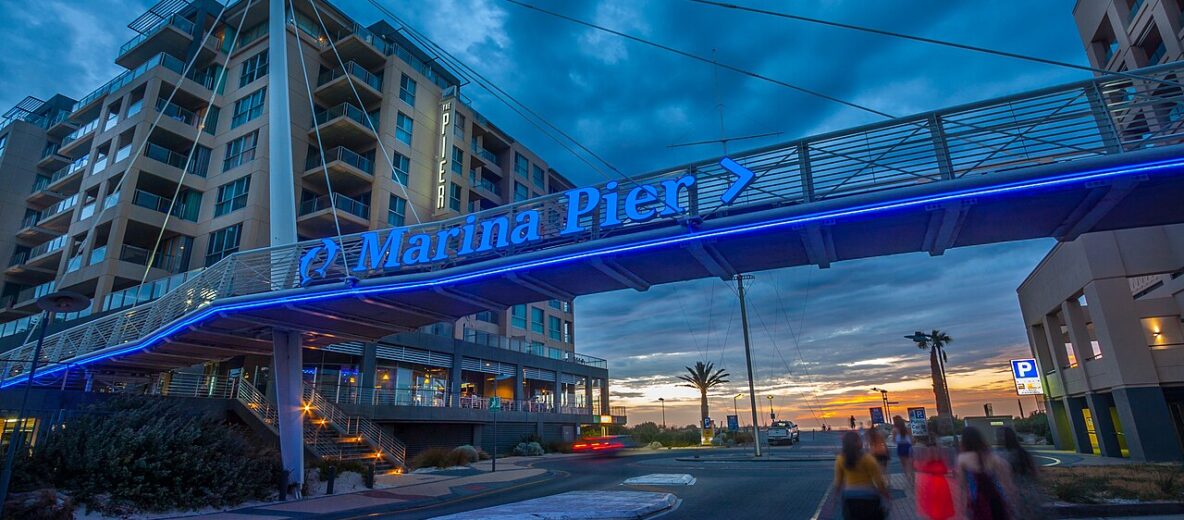
The catamaran slides out of the marina at Glenelg in the early morning, past the breakwater and into the flat blue of Gulf St Vincent, and for a while nothing happens. Then someone on the front deck points, and a curved grey fin breaks the surface, then another, and suddenly there is a small pod of wild dolphins riding the pressure wave off the bow. Fifteen minutes later you are in a wetsuit and a snorkel mask, holding a line in the water, listening to clicks and whistles you did not know you could hear. That is the easiest way to swim with dolphins Adelaide has to offer, and it leaves from a pier ten minutes’ walk from the Glenelg tram stop.
This guide covers how the swim works, what it really feels like, whether to swim or just watch, the dolphins you are likely to meet and the rules that protect them, the calmer and cheaper alternative in the Port River, and what to bring. Prices come from the operator’s own website and were checked in September 2026 — treat them as the right order of magnitude and confirm when you book, because tour times and prices change with the season.
The Glenelg dolphin swim at a glance
| What | Detail |
|---|---|
| Operator | Temptation Sailing — the first vessel in South Australia to be given a dolphin swim licence, operating since January 2002 |
| Departs | Marina Pier, Holdfast Shores Marina, Glenelg |
| Boat | A 58ft sailing catamaran surveyed for up to 50 passengers, with a licensed bar and a 360-degree front viewing deck |
| Duration | About three and a half hours |
| Swim ticket | A$154 adults (16+), A$144 children 9–15 |
| Watch-only ticket | A$92 adults (16+), A$82 children 3–15, infants free |
| Minimum age to swim | 9; younger children can watch from the boat |
| Included for swimmers | Full-length 5mm wetsuit, mask and snorkel, and a crew briefing |
| Dolphins you may see | Indo-Pacific bottlenose and short-beaked common dolphins |
| If no dolphins appear | Come again free within a year, or a 50% refund on direct bookings |
How the dolphin swim works
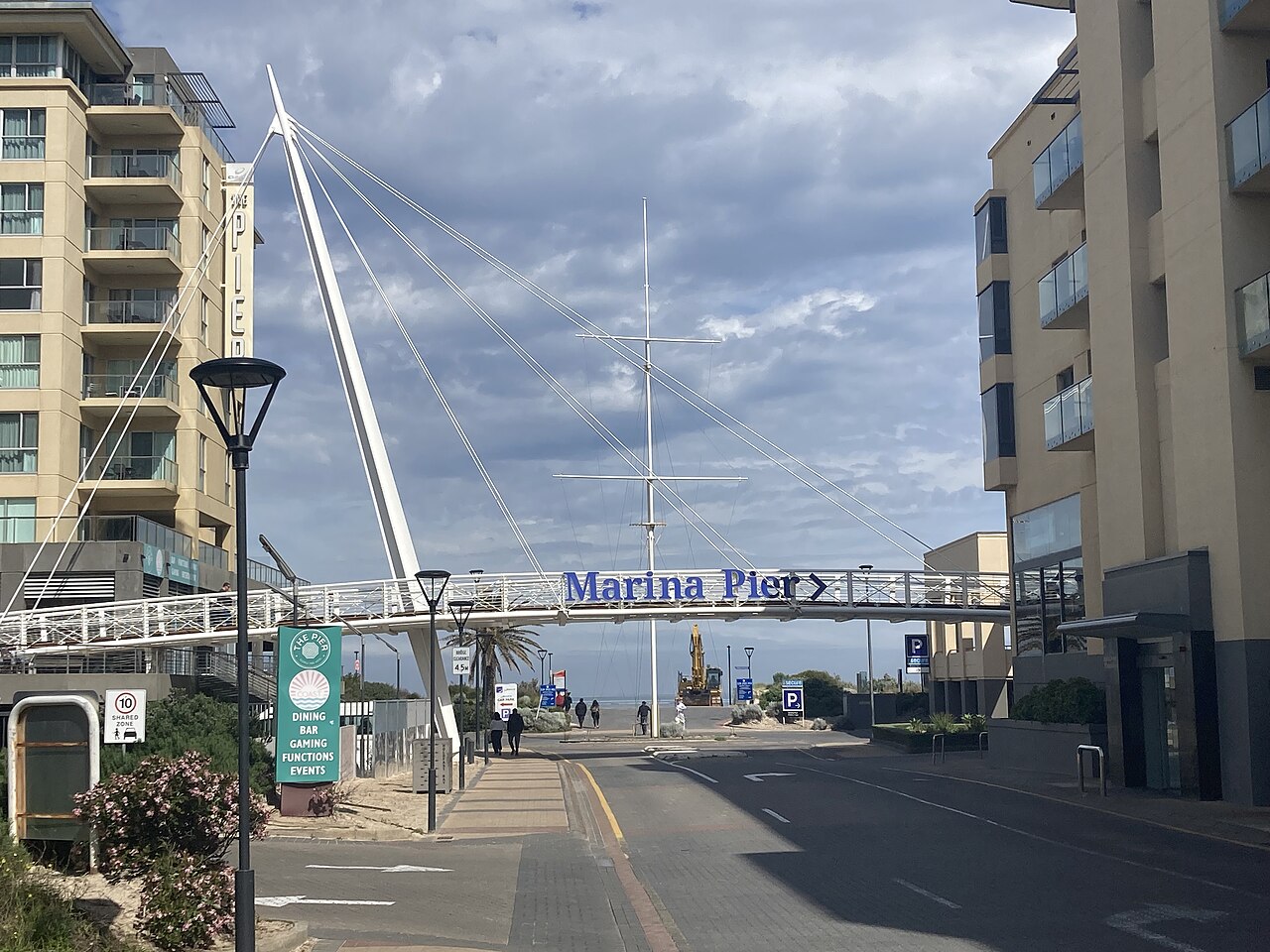
Tours leave from Marina Pier at Holdfast Shores in Glenelg. After boarding, the crew runs a safety briefing and hands out wetsuits while the boat heads out into the gulf to find dolphins. There is no feeding and no chasing — the skipper looks for a pod, positions the boat nearby, and lets the dolphins decide whether to come closer. Wild dolphins often do, particularly to ride the bow wave, and that is when the swimmers go in.
There are two ways to be in the water, and the crew usually rotates everyone through both:
- The Front Swim: you lie on a custom net stretched between the catamaran’s two bows, face down with your mask in the water, as the dolphins move around and beneath the boat. It is the closer, more immersive position, and it feels a little like being part of the pod.
- The Back Swim: you hold on to what the crew call “mermaid lines” trailing off the back of the vessel and float face down, watching the dolphins pass below.
Holding on to a flotation line is compulsory, and nobody swims free in open water. The full-length 5mm wetsuits also add buoyancy, so you do not need to be a strong swimmer. The operator specifically caters for nervous and non-confident swimmers, with a structured briefing, visual guides and crew on hand to help. One important exception: shark shields — electronic deterrent devices — are used during the back swim, so anyone with a pacemaker can only do the front swim. Mention it when you book.
What it actually feels like

It is worth being honest about this, because the marketing photos can set the wrong expectations. You are not going to cuddle a dolphin. You will be in cool water, holding a line or lying on a net, with your face down and your heart pounding, and dolphins will pass beneath you, sometimes a couple of metres away, sometimes further, for anything from a few seconds to several minutes at a time. Some swims are spectacular, with a whole pod weaving around the swimmers. Some are brief. The dolphins are wild and choose for themselves.
What people remember is less the view than the sound — the clicks and whistles carry clearly through the water — and the strange intimacy of being looked at by an animal that has swum over to check you out. Between swims you are back on deck with the watchers, warming up and scanning for fins. And yes, on a choppy day some people get seasick; there is advice on that below.
The water is the other thing to prepare for. Gulf St Vincent is cooler than tropical water even in summer, which is why the wetsuits are thick. You will be cold for the first few seconds and then, very quickly, you will not care.
Swim or watch?
The swim ticket costs A$62 more than the watch-only ticket for an adult (A$154 against A$92), and whether that is worth it depends on you.
| You are… | Choose | Why |
|---|---|---|
| Comfortable in open water and after the thrill | Swim | Being in the water with wild dolphins is the whole point |
| A nervous swimmer who still wants to try | Swim, and ask for the front net first | You hold a line or lie on a net, the wetsuit floats you, and crew help |
| A family with children under 9 | Watch | Under-9s cannot swim, and a watch ticket for a child is A$82 |
| Prone to cold or seasickness | Watch | You get the dolphins from the deck without the cold water |
| A photographer | Watch, or swim with a strapped action camera | The deck is the better platform for surface shots |
The operator says it has seen dolphins on every trip since 2002, and it backs that up with a clear policy: if no dolphins are seen above the water, you can come again free within a year, or take a 50% refund if you booked direct. That takes most of the financial risk out of the trip. Book direct if you want the refund option.
Meet the dolphins
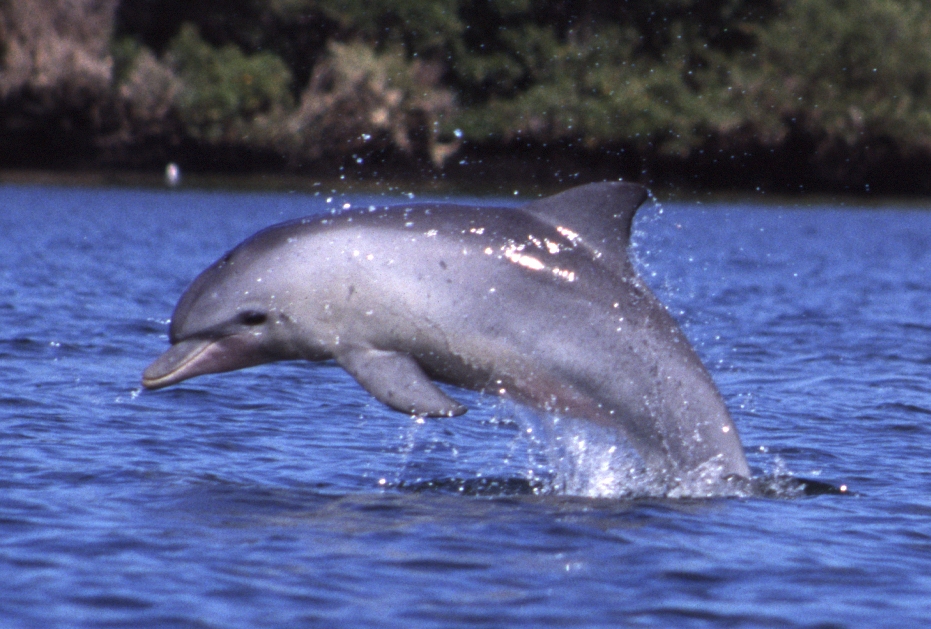
Two species live in the waters off Adelaide. The Indo-Pacific bottlenose dolphin is the one you are most likely to see: a sturdy grey dolphin found close to shore in gulfs, bays and estuaries. Short-beaked common dolphins, sleeker and patterned with a pale hourglass on their sides, are more oceanic and turn up in the gulf too, often in larger, faster groups.
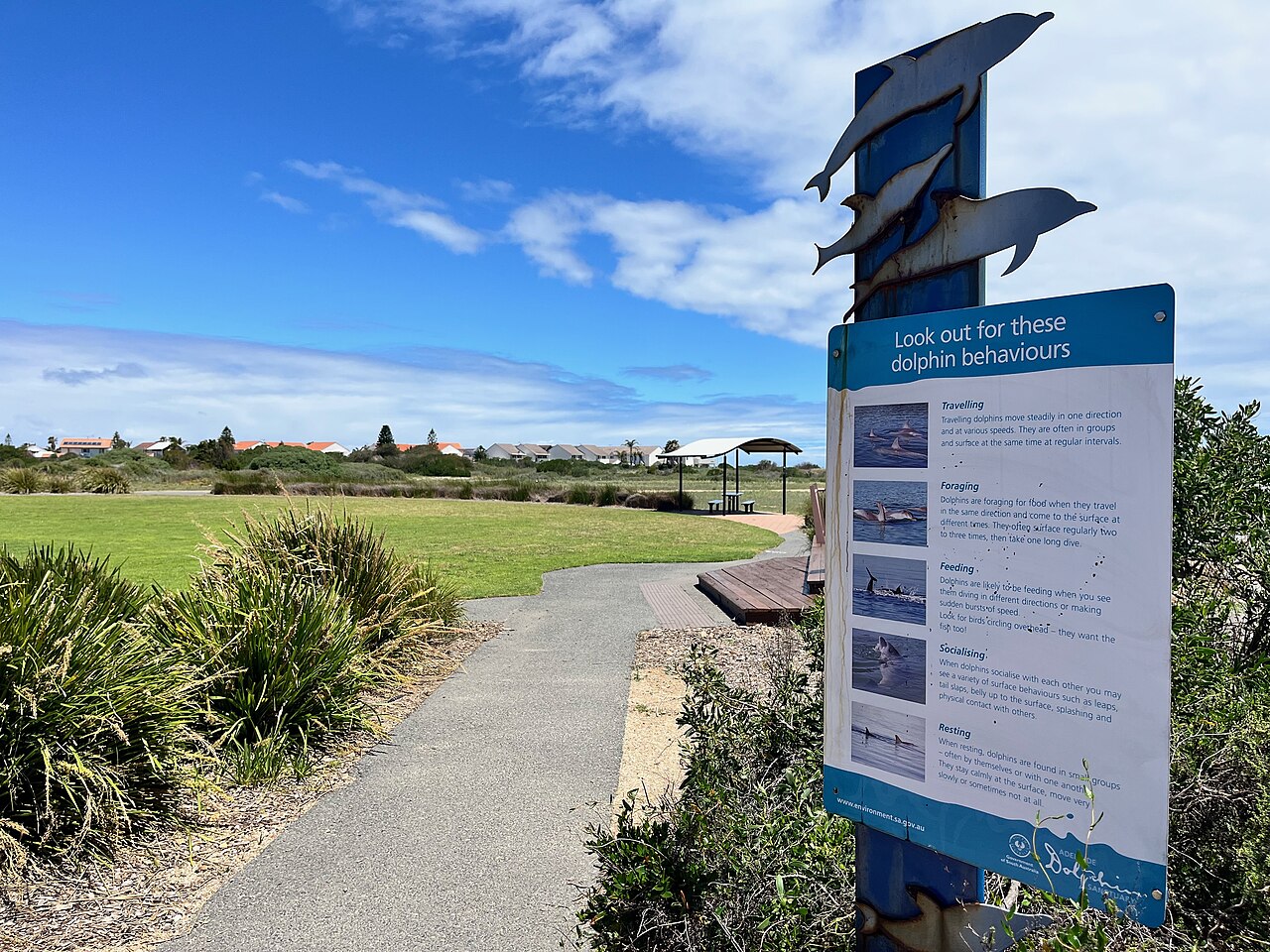
It helps to know what you are looking at. Signs put up by the state’s environment department at Outer Harbor describe five things dolphins spend their time doing:
- Travelling: moving steadily in one direction, often in a group, surfacing together at regular intervals.
- Foraging: heading the same way but surfacing at different times, taking two or three breaths and then a long dive.
- Feeding: diving in different directions with sudden bursts of speed. Seabirds circling overhead are a giveaway.
- Socialising: the showy part — leaps, tail slaps, rolling belly-up, splashing and touching each other.
- Resting: small groups moving slowly and calmly at the surface, sometimes barely at all.
A pod that is socialising or curious is the one most likely to come to the boat. A resting or feeding pod is best left alone, and good operators do exactly that.
Dolphins and the law
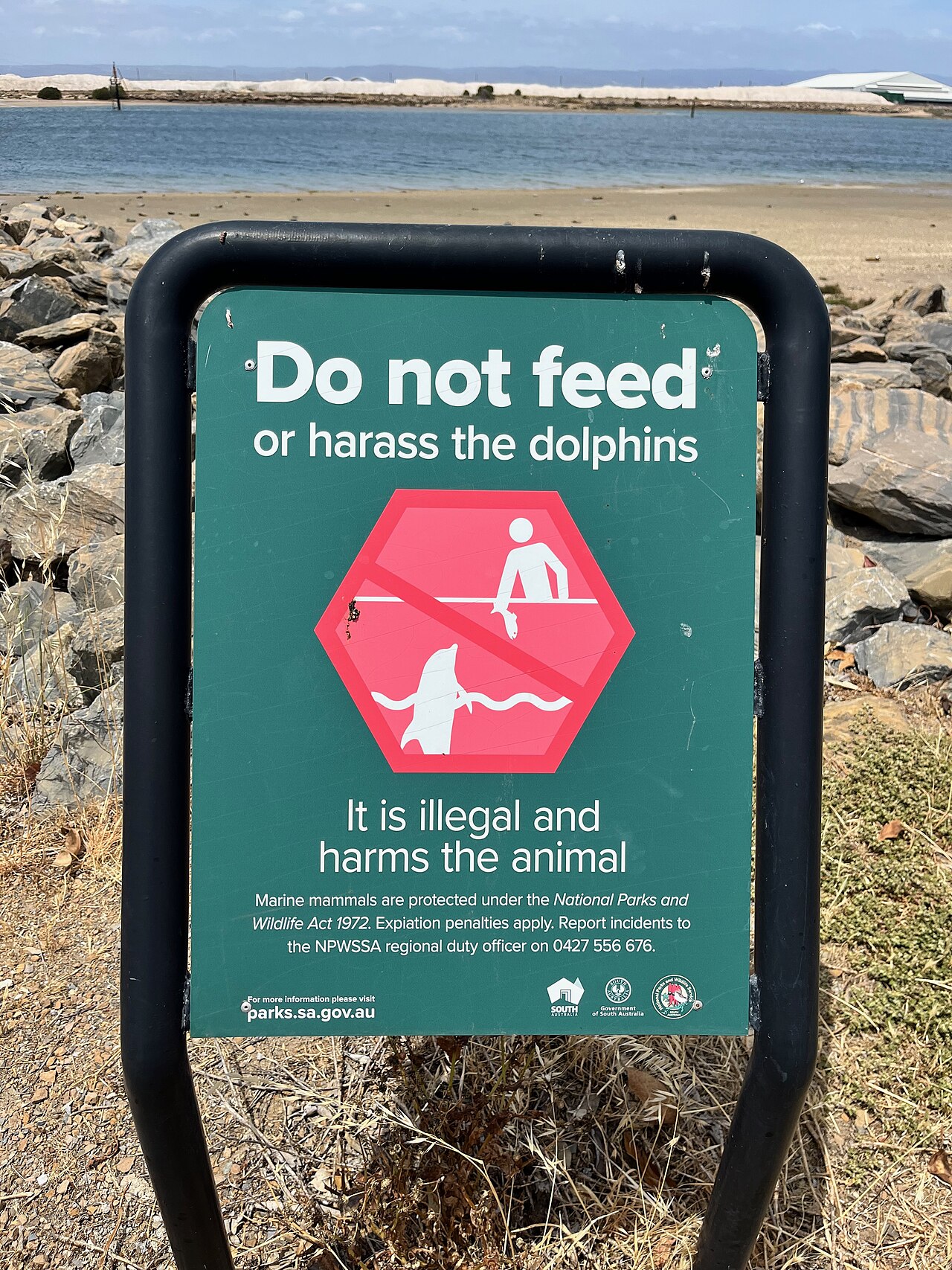
Dolphins in South Australia are protected. As the signs along the coast put it, marine mammals are protected under the National Parks and Wildlife Act 1972, feeding or harassing dolphins is illegal and harms the animal, and expiation penalties apply. The rules on how close boats and swimmers may go are strict, which is why a swim like this only happens under licence, with a crew trained to approach dolphins in ways that do not disturb them.
That is also the case for choosing a licensed, eco-certified operator over an improvised alternative. Temptation Sailing holds Advanced Ecotourism certification. If you are on your own boat, a kayak or a paddleboard and dolphins approach you, enjoy them from where you are. Do not chase them, do not try to touch them, and never feed them — dolphins that learn to beg from boats are more likely to be injured by propellers and fishing gear.
The Port River alternative
Glenelg is not the only place to see dolphins in Adelaide. The Port River and Barker Inlet, north-west of the city, make up the Adelaide Dolphin Sanctuary, established under its own state legislation in 2005 to protect a small resident population of bottlenose dolphins, which are joined by visitors from the gulf. Resident dolphins mean regular sightings in calm, sheltered water. You cannot swim with them, but you can see them from dolphin-watching cruises that leave from Port Adelaide, from guided kayak tours in the estuary, and sometimes simply from the shore and the wharves.
The Port River dolphins have a claim to fame of their own. In the late 1980s a dolphin called Billie spent a few weeks recovering in a marine park, where she saw trained dolphins “tail-walking” — rising out of the water and skittering backwards on their tails. Back in the river she started doing it herself, and other wild dolphins in the Port River picked up the habit, which made them one of the few wild populations ever recorded tail-walking.
For a cheaper, calmer outing, especially with young children, the Port River is excellent value. Pair it with the maritime and railway museums — our Port Adelaide guide covers the day.
Other cruises on the same boat
If the dolphin swim is not for you, or you want a second trip, the same catamaran runs shorter and cheaper public cruises. The prices in September 2026:
| Cruise | Adult | Child (3–15) | Notes |
|---|---|---|---|
| Coastal Day Cruise | A$44 | A$34 | The cheapest way onto the water |
| Twilight Cruise | A$56 | A$52 | Sunset over the gulf from the deck |
| Afternoon Tea Cruise | A$79 | A$69 | Includes a two-hour food and drink package |
| Kauwi Cultural Cruise | A$98 | A$88 | A cruise built around Kaurna culture |
| Tunes on Temptation | A$69 | Adults 18+ only | Music on the water |
| Package for Two | A$149 | — | Two adult tickets with drinks and a shared platter, on Twilight or Coastal Day cruises |
The twilight cruise is the best value on the list. Adelaide’s coast faces west, so the sun sets over the water, and a sail out of Glenelg as it drops is a lovely, low-effort evening. Our Adelaide date night ideas have more like it.
When to go
The dolphins live in the gulf all year, so the question is really about you and the weather.
- Summer and early autumn are the most comfortable months to swim. The water has had months of sunshine to warm up, the days are long, and calm mornings are common before the afternoon sea breeze arrives. Book ahead for school holidays.
- Winter and spring bring colder water and more wind. The 5mm wetsuits help, but the swim is more bracing, and the watch ticket starts to look more attractive. Check the booking calendar for which days swims are scheduled outside the warmer months.
- Wind matters more than temperature. A windy day makes the gulf choppy, which is uncomfortable on deck and harder in the water. Tours run subject to the weather, and the operator will move or cancel trips when conditions are poor. If your dates are flexible, pick an early booking in your trip so there is room to reschedule.
- Morning departures usually get the calmest water. It is worth the early alarm.
Swimming with dolphins with kids
Children aged 9 and over can swim, and for many of them it will be the highlight of the trip. A few things help. Talk it through beforehand so the cold water and the face-down snorkelling are not a surprise. Practise with a mask and snorkel at a beach or pool in the days before. Let them start on the front net, which feels more secure than holding a line, and let them sit out a rotation if they are cold — there is no shame in watching from the deck. Children under 9 go on a watch ticket and often enjoy spotting fins from the viewing deck as much as the swimmers enjoy the water.
Anyone with specific medical or mobility needs should speak to the operator before booking. Boarding a catamaran and moving about a deck at sea involves steps and some balance, and the crew can advise on what is practical.
Getting there and what to bring
The tours leave from Marina Pier, Holdfast Shores Marina, Glenelg. From the city, the tram runs straight to Moseley Square at the end of the line, and the marina is a short walk from there. See our tram guide. If you are driving, allow time to find parking around Glenelg, especially on summer weekends. Staying overnight in Glenelg makes an early start painless — our Glenelg accommodation guide has the options.
What to bring:
- Swimmers worn under your clothes, and a towel.
- A warm layer and a windproof jacket. It is cooler on the water than on land, and much cooler when you are wet.
- Hat, sunglasses and sunscreen. Apply the sunscreen well before the swim.
- A change of clothes for the ride home.
- An action camera on a wrist strap if you want underwater footage. Anything you drop is gone.
- Seasickness tablets if you are prone, taken before you board rather than once you feel ill.
A few more tips for seasickness: eat a light breakfast, stay on deck in the fresh air, look at the horizon, and avoid the cabin while the boat is moving. Catamarans are much more stable than single-hull boats, but a windy day on the gulf can still be bumpy.
More wild encounters in South Australia
If the dolphin swim gets you hooked, South Australia has plenty more. On the Eyre Peninsula, Port Lincoln offers sea lion swims and shark cage diving with operators such as Adventure Bay Charters and Calypso Star Charters. It is a 50-minute flight or a seven-hour drive from Adelaide. Closer in, Kangaroo Island has sea lions on the beach and dolphins in its bays. Between June and September, southern right whales come into Encounter Bay off Victor Harbor. On land, Cleland Wildlife Park in the Adelaide Hills is the easiest place to meet koalas and kangaroos.
Is swimming with dolphins in Adelaide worth it?
For most people who are comfortable in the water, yes. It is a genuinely wild encounter with a responsible, licensed operator that has been doing it for more than two decades, it leaves from a tram stop, and the come-again-free policy means you are unlikely to go home without seeing dolphins. At A$154 it is not cheap, but compared with swim-with-dolphin experiences elsewhere in Australia, it is easy to reach and well run.
It is less worth it if you hate cold water, suffer badly from seasickness, or expect to touch or play with the dolphins. In those cases, the A$92 watch ticket or a Port River cruise gives you the dolphins without the disappointment. And if you have children under 9, watch from the deck together and come back when they are old enough.
Swim with dolphins Adelaide FAQ
Where can you swim with dolphins in Adelaide?
From Glenelg, with Temptation Sailing, which departs from Marina Pier at Holdfast Shores Marina. It was the first vessel in South Australia licensed for dolphin swims and has operated since 2002.
How much does it cost to swim with dolphins in Adelaide?
A$154 for adults (16+) and A$144 for children aged 9 to 15 in September 2026. Watch-only tickets are A$92 for adults and A$82 for children aged 3 to 15, and infants go free.
How old do you have to be to swim with dolphins at Glenelg?
At least 9. Younger children can join the tour on a watch ticket and see the dolphins from the deck.
Do you need to be a strong swimmer?
No. Everyone holds a flotation line or lies on the front net, the 5mm wetsuits add buoyancy, and the crew caters for nervous swimmers.
What if we do not see any dolphins?
If no dolphins are seen above the water, you can come back free within a year, or take a 50% refund if you booked direct. The operator reports seeing dolphins on every trip since 2002.
Can you touch the dolphins?
No. They are wild, protected animals, and feeding or harassing dolphins is illegal in South Australia. They choose how close to come.
How long is the dolphin tour?
About three and a half hours from departure to return.
Can you see dolphins in Adelaide without swimming?
Yes. Buy a watch ticket on the Glenelg tour, take a dolphin cruise or kayak tour in the Port River, part of the Adelaide Dolphin Sanctuary, or watch from the shore around the Port River and Outer Harbor.
Related Adelaide Guides
- Glenelg — the beach suburb the dolphin boat sails from.
- Port Adelaide — the Port River dolphins and the maritime museums.
- Adelaide Wildlife Experiences for Families — zoos, parks and animal encounters.
- Adelaide’s Beach Suburbs — where to base yourself on the coast.
- Victor Harbor — winter whale watching south of the city.
- Kangaroo Island — sea lions, dolphins and wild coast.
- Adelaide with Kids — family days out across the city.
- Adelaide Beaches & Nature — the coast and the outdoors.
Photo Credits
Marina Pier at Holdfast Shores: “Glenelg Marina Pier walkway.jpg” by DaHuzyBru, via Wikimedia Commons, CC BY-SA 4.0.
A bottlenose dolphin in the Port River: “Tursiops aduncus, Port River, Adelaide, Australia – 2003.jpg” by Aude Steiner, via Wikimedia Commons, CC BY-SA 1.0.
Dolphin protection sign: “Do not feed or harass the dolphins sign.jpg” by AlphaLemur, via Wikimedia Commons, CC0.
Dolphin behaviour sign at Outer Harbor: “Dolphin information sign at Outer Harbor.jpg” by AlphaLemur, via Wikimedia Commons, CC0.
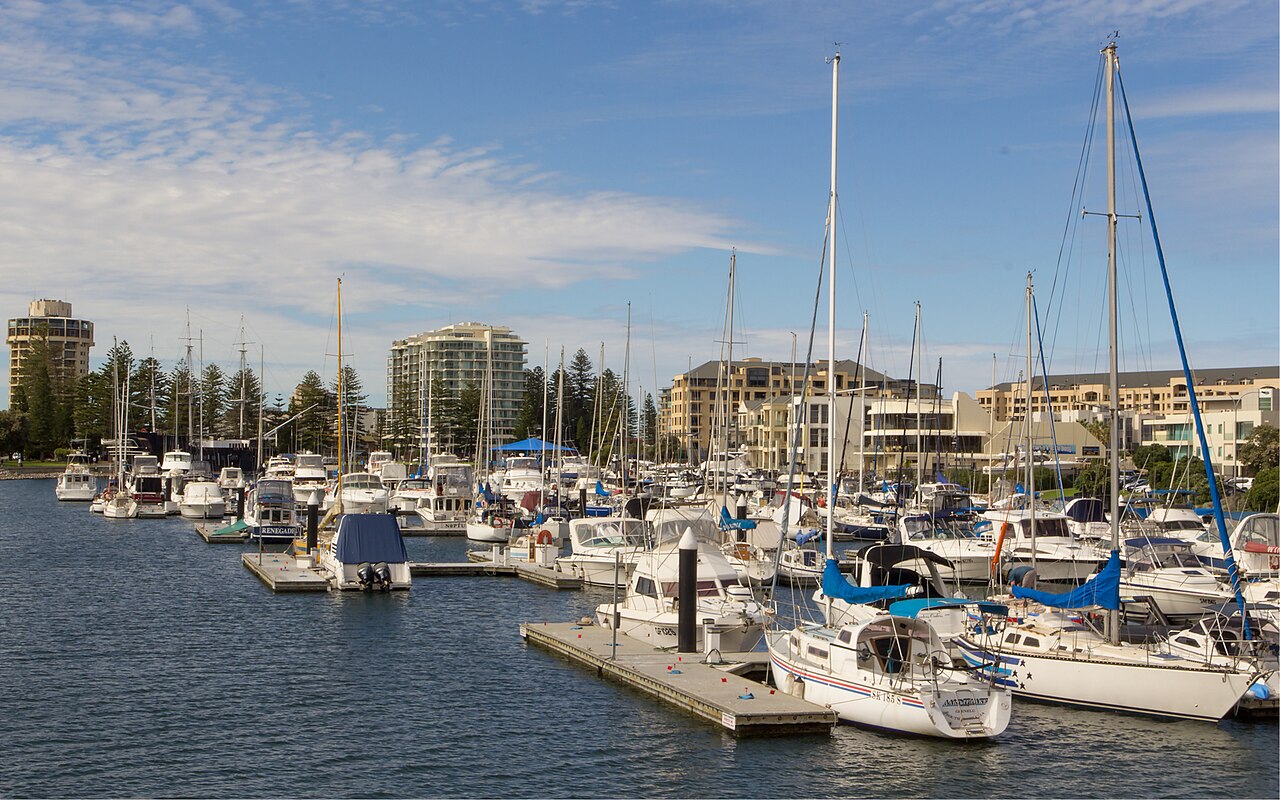
Holdfast Shores marina: “Glenelg marina South Australia.jpg” by Daniel Beale, via Wikimedia Commons, CC BY-SA 3.0.
Marina Pier at dusk (featured image): “Marina Pier HDR (8259096353).jpg” by Ikhwan Zailani yuslim | honestly lazy from Adelaide, South Australia, via Wikimedia Commons, CC BY 2.0.