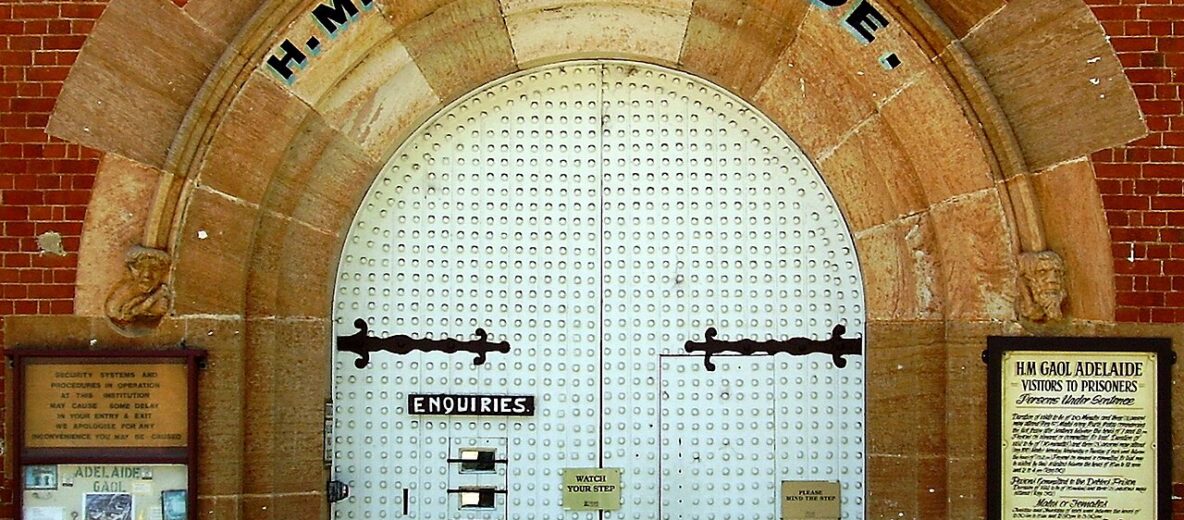
The front gate still carries the words “H.M. Gaol Adelaide” in a sandstone arch above a pair of studded white doors, and they were the last thing a great many people saw of the outside world. For 147 years, from 1841 to 1988, around 300,000 prisoners passed through them, 45 people were executed inside the walls, and their bodies are still buried in the grounds. The Adelaide Gaol is now one of the most atmospheric historic sites in the city: a museum by day, a venue for ghost tours after dark, and, if you believe the stories, still home to a few residents who never left.
This guide covers visiting the Gaol: opening hours and ticket prices, the new way in through Bonython Park, what you will see on a self-guided visit, the guided and ghost tours run after hours, the Escape Cells, the Halloween event, and the story of the place, from the building that helped bankrupt the colony to the hangings and the women who served time here. Prices and hours were checked on the Gaol’s own website in October 2026; treat them as the right order of magnitude if you are reading later.
Adelaide Gaol at a glance
| What | The short answer |
|---|---|
| Where | 18 Gaol Road, Thebarton, on the western edge of the city’s parklands |
| Getting in | Access is only through Bonython Park, from Port Road, while the new Women’s and Children’s Hospital is built next door |
| Hours | 10am to 4pm daily; last entry for self-guided visits 3pm; closed Christmas Day |
| Adult entry | A$18.10 |
| Child (4 to 15) | A$10.90; under-4s free |
| Family | A$49.00 for two adults and two children, or one adult and three |
| Time needed | Up to two hours for a self-guided visit |
| Ghost tours | Run after hours by independent operators on a rotating roster; book with the operator |
| Parking | Free, on site |
| Accessibility | Fully wheelchair accessible, with wheelchairs available; pram friendly |
| Next big event | Halloween Wail at the Gaol, Saturday 24 October 2026, 11am to 3pm |
Why the Adelaide Gaol is worth your time
Plenty of Australian cities have an old gaol you can tour. What makes Adelaide’s unusual is how old it is and how long it stayed in use. Along with Government House, built at the same time, it is one of the two oldest buildings still standing in South Australia, and it was a working prison until 1988, within living memory. You walk through cell blocks built for the colony’s first prisoners and others that held men in the 1980s, and the layers of 147 years sit side by side: colonial stonework, Victorian additions built by the prisoners themselves, and later fittings like the security cameras installed in 1984.
It is also a place where the city’s darkest history is told plainly. The executions are not glossed over: the Mugshot Exhibition sits directly below the wing where many of the condemned were hanged, and you can visit the grave of Elizabeth Woolcock, the only woman ever executed in South Australia, where visitors still leave flowers. It is a sobering visit as much as an entertaining one, and the better for it.
Opening hours, tickets and booking
The Gaol is open from 10am to 4pm every day except Christmas Day. Last entry for a self-guided visit is 3pm, an hour before closing, and you should allow up to two hours to see it properly. You can book online or buy tickets on the day.
| Ticket | Price |
|---|---|
| Adult | A$18.10 |
| Child (aged 4 to 15) | A$10.90 |
| Child under 4 | Free |
| Concession | A$14.70 |
| Senior (with an Australian Seniors Card) | A$14.70 |
| Family (2 adults + 2 children, or 1 adult + 3 children) | A$49.00; extra children A$5.50 each, up to five children |
| Group of 10 or more | A$15.40 per adult, A$9 per child |
Children aged 4 to 15 must be with a paying adult. Concessions are broad, and unusually generous to visitors from overseas: as well as Commonwealth Pensioner Concession, Health Care and Seniors Health Care cards, full-time secondary and tertiary student cards, state Seniors Cards, the South Australian State Concession Card and veterans’ cards, the Gaol accepts international student cards and international concession cards.
On value, it compares well. A family of four is in for A$49, there is free parking, and two hours is a decent visit for the money, especially if you add a picnic in Bonython Park next door.
Getting to the Adelaide Gaol
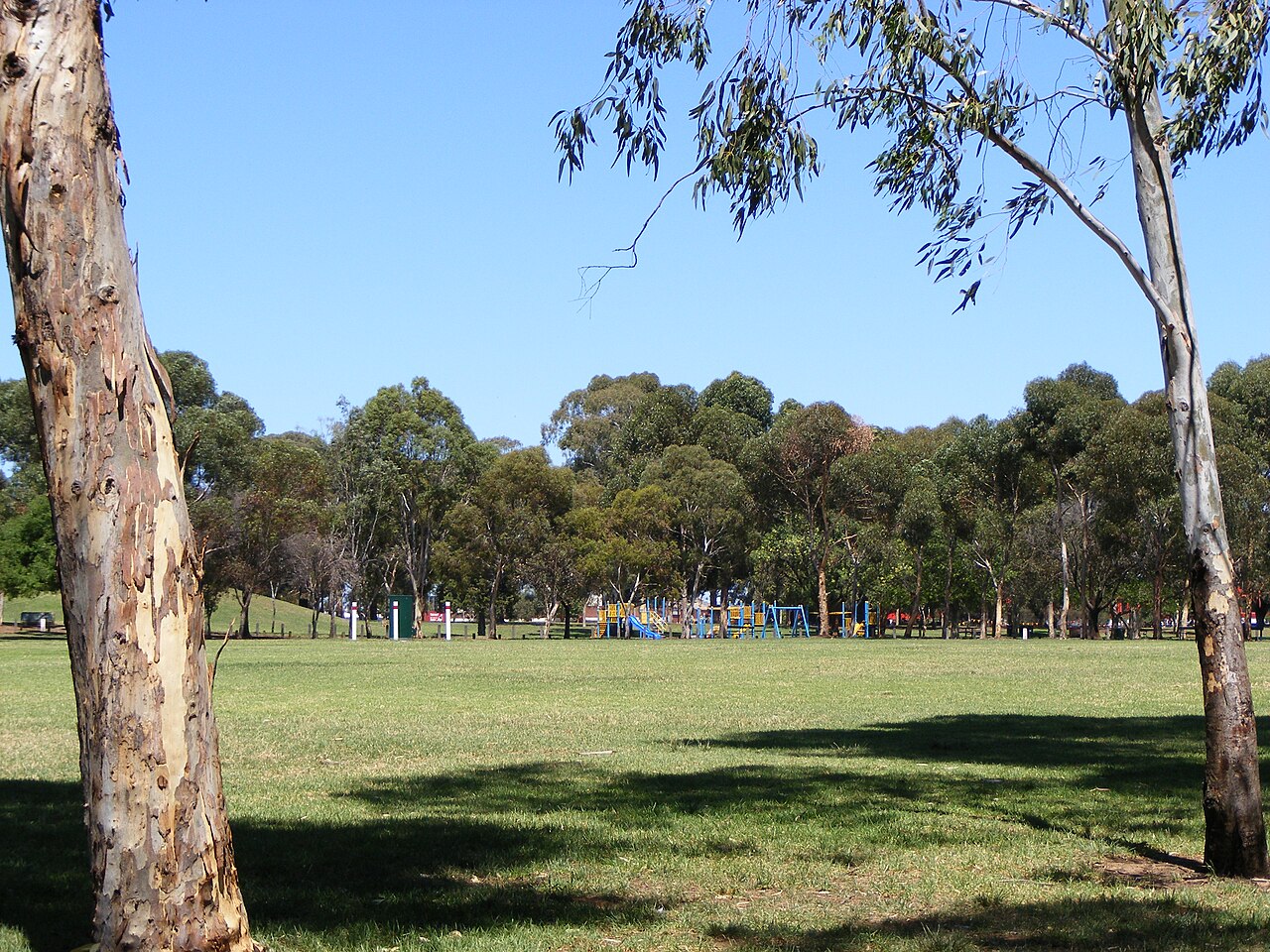
The Gaol sits at 18 Gaol Road, Thebarton, between the River Torrens and Port Road, a couple of kilometres north-west of the city centre. The important thing to know in 2026 is that the only way in is through Bonython Park. The new Women’s and Children’s Hospital is being built right next door, and while that work goes on, everyone, on foot or by car, enters Bonython Park from Port Road and follows the signs to the Gaol. The Gaol itself is open as usual.
- By tram: trams to the Adelaide Entertainment Centre run along Port Road through Thebarton, and the whole route from the city is inside the free tram zone. Hop off at the Port Road stops in Thebarton and walk in through the park.
- By bus: buses stop frequently at Stop 2 Port Road, next to Bonython Park, a five to ten minute walk from the Gaol.
- By car: there is free parking on site for cars, bikes and coaches. Drive into Bonython Park from the intersection of Port Road and Phillips Street, or through the Bonython Park Playspace car park, and follow the signs.
- On foot or by bike: the River Torrens Linear Park path runs past Bonython Park, so you can walk from the Adelaide Oval end of the riverbank in about 40 minutes, or cycle it in 15.
For how the tram and bus fares work, see our guide to Adelaide’s free tram.
What you will see on a self-guided visit
A self-guided visit lets you wander the cell blocks, yards and exhibitions at your own pace, with an online map or a printed one from the front desk. Highlights include:
The cell blocks and the New Building
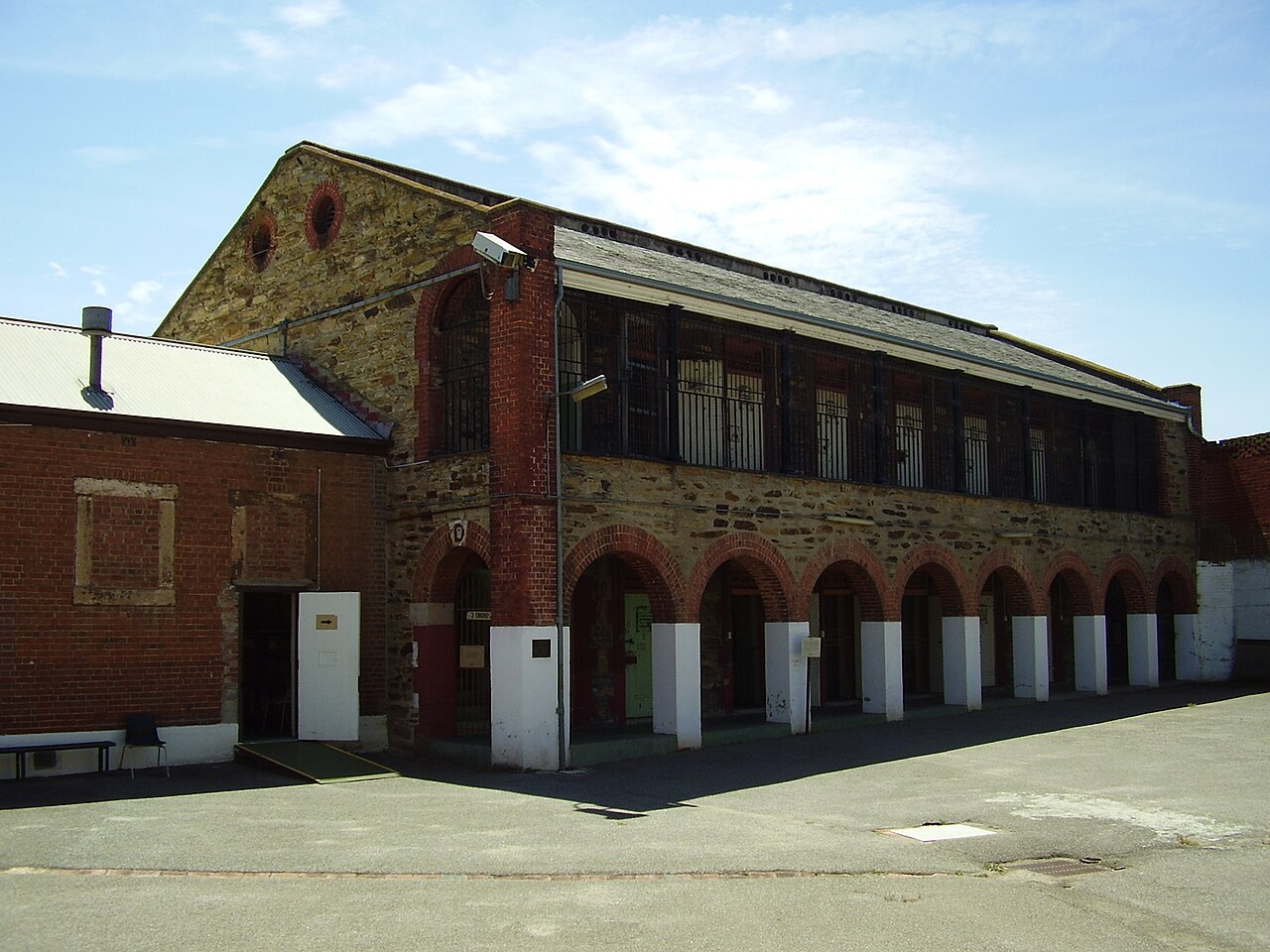
Kingston’s original design was never fully built, and the Gaol grew in fits and starts over its working life. By 1879 it was packed to capacity, and the New Building went up, built with prisoner labour. Walking through, you move between the oldest colonial wings and later additions, and the cells themselves, small, cold and bare, say more about prison life than any panel could.
Cell 18
In 2019 the Gaol worked with the award-winning studio illuminart on an installation that brings some of the Gaol’s most infamous stories to life, built from archival material including oral histories recorded shortly after the prison closed.
The Mugshot Exhibition
Nine prisoners’ mugshots, rediscovered in the Gaol’s archives and never publicly shown before, tell the stories of the people behind them. Many of the nine were hanged in the wing directly above the exhibition, which gives it a weight most museum displays never manage.
The Adelaide Gaol Museum
The hands-on exhibition lets you handle artefacts from the Gaol’s working life: try on handcuffs and leg irons to feel their weight, and have a go at picking the locks to see how hard escape really was. The irons are a lot heavier than they look.
The archaeological dig
A South Australian Museum dig in the Gaol grounds revealed that the site was once a temporary camp for the earliest European settlement of Adelaide, and turned up finds that trace prisoners’ changing work, personal lives and hidden secrets.
The graves
The 45 people executed at the Gaol were buried within its grounds. Elizabeth Woolcock’s grave lies between the inner and outer walls, and visitors often leave flowers there, many in tribute to the belief that she was innocent.
Guided tours, ghost tours and nights at the Gaol
The Gaol does not run its own guided tours. Instead, guided tours are run by independent private operators, chosen for their knowledge of the place, and they usually happen outside normal opening hours. The operators work on a rotating roster, so check the tour calendar on the Gaol’s website to see which tours run on which nights, then book directly with the operator.
Expect a mix of history and ghost stories in the cell blocks after dark, and some operators run longer paranormal investigation nights for those who want to sit in a dark cell and wait. Whether you leave believing in ghosts is up to you. Even for a sceptic, a nineteenth-century gaol after dark is an unnerving place to be, and the best guides are as strong on the documented history as on the legends.
A practical note: ghost tours vary by operator in length, price, minimum age and how hard they lean into the scares, so read the description before you book, particularly if you are bringing teenagers.
Escape Cells
For something more interactive, the Gaol runs escape rooms in old cells, and the ticket includes general entry to the Gaol before or after your session.
- Adult Escape Cells (12 and over), A$43.50 per person: Mitch’s Mate (easy), Wizard’s Prison (medium), and Incarcerated and Infected (hard).
- Kids Escape Cells (8 and over, designed for children to do on their own), A$33.10 per person: The Friendly Ghost (easy), The Captain’s Revenge (medium) and The Junior Detective (hard).
Booking is essential. For a group of friends or a family with children over eight, it turns a museum visit into a proper afternoon out.
Halloween, school holidays and events
The Gaol’s Halloween Wail at the Gaol, one of Adelaide’s longest-running Halloween events, returns on Saturday 24 October 2026, from 11am to 3pm. It is aimed squarely at families: a Fairy Tale Trail through the Gaol with themed spaces inspired by Snow White, Beauty and the Beast, under-the-sea adventures, castles, dragons and the Yellow Brick Road, costumed characters, and Halloween treats for children at each station. Tickets are the standard entry prices (A$18.10 adult, A$10.90 child, A$14.70 concession, A$49 family), Companion Cards are accepted, and fancy dress is encouraged. Book ahead and select the right date.
The Gaol also runs school holiday activities, a History Day, education tours mapped to the Australian Curriculum and SACE, birthday parties, and venue hire. Check the website’s what’s on page before you visit; our guide to Adelaide school holiday activities has more ideas for the same weeks.
The story of the Adelaide Gaol
The gaol that bankrupted a colony
When the first colonists arrived in 1836, prisoners were held in irons aboard ships, and later in a ramshackle wooden lock-up near Government House so flimsy that inmates escaped through gaps in the walls. In 1840 Governor George Gawler commissioned the surveyor and architect George Strickland Kingston to design a proper gaol, based on London’s Pentonville prison and radical for its time. The estimate was £17,000. By 1841, with only half the work done, the bill had already reached £16,000, and the final cost was more than double the original quote.
The blowout helped tip the young colony into bankruptcy. Gawler was recalled to England and replaced by George Grey, who halted the work, and construction languished for more than six years. Kingston’s full design was never completed. The first public hanging at the site took place in November 1840, while the Gaol was still a building site.
Life inside
For most of its history the Gaol held both men and women. It filled and refilled; by 1879 it was so crowded that prisoners were set to work building the New Building to hold more of themselves. Some prisoners became local legends. Sarah Francisco, known as Saucy Sarah, a Port Adelaide woman with a drinking problem, was convicted 295 times, spent more than sixteen years in the Gaol on short sentences, and spent Christmas Day inside twelve times. Had she served every sentence in full, it has been calculated, she would have been locked up for more than 180 years.
The hangings
Sixty-six people were hanged in South Australia, and 45 of those executions took place at the Gaol: seven outside the front door, thirteen in the north-west lane, twenty-one in the New Building and four in the Hanging Tower. Once a death sentence was passed, the prisoner was segregated and watched around the clock, and had 28 days to appeal; in earlier years, execution followed 21 days after sentence. The last hanging in South Australia took place here in 1964.
The case that still draws people to the Gaol is Elizabeth Woolcock’s. Married at 20 to a miner who turned out to be a violent alcoholic, she tried to leave him several times and became addicted to morphine after a suicide attempt. When he died suddenly, rumours of poisoning began, despite three different doctors having given him different medicines, including arsenic, in the weeks before his death. The jury took less than half an hour to convict her of murder and recommended mercy because of her youth. The recommendation was ignored. Found guilty on 4 December 1873, she was hanged on 30 December, the date set by the judge to avoid an execution on Christmas Day. She was 25, and remains the only woman ever executed in South Australia.
The closing years
Women prisoners were moved to the new Adelaide Women’s Prison at Northfield in 1969, and for the first time men occupied the whole institution. By the early 1980s the decision had been made to close it. The Adelaide Remand Centre opened in Currie Street in 1984 and a medium-security prison at Mobilong, near Murray Bridge, in 1987, prisoners were gradually moved out, and the Gaol was officially decommissioned on 4 February 1988. For more on the colony these walls were built for, see our history of Adelaide.
Visiting with children, and accessibility
The Gaol works well for school-age children, especially the hands-on museum and the Escape Cells for over-eights. Younger children may find the subject matter heavy, and some parents will want to steer around the execution history; the Halloween Wail and school holiday programs are the gentlest introduction. Under-fours are free, the site is pram and stroller accessible, and there are baby-changing facilities near the entrance.
The site is fully wheelchair accessible, there are accessible toilets, and wheelchairs are available for hire; ask the staff. Guide dogs and companion dogs are welcome. The Mugshot Canteen sells coffee, wraps, toasties and hot dogs, and is open 8am to 3pm on weekdays and 10am to 3pm at weekends, so eat before 3pm if you are arriving late. There is a souvenir shop with books on South Australian crime and history, picnic tables outside, and toilets near the shop and within the site. The whole site is non-smoking.
Tips for your visit
- Arrive by 2pm. Last entry is 3pm and the site closes at 4pm, and two hours is about right; a 3pm arrival means rushing.
- Follow the Bonython Park signs. Do not head for the old Gaol Road entrance on the hospital side; while construction continues, everyone comes in through the park from Port Road.
- Eat before 3pm. The Mugshot Canteen stops serving at 3pm, an hour before the Gaol closes.
- Want a guide? Plan ahead. Daytime visits are self-guided. If you want a guided history tour or a ghost tour, check the operators’ calendar on the Gaol’s website before you choose your day.
- Dress for the weather. Stone cell blocks hold the cold in winter, and the open yards offer little shade in summer.
- Read before you go. Ten minutes with the Gaol’s online history pages, especially the stories of Elizabeth Woolcock and Saucy Sarah, makes the cells far more vivid.
Is the Adelaide Gaol worth visiting?
- History lovers: yes, absolutely. It is one of the oldest buildings in the state and its story, from colonial bankruptcy to the last hanging, is told without sugar-coating.
- Families with children over about eight: yes, especially with an Escape Cell session added and a run around the Bonython Park playground afterwards.
- Ghost tour fans: yes, but book early, pick your operator carefully, and remember the history is the real draw.
- Visitors short on time: if you only have a day or two in Adelaide, North Terrace’s museums and galleries are closer and free. The Gaol is the better pick on a second or third day, or a rainy one.
What is not worth it: arriving at 3:15pm and expecting to get in, or bringing very young children to a night-time ghost tour.
Combine your visit
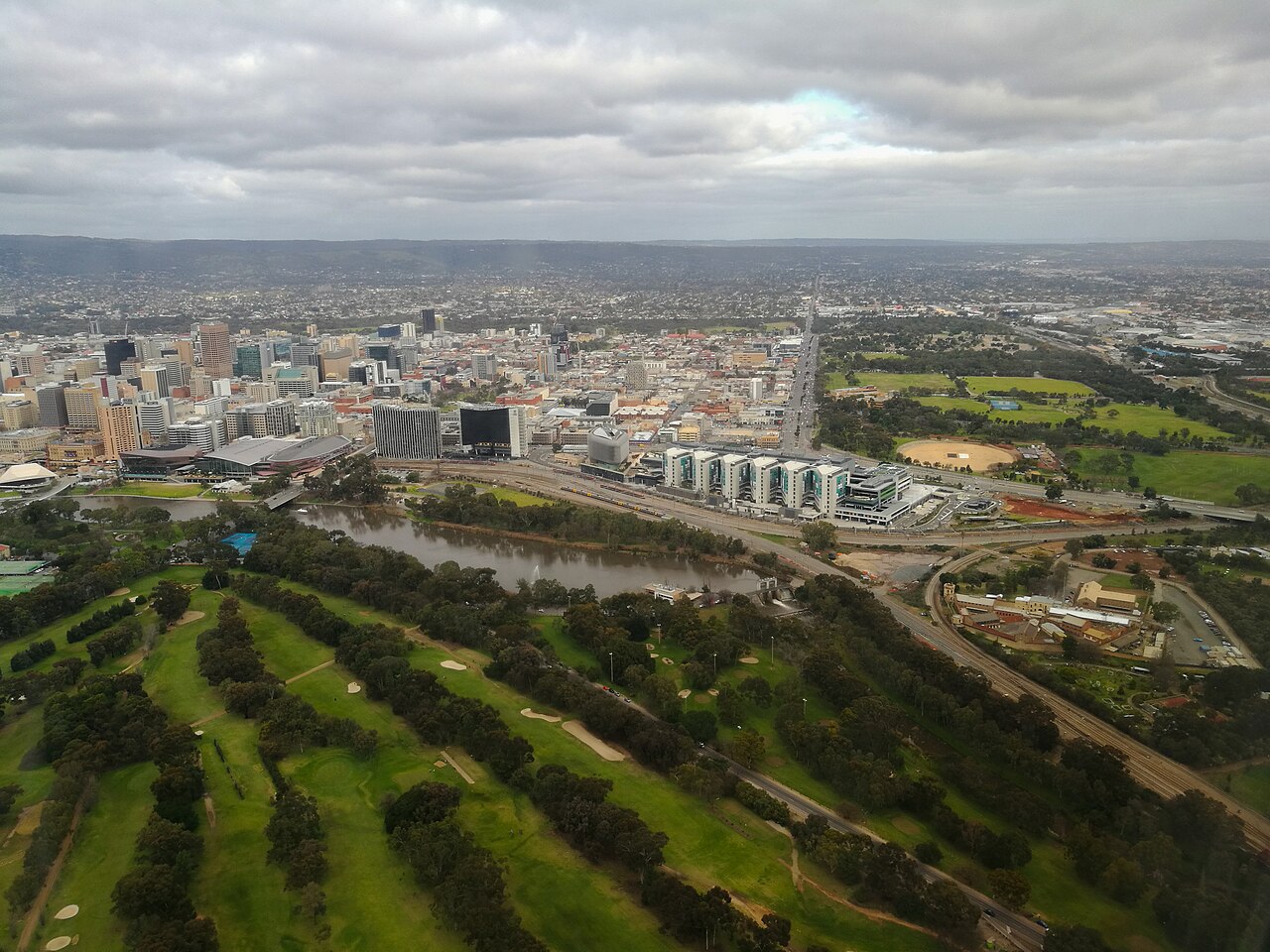
The Gaol sits in a green corner of the city that is easy to turn into a half-day out. Bonython Park, which you walk through to get in, has open lawns, big gum trees and a playspace; our guide to Adelaide’s playgrounds and parks has more. The River Torrens path runs right past, so you can walk or cycle back towards Adelaide Oval and the city along the river. For more of Adelaide’s colonial past, head to North Terrace, where the South Australian Museum, the State Library and the Art Gallery sit side by side, or out to Port Adelaide’s heritage precinct. And on a wet day, the Gaol is one of the better options on our list of rainy day activities in Adelaide, since much of the visit is indoors.
Adelaide Gaol FAQ
How much does it cost to visit the Adelaide Gaol?
Entry costs A$18.10 for adults, A$10.90 for children aged 4 to 15, A$14.70 for concessions and seniors, and A$49 for a family. Under-4s are free.
What are the Adelaide Gaol opening hours?
10am to 4pm every day except Christmas Day, with last entry for self-guided visits at 3pm.
How do I get into the Adelaide Gaol at the moment?
Through Bonython Park, from Port Road, while the new Women’s and Children’s Hospital is built next door. Drivers enter from the Port Road and Phillips Street intersection or the Bonython Park Playspace car park. Parking is free.
Does the Adelaide Gaol run ghost tours?
Yes, through independent tour operators who run guided and ghost tours, usually after normal opening hours, on a rotating roster. Check the calendar on the Gaol’s website and book with the operator directly.
How long do you need at the Adelaide Gaol?
Up to two hours for a self-guided visit, longer if you add an Escape Cell session or lunch at the Mugshot Canteen.
How many people were executed at the Adelaide Gaol?
Forty-five, of the 66 people hanged in South Australia. They are buried within the Gaol grounds.
When did the Adelaide Gaol close?
It was officially decommissioned on 4 February 1988, after 147 years in use.
Is the Adelaide Gaol suitable for kids?
Yes for school-age children, who enjoy the hands-on museum and the Escape Cells for over-eights. The family-friendly Halloween Wail is on Saturday 24 October 2026.
Related Adelaide Guides
- History of Adelaide — the colony the Gaol was built for.
- Adelaide Architecture — Kingston’s other buildings and the city’s colonial stone.
- Adelaide Museums & Galleries — the rest of the city’s collections.
- Adelaide Hidden Gems — more places most visitors miss.
- Adelaide Culture — the arts and heritage hub.
- Adelaide with Kids — family days out across the city.
- River Torrens — the riverside path past the Gaol.
- Rainy Day Activities — indoor ideas for wet days.
Photo Credits
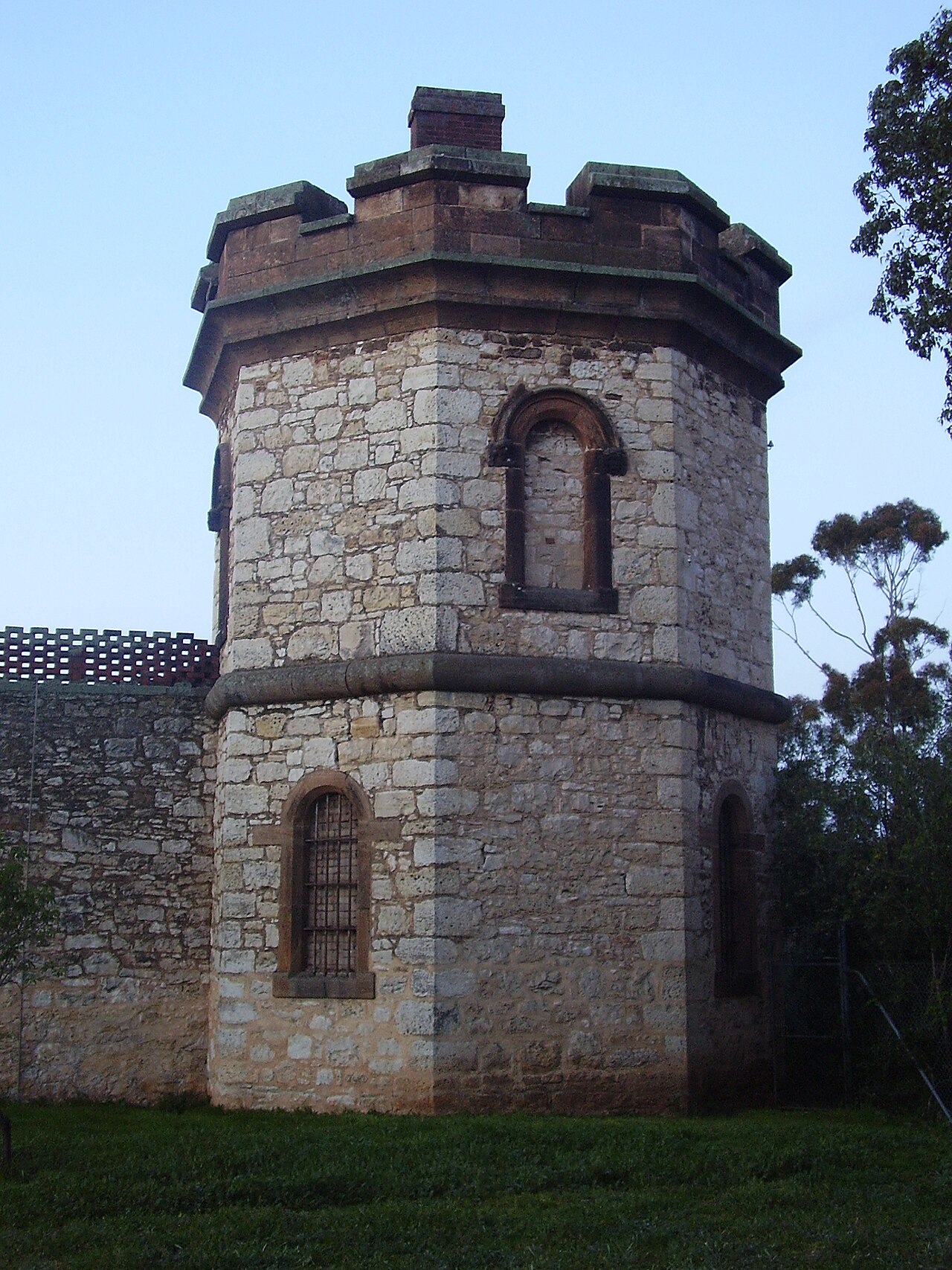
A tower on the Gaol wall, 2007: “Adelaide gaol tower.jpg” by Peripitus, via Wikimedia Commons, CC BY-SA 4.0.
Bonython Park: “Bonython Park – Adelaide.jpg” by Peripitus, via Wikimedia Commons, CC BY-SA 3.0.
A cell block, 2007: “Adelaide gaol cell block.jpg” by Peripitus, via Wikimedia Commons, CC BY-SA 4.0.
The view over Bonython Park, 2017: “Looking from over Bonython Park.jpg” by Clintpix, via Wikimedia Commons, CC BY-SA 4.0.
The main gate (featured image): “Adelaide Gaol main door.JPG” by Peripitus, via Wikimedia Commons, Public domain.