Here’s the honest truth about Adelaide in summer: it’s hot, it’s bright, and it’s the most alive this city ever gets. From December through February the days stretch long and golden, the beaches fill up, and there’s a festival or a cricket match or a twilight market on most nights of the week. I grew up here, and summer is the season I’d happily show off to anyone, as long as you come prepared for the heat and pick your moments. For the wider picture before you commit, our complete Adelaide travel guide covers the lot; this piece is all about the warm months.
I’ll give you the weather straight, the events worth planning around, the beaches I actually swim at, and the heat-smart tricks locals use without thinking. If you’re still weighing up the seasons, our guide to the best time to visit Adelaide sets summer against the rest of the year.
Adelaide summer weather, honestly
Let’s talk numbers first, because summer here is warmer and drier than a lot of visitors expect. December averages a high around 29°C with overnight lows near 16°C. January and February both sit a touch warmer, highs around 30°C and lows near 17°C. Those averages are pleasant enough, but they hide the spikes: a proper heatwave can push the mercury past 40°C for two, three, even four days straight, and when that happens the whole city slows down and heads for air conditioning or the water.
The thing that genuinely sets Adelaide apart is the dryness. We get the lowest humidity of any Australian capital, which means even a 35°C day feels more bearable here than the same temperature in muggy Brisbane or Sydney. Rain in summer is sparse, you might get the odd dramatic thunderstorm, but mostly the sky stays a relentless blue. The flip side is that everything goes brown and crisp, and fire risk climbs in the hills and bush.
Two more things worth knowing. The daylight is long, sunrise around 6am, light in the sky past 8.30pm, so you’ve got hours to play with. And on a lot of hot afternoons a sea breeze rolls in off the gulf and drops the temperature several degrees by evening. We call it the Glenelg doctor, and it’s the reason warm summer nights here are so good for eating outside. The sea itself warms to a swimmable 20 to 21°C by January, cool on entry but lovely once you’re in.
Adelaide summer weather: what to pack and expect
Because the days are hot and the evenings can cool right off, you’ll want layers even in January. A light jumper for after the doctor blows in saves you more often than you’d think. Sun protection is non-negotiable, the UV index here regularly hits extreme in summer, far higher than the air temperature would suggest, so a hat, sunglasses and high-SPF sunscreen go on early and get reapplied. I’ve put together a full Adelaide packing list if you want the complete rundown, but for summer the short version is: swimmers, a hat, reef-safe sunscreen, a refillable water bottle and one warm layer for the night breeze.
Beach life: where I actually swim
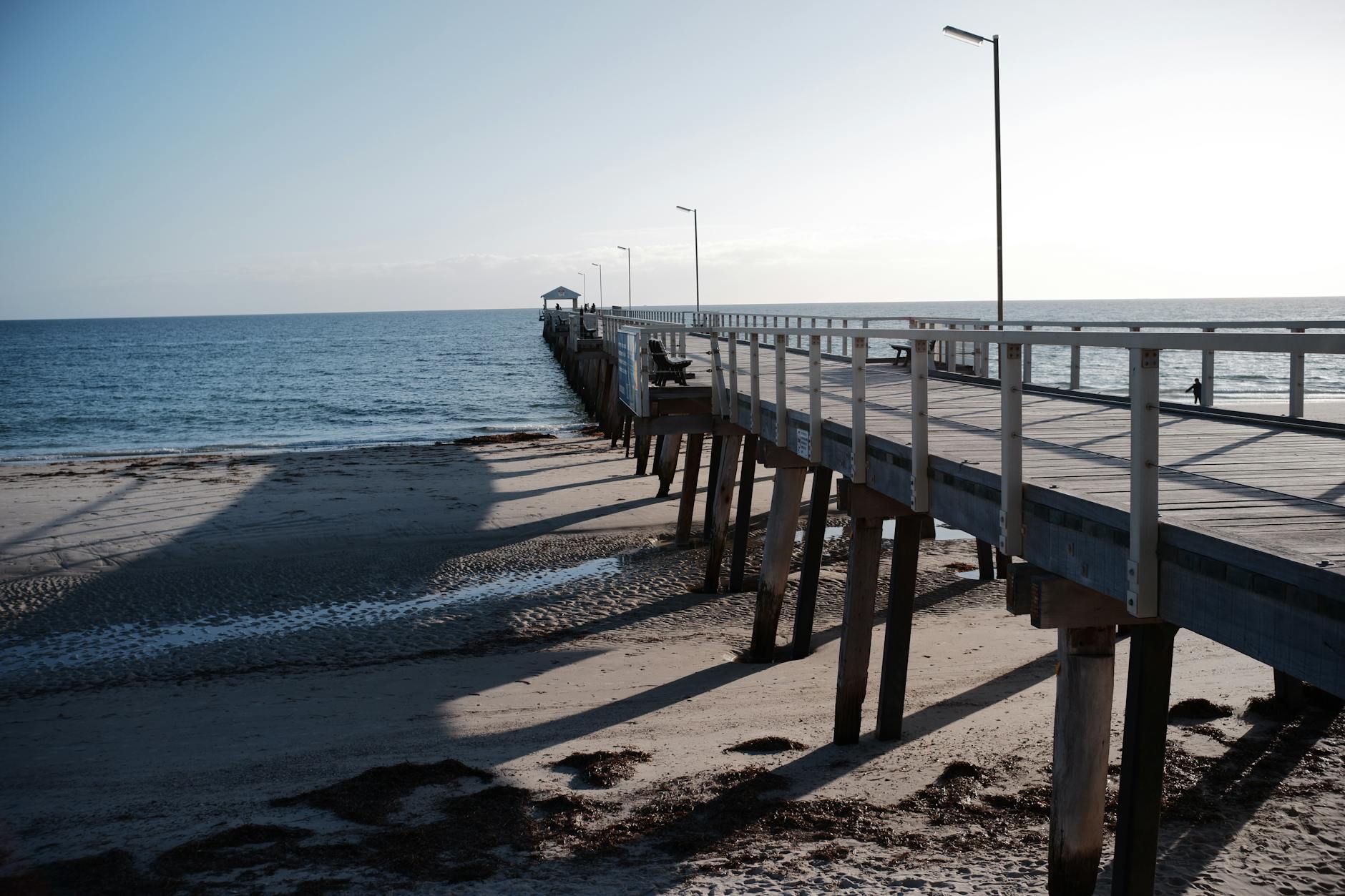
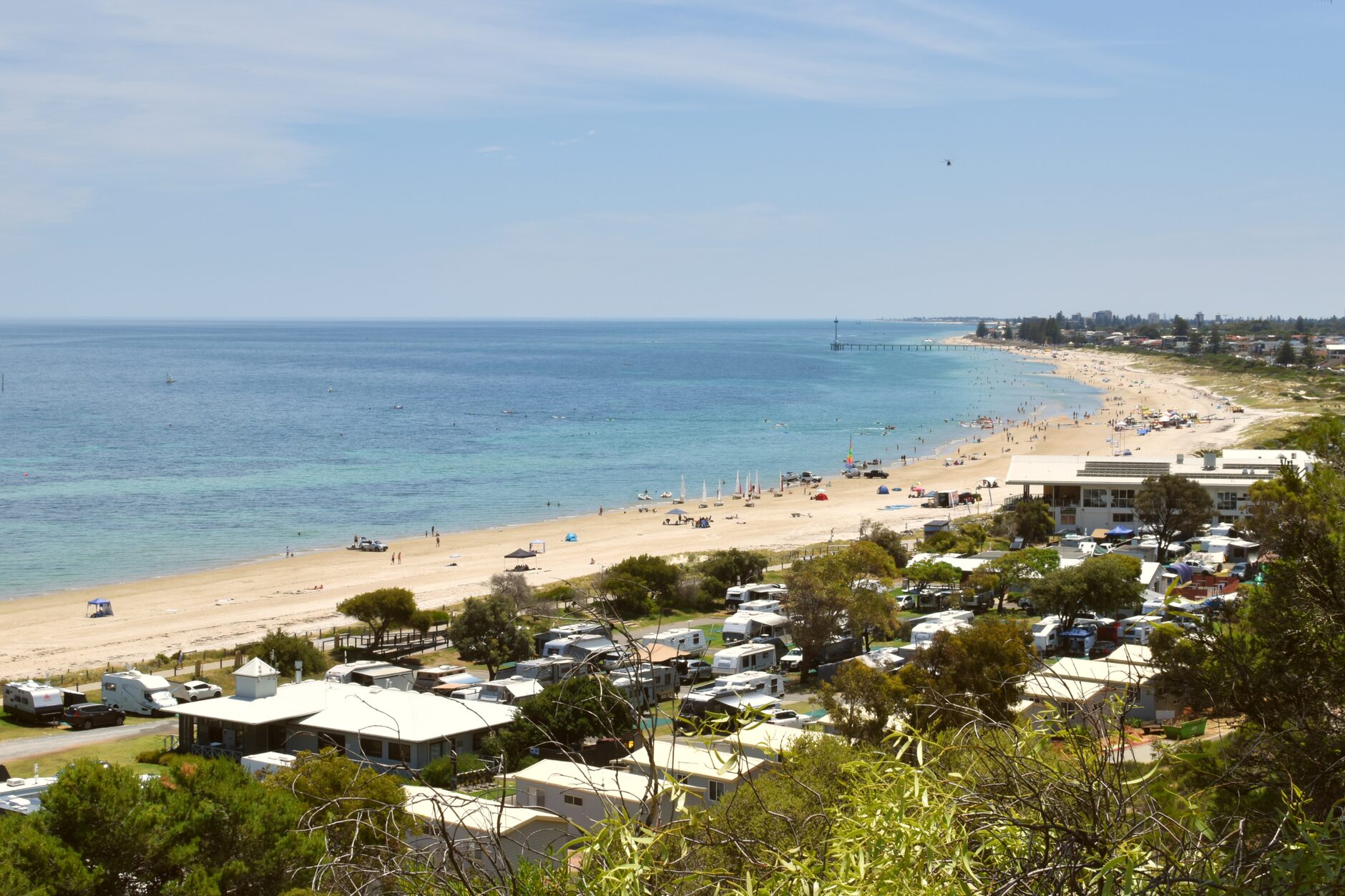
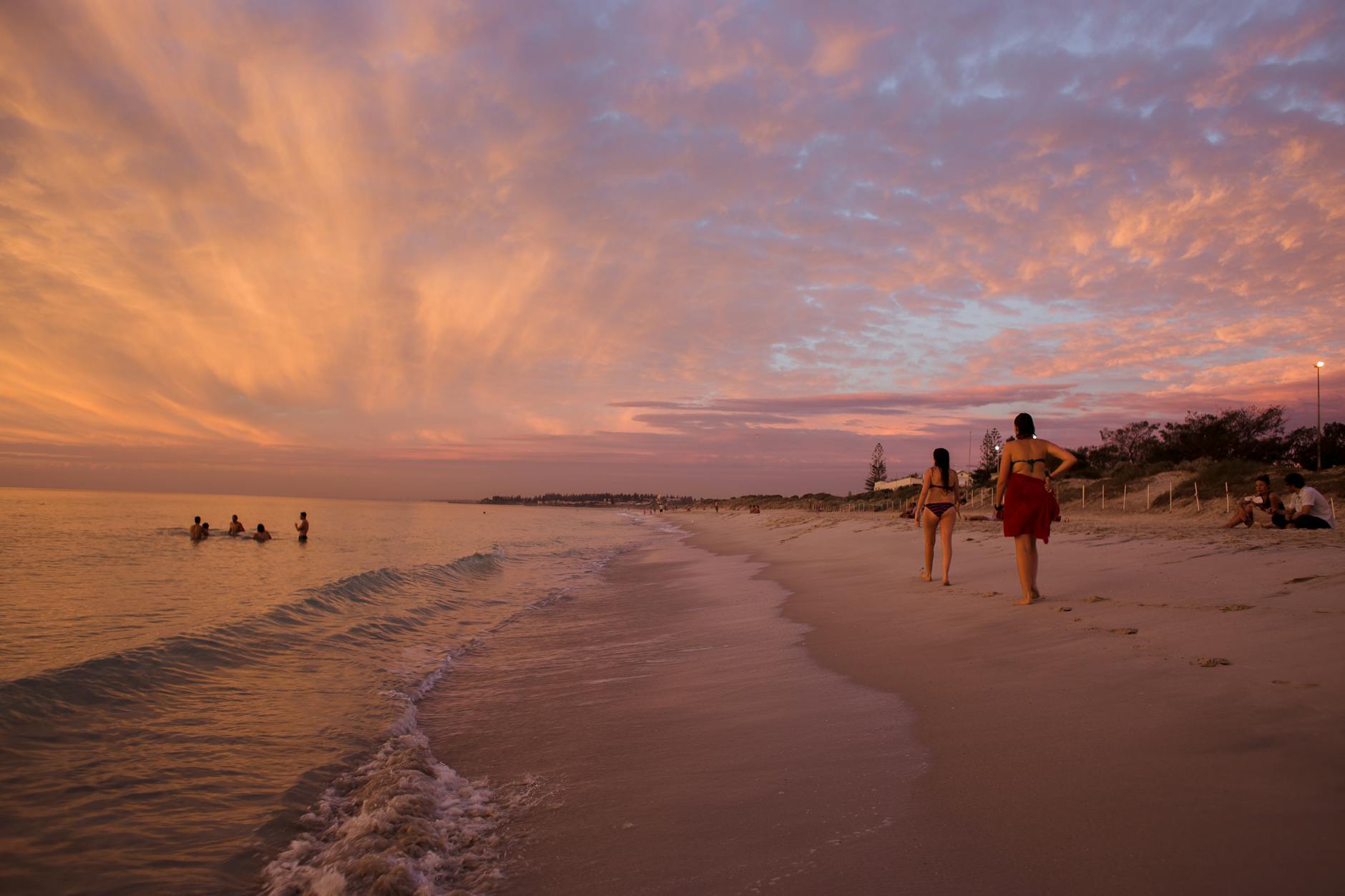
Summer in Adelaide is a beach city’s summer, and the best part is how easy the coast is to reach. Glenelg is the obvious starting point and deserves its reputation: hop the tram from Victoria Square in the city and you’re at the sand in about 20 minutes, walking distance from the jetty, the swimming flags and a strip of pubs and gelato shops. It gets busy on a hot weekend, but the swimming is safe and the sunset over the gulf is the kind of thing that sells postcards. If you’re thinking of basing yourself out there, our guide to Glenelg accommodation walks through the options.
Henley Square, a little north, is my pick for a relaxed swim and a meal with your feet practically in the sand. Brighton, to the south, has a gentler, more local feel and its own jetty. But if you’ve got a car and want the good stuff, keep driving south. Maslin Beach, Port Willunga with the haunting shipwreck timbers of the Star of Greece restaurant perched above it, and Sellicks Beach where you can still drive onto the sand, these are quieter, more dramatic, and worth the half-hour out of town. For the full ranking and which beach suits which mood, see our guide to the best beaches in Adelaide.
Sunset is the main event
Adelaide faces west, so summer sunsets over the water are spectacular and reliable. My standing recommendation is to time a beach afternoon so you’re still there at golden hour, grab fish and chips, find a spot on the sand at Glenelg or Henley, and watch the sky do its thing as the doctor cools the air. It costs nothing and it’s the most Adelaide thing I can think of.
Adelaide summer events worth planning around
This is where summer really earns its keep. The calendar is stacked, and a few events are big enough to plan a whole trip around.
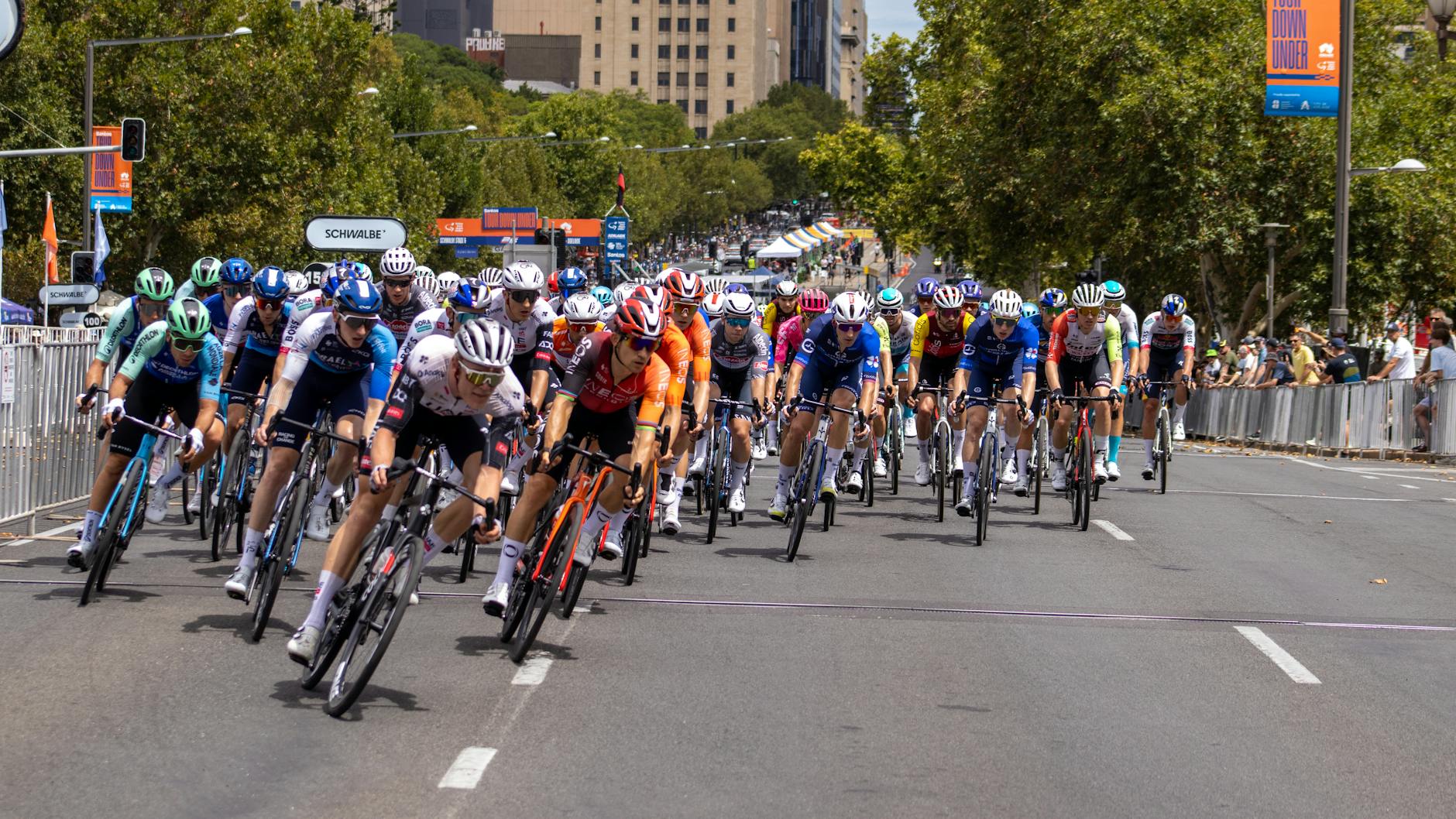
January belongs to the Santos Tour Down Under, the first major race on the world cycling calendar. For eleven days the peloton tears through the Adelaide Hills, the Barossa and the coast, and the city throws a party around it with street events and a buzzing finish line. Even if you don’t follow cycling, the atmosphere is infectious and the regional stages are a great excuse to see the countryside.
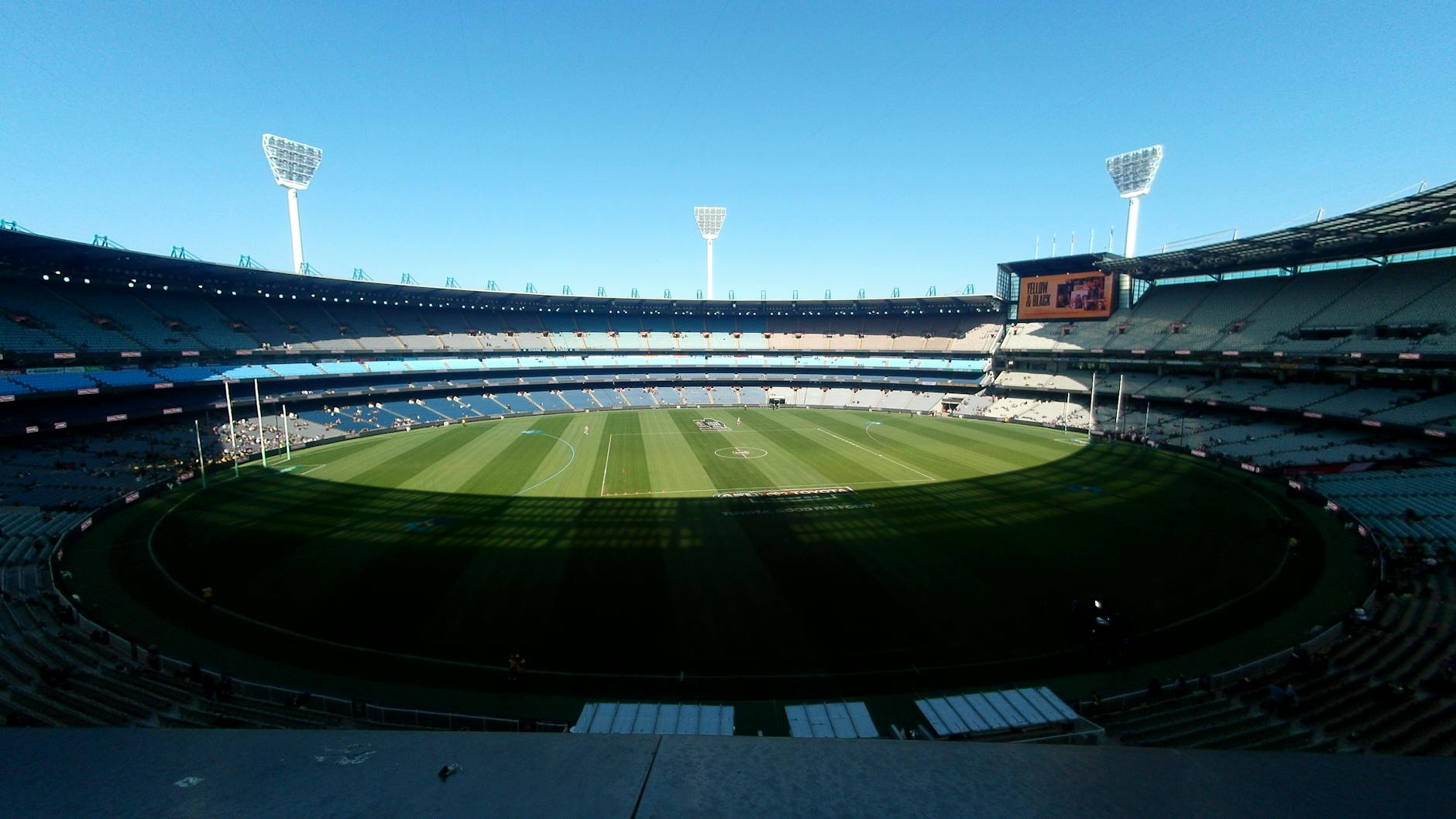
December brings Test cricket to Adelaide Oval. Adelaide is now Australia’s pre-Christmas Test venue, locked in until 2031, and in 2026 Australia plays New Zealand there from 17 to 21 December. The ground pioneered day-night Tests with the pink ball in 2015, and when the fixture is a day-nighter, watching the final session under lights as the heat fades is a genuinely magic way to see the game. The Adelaide Strikers’ Big Bash games fill the summer evenings too, including a New Year’s Eve match with fireworks. Our guide to cricket at Adelaide Oval has the fixtures, tickets and tips for a day on the Hill. It’s one of the prettiest grounds in the world and worth a visit for the architecture alone.
New Year’s Eve sees fireworks over the riverbank and Elder Park, an easy free night out in the heart of the city. Through January and February the twilight markets and outdoor cinemas pop up everywhere, the Botanic Garden, the parklands, Glenelg, screening films under the stars once the worst of the heat has passed.
And then the big one starts building. The Adelaide Fringe, the second-largest fringe festival in the world after Edinburgh, opens in mid-February and runs into March, turning the parklands and laneways into a sprawl of pop-up venues, comedy, circus and late-night chaos. The festival proper, WOMADelaide and the rest of what locals call Mad March really kick off late summer into autumn, so if you’re here in February you catch the opening swell of it. Our Adelaide Fringe guide tells you how to do it properly, and for the full season calendar see our rundown of Adelaide events and festivals.
What to do when it’s too hot for the beach
Some summer days are simply too fierce for the sand, and that’s when you lean on the city’s indoor and early-morning options. Here’s how I’d structure a scorcher.
Go early, before the heat lands
Get your outdoor activity done in the cool of the morning. A sunrise walk up the Waterfall Gully to Mount Lofty track, or a wander through the gorges and waterfalls of Morialta Conservation Park, is glorious before 9am and miserable by midday. Same goes for a riverbank stroll or a lap of the Botanic Garden, which opens around 7.15am and is at its best when the dew is still on the lawns.
Hide from the midday sun
Midday is for air conditioning, and Adelaide’s free cultural institutions on North Terrace are perfect for it. The Art Gallery of South Australia, the South Australian Museum and the State Library are all free to enter and blissfully cool, you could lose three hours in the gallery’s collection alone. The Adelaide Zoo is another good hot-day option, with plenty of shade and the only giant pandas in the southern hemisphere.
Escape to higher, cooler ground
One of Adelaide’s quiet advantages is that cooler air is half an hour away. The Adelaide Hills sit several degrees below the plains, so a wine-region day up around the cellar doors and the leafy villages is a smart move on a hot afternoon. As the sun drops, twilight at the Botanic Garden or a riverbank dinner makes the most of those long, warm evenings.
Heat-smart tips from a local
A few things I do automatically in summer that visitors often miss. Hydrate constantly, the dry air dehydrates you faster than you notice, so carry water everywhere; Adelaide tap water is perfectly good to refill from. Treat the sun seriously: the UV here is brutal even on a mild day, so cover up and reapply sunscreen rather than trusting the temperature reading.
Plan your outdoor time for early morning or late afternoon and surrender the middle of the day to shade or air conditioning. If you’re heading into the hills or the bush, check for total fire ban days before you go, on a catastrophic fire-danger day you simply shouldn’t be out there, and some parks close. Expect the beaches to be packed on hot weekends, so go early for a parking spot, or pick a quieter southern beach. And book your accommodation well ahead if you’re coming in February or March, because festival season sends rooms scarce and prices climbing across the city. The wider Adelaide travel tips guide has more of this practical stuff in one place.

Is summer a good time to visit Adelaide? My honest verdict
Yes, with one condition: come for the energy, not for gentle weather. If you want festivals, beaches, long evenings, cricket and a city in full party mode, summer is unbeatable and there’s simply more on than any other season. The trade-offs are real heat, peak-season prices in February and March, and the need to plan your days around the temperature rather than just rolling out the door.
If you’d rather have mild days and thinner crowds, the shoulder seasons are kinder. Our look at Adelaide in autumn covers the cooler, festival-heavy back half of Mad March, which many locals quietly think is the best time of all. But for sheer summer fun, if you’re the type who plans their day around a swim and a sunset, December to February is glorious.
A suggested Adelaide summer day
To make it concrete, here’s a hot-weather day I’d happily hand a visitor. Start early with a sunrise climb up to Mount Lofty Summit for the view back across the city to the sea, beating the heat entirely. Back in town, take a free loop bus to North Terrace and spend the hot middle of the day in the air-conditioned cool of the Art Gallery and the Museum. As the worst of the heat eases mid-afternoon, tram out to Glenelg, swim while the water’s warm, then claim a patch of sand with fish and chips for sunset as the Glenelg doctor cools the evening. Finish at a twilight market or an outdoor cinema back in the parklands. If you want to thread this into a longer trip, our 3-day Adelaide itinerary slots the highlights together day by day.
Frequently asked questions
How hot does Adelaide get in summer?
Summer days in Adelaide average around 29 to 30°C from December to February, with overnight lows near 16 to 17°C. Heatwaves can push temperatures past 40°C for several days at a time. The big upside is the dryness: Adelaide has the lowest humidity of any Australian capital, so the heat feels more bearable than the same temperature in more humid cities.
Can you swim at Adelaide beaches in summer?
Yes. The sea warms to a swimmable 20 to 21°C by January, cool on entry but comfortable once you’re in. Glenelg, Henley and Brighton have patrolled swimming areas and are easy to reach, with Glenelg just a 20-minute tram from the city. Quieter southern beaches like Maslin, Port Willunga and Sellicks are worth the short drive for fewer crowds.
What events are on in Adelaide over summer?
Plenty. January brings the Santos Tour Down Under cycling race, December brings the Adelaide Test, now locked in as Australia’s pre-Christmas Test, and there are New Year’s Eve fireworks, twilight markets and outdoor cinemas throughout. The Adelaide Fringe, the world’s second-largest fringe festival, opens in mid-February and runs into March, with the full Mad March festival season carrying on into autumn.
What should I pack for an Adelaide summer?
Swimmers, a wide-brim hat, sunglasses and high-SPF sunscreen are essential, as the UV is extreme even on milder days. Bring a refillable water bottle for the dry heat, and pack one light layer for the evenings, when a sea breeze known as the Glenelg doctor often cools things down noticeably after a hot day.
Is summer the best time to visit Adelaide?
It depends on what you want. Summer is the most vibrant season, with festivals, beaches, cricket and long warm evenings, so it’s ideal if you want energy and events. If you’d prefer milder weather and smaller crowds, autumn or spring are gentler, and accommodation is cheaper outside the February and March festival peak.
How do I cope with the heat in Adelaide?
Plan outdoor activities for early morning or late afternoon and spend the hot middle of the day indoors, the free North Terrace museums and galleries are air-conditioned and perfect for it. Hydrate constantly, stay sun-safe, and on extreme days head for the cooler Adelaide Hills or the water. Always check for total fire ban days before heading into the bush.