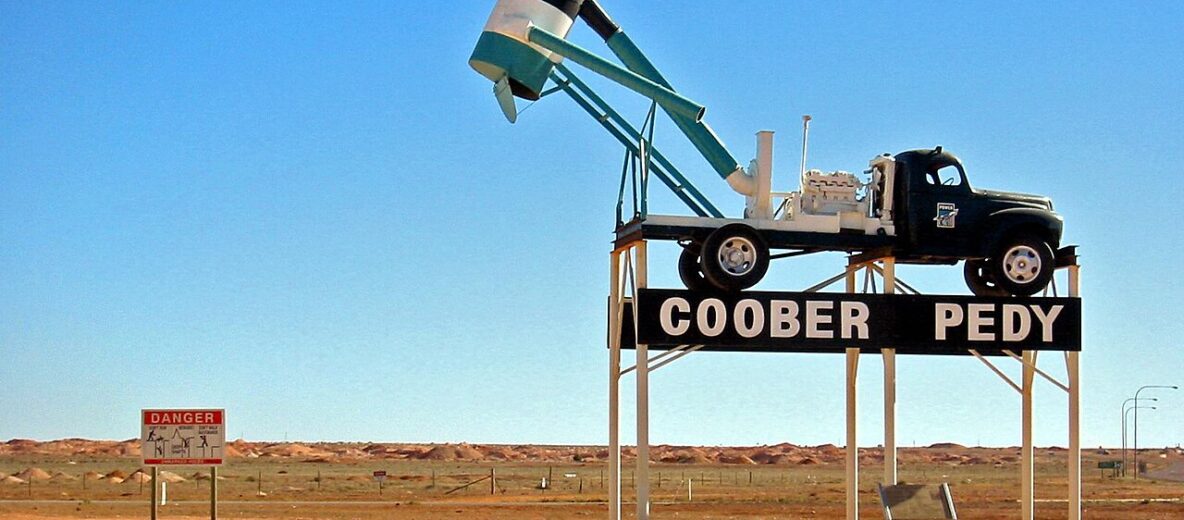
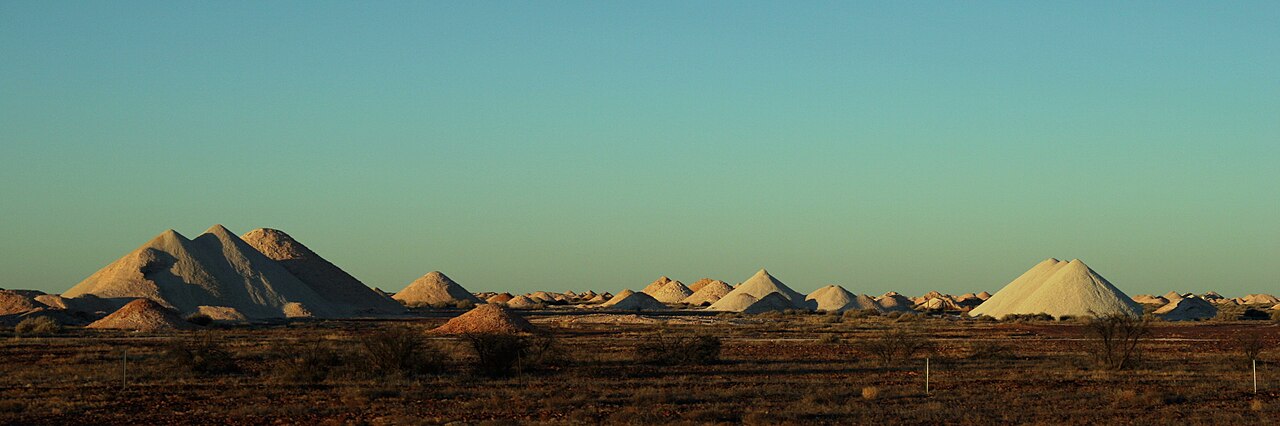
The first thing you notice driving into town is not the town at all. It is the hills of pale spoil on both sides of the Stuart Highway: thousands of them, each one the dirt hauled up from a single opal shaft, spread across the gibber like a field of giant anthills. Then come the ventilation pipes poking out of low rises, and you realise people are living inside the hills. Coober Pedy is a mining town of dugout homes, underground churches and a sign warning you not to walk backwards, and it sits 846km north of Adelaide in some of the hottest, driest country in South Australia.
This guide covers how to get there from Adelaide by car, plane, coach or train, how long to stay, the underground sights worth your time (and the ones that are not), the Kanku-Breakaways and the Dog Fence, where to sleep underground, when to go and how to stay safe around the mine fields. Prices and opening hours were checked in November 2026 against the operators’ own sites, the District Council of Coober Pedy and National Parks and Wildlife Service South Australia; treat them as the right order of magnitude and check before you travel, because small-town hours change with the season.
Coober Pedy at a Glance
| What | The short answer |
|---|---|
| Where | On the Stuart Highway, 846km north of Adelaide and 685km south of Alice Springs |
| Drive from Adelaide | A very long day; most people break it at Port Augusta or further north |
| Coach | Greyhound, daily, about 11 hours 15 minutes overnight; fares from A$259 |
| Fly | Rex, Adelaide to Coober Pedy; one-way fares from A$309 in November 2026 |
| Train | Only The Ghan Expedition (Darwin to Adelaide) stops here |
| Time to allow | Two nights in town, plus the travel days |
| Kanku-Breakaways entry | A$13.50 per vehicle (A$11.20 concession), permit from the council |
| Free things | The Umoona museum, the noodling area, the Big Winch lookout, the churches’ exteriors |
| Best months | April to October; summer means daily highs in the mid-30s |
Why Coober Pedy Is Worth the Trip
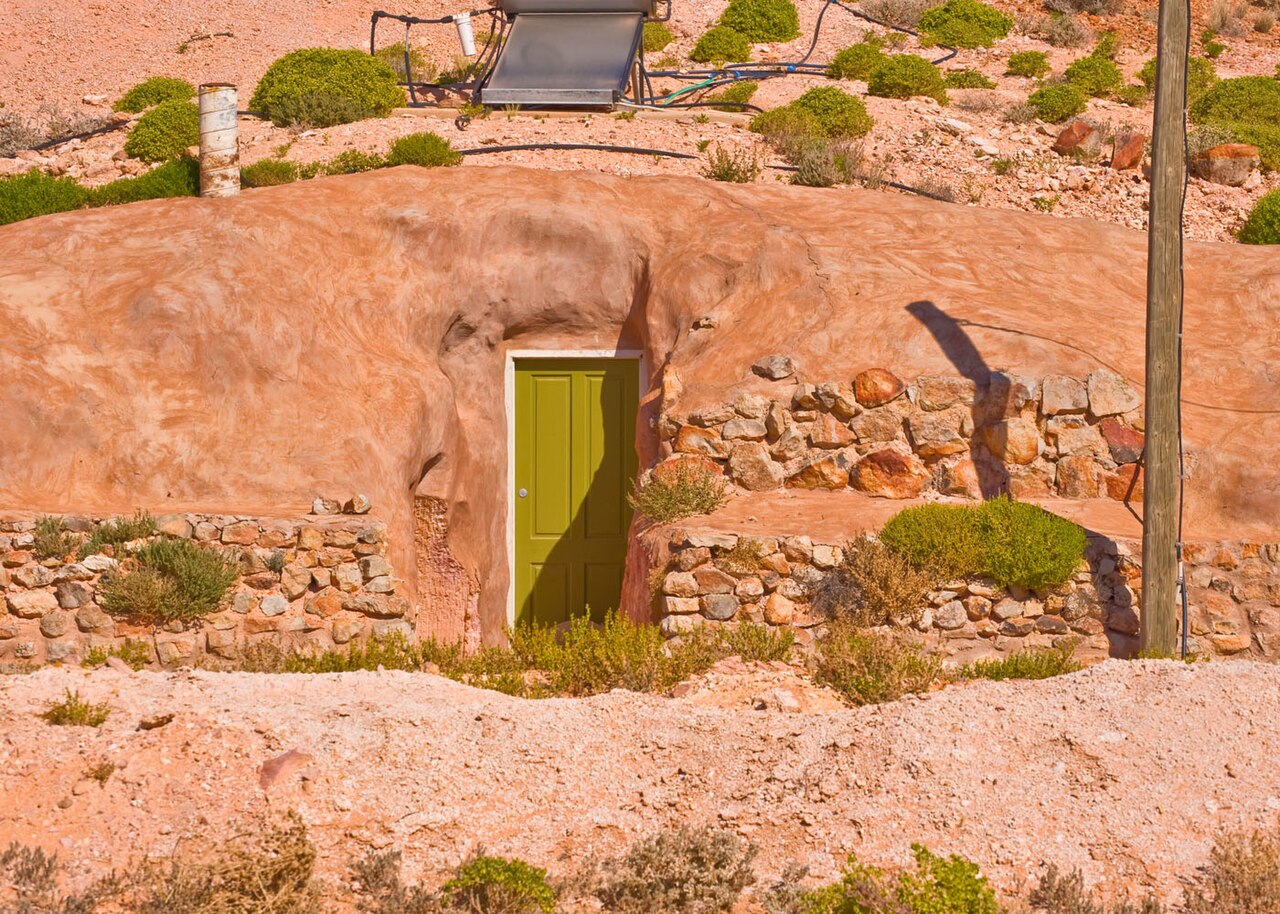
Opal was first found here on 1 February 1915 by Willie Hutchison, and the town that grew up around the find was built around opal mining. The holes are still everywhere. What makes Coober Pedy unlike anywhere else in Australia is what the miners did next. Summers here are brutal, so people dug homes into the hillsides instead of building on top of them. The rock keeps a steady temperature in the low-to-mid 20s all year, cooler than outside in January and warmer than the desert nights in July, and the visitor centre says more than half of the town’s families still live underground.
The name is usually traced to the Kokatha words kupa piti, often translated as “whitefella hole in the ground”, and the land is the country of the Antakirinja Matu-Yankunytjatjara people, who are named as custodians of the Kanku-Breakaways north of town. It is a reminder that the opal fields were dug into somebody’s country, not into empty space.
The honest pitch is this: Coober Pedy is a strange, dusty, slightly ramshackle place, and that is exactly why people remember it. The sights themselves are small and many are privately run. Nobody drives 846km for any one of them. You go for the whole odd package: sleeping in a cave, standing in a church cut into rock, looking out over a moonscape of mullock heaps, and the long, empty highway that gets you there.
Getting to Coober Pedy from Adelaide
There are four ways to do it, and the right one depends far more on your time than your budget.
| Option | Time | Cost (one way) | Best for |
|---|---|---|---|
| Drive yourself | One very long day, or two easier ones | Fuel plus car hire | Flexibility, the Breakaways, Flinders Ranges add-ons |
| Greyhound coach | About 11h 15m, overnight | From A$259 | Solo travellers without a licence or a car |
| Rex flight | Short flight | From A$309 | Short trips; pair with a local tour |
| The Ghan Expedition | 4 days / 3 nights, Darwin to Adelaide | A premium rail fare | People already doing The Ghan |
Driving the Stuart Highway
The route could hardly be simpler: north out of Adelaide on the highway to Port Wakefield, up to Port Augusta at the head of Spencer Gulf, then left onto the Stuart Highway (signed A87) and straight on. From Port Augusta it is 535km to Coober Pedy, and almost all of it is sealed, flat and empty. The highway skirts the salt lakes and the Woomera area, with only a handful of small roadhouse settlements, such as Pimba and Glendambo, between Port Augusta and the opal fields.
At about 846km in total, it is a very long drive once you add stops for fuel, food and a stretch, so treat it as a full day at the very least. Plenty of people split it: a night at Port Augusta or a detour into the Flinders Ranges on the way up, then a shorter run north the next morning. Our Adelaide to Flinders Ranges road trip covers that first leg, and it is a much better use of a day than an extra night in Port Augusta.
Practical points for the drive:
- Fuel: fill up in Port Augusta and top up whenever you pass a roadhouse. The gaps between them are long, and nobody wants to find out whether the next pump is open.
- Daylight: avoid driving at dawn, dusk and night. Kangaroos, emus and wandering stock are the real hazard out here, and so are road trains.
- Road trains: they are long and heavy. Overtake only with a long clear straight, and pull well off the road onto firm ground if you stop.
- Water and phone: carry more water than you think you need. Mobile coverage between towns is patchy at best.
- Hire cars: read the fine print. Many standard rental agreements restrict unsealed roads, which matters for the Breakaways. Our car rental guide and driving in South Australia explain the rules.
By coach: Greyhound
Greyhound runs one service a day from the Adelaide Central Bus Station at 85 Franklin Street, leaving at 7pm (the time can vary by season) and pulling into Coober Pedy about 11 hours and 15 minutes later, on Hutchison Street. Fares start at A$259 one way. It is usually the cheaper way to arrive without a car than flying, and the overnight timing saves a night’s accommodation, though you arrive tired. The catch is that you then have no wheels in a town whose best sights are spread out, so budget for a local tour to get to the Breakaways.
By air: Rex
Regional Express (Rex) flies between Adelaide and Coober Pedy. One-way economy fares on its own booking site started at A$309 in November 2026 and A$348 in December. Check Rex’s current timetable for flight days before you plan the rest of the trip around them. Flying makes the most sense for a short stay: two nights in town, a mine tour, a sunset Breakaways tour, then home. See our Adelaide Airport guide for the terminal and getting there.
By train: The Ghan Expedition only
The regular Ghan between Adelaide and Darwin does not stop at Coober Pedy. The Ghan Expedition does: it runs Darwin to Adelaide only, over four days and three nights, and its Coober Pedy stop is a full-day Off Train Experience through the underground attractions and opal-mining history. A scenic flight over the Painted Hills and Lake Eyre is a paid upgrade rather than part of the fare. It is a lovely way to see the town if you were doing The Ghan anyway, and a very expensive way to get to Coober Pedy if you were not. Our guide to The Ghan from Adelaide has the routes and fares.
How Many Days Do You Need?
Two nights in town is the sweet spot. That gives you one full day for the underground sights and a mine tour, plus the late afternoon and sunset for the Breakaways, and a spare half-day for noodling or a second tour. One night is too little after a day-long drive: you arrive tired, sleep underground, and leave without seeing the Breakaways in good light.
If you are driving, the whole trip from Adelaide works best as five days or more: a day up (or two with the Flinders Ranges), two nights in Coober Pedy, and a day back. Anything shorter and you spend most of your holiday looking at the highway. If you only have a weekend, fly.
Underground Coober Pedy: What to See
Most of the attractions are small, family-run and on or near Hutchison Street, the main road through town. The Visitor Information Centre, also on Hutchison Street, is open 9am to 5pm Monday to Friday and 9am to 1pm on weekends and public holidays (summer hours can differ). Start there for a town map, tour bookings and the Breakaways permit if you have not bought it online.
The underground churches
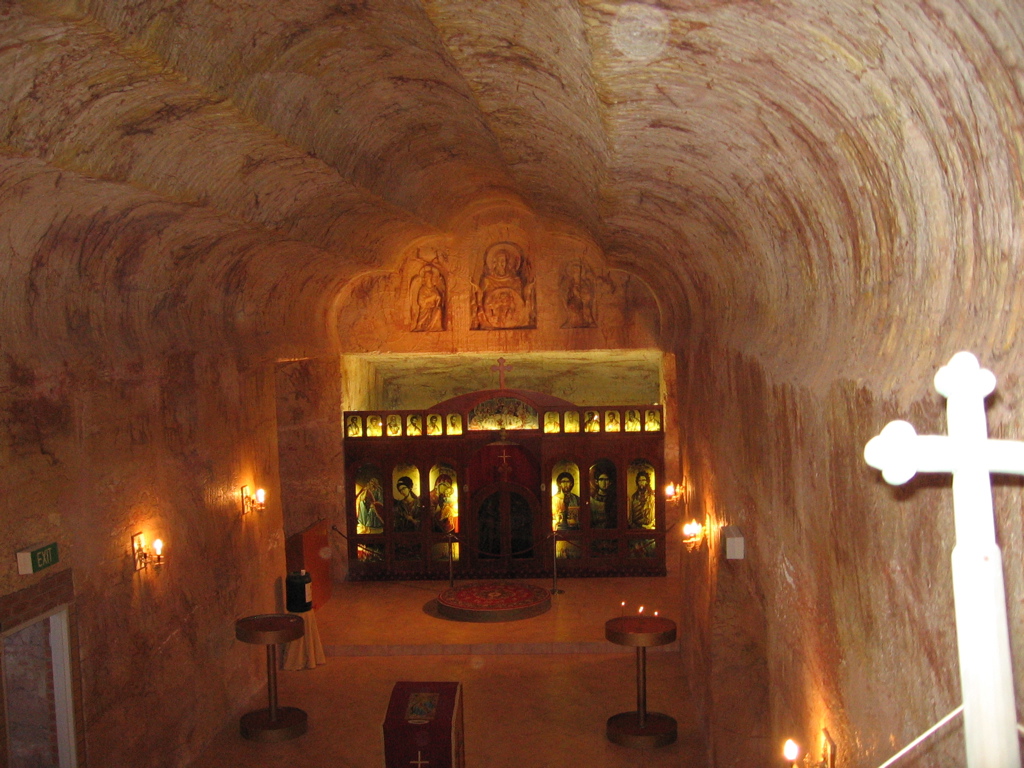
Coober Pedy’s underground churches are among the best-known sights in town, and they are genuinely worth seeing.
- Serbian Orthodox Church of Saint Elijah the Prophet: built in 1993.
- The Catacomb Church: dug in the mid-1970s on Catacomb Road, with a Sunday service at 9:30am.
- St Peter and Paul Catholic Church: opened on 25 June 1967.
Entry arrangements and any small fee change from year to year, so ask at the visitor centre. Be respectful: these are working churches, not museum pieces.
Umoona Opal Mine and Museum
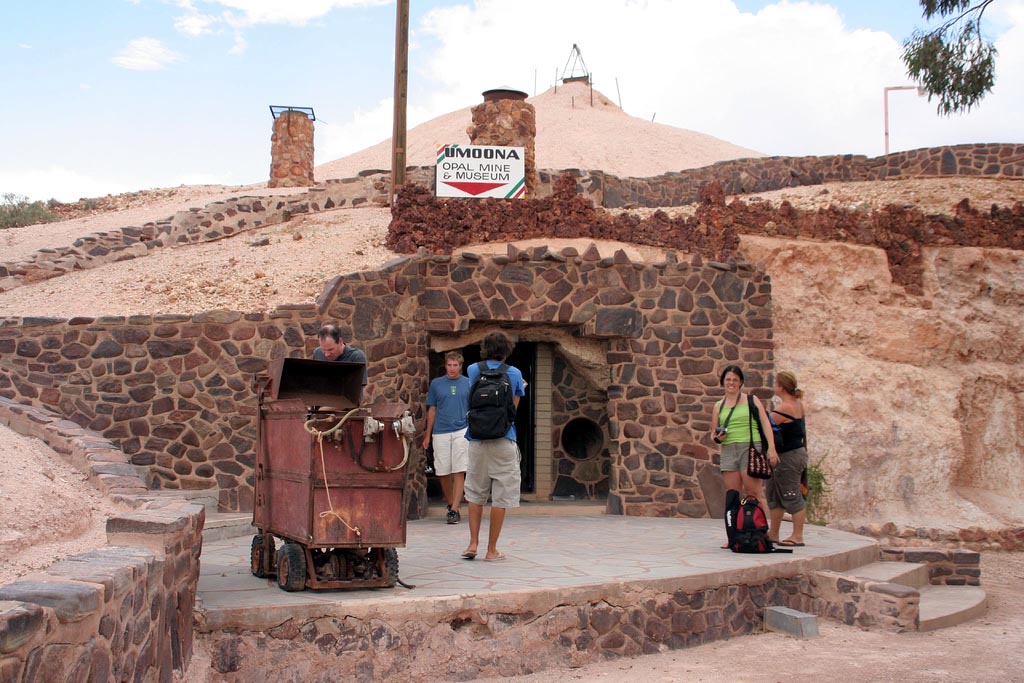
If you only do one thing in town, make it Umoona at 14 Hutchison Street. The museum is free and open daily from 8:30am to 5:30pm, and covers the town’s opal-mining history. Guided mine tours run daily at 10am, 2pm and 4pm; check the price when you book. It is on Hutchison Street in the middle of town, and a good introduction before anything else.
Old Timers Mine
The original Old Timers Mine dates to 1916 and was dug by hand, and the mine and museum give a look at opal mining in the early days. Check current prices and hours on the mine’s own site (oldtimersmine.com) or with the visitor centre before you go.
Tom’s Working Opal Mine
Tom’s runs guided tours of a working mine, priced at A$40 for adults, A$15 for children aged 3 to 17 and A$100 for a family, with tours at 10am and 1:30pm in the peak season from April to mid-October. It is seasonal: it closes over the hot months and is shut until it reopens over the Easter long weekend in 2027. If your trip falls between November and Easter, Umoona and the Old Timers Mine are open alternatives.
Faye’s Underground Home
Faye’s Historic Underground Home, on Old Water Tank Road, gives the best sense of what underground living actually looks like, from the kitchen to the bedrooms. The visitor directory lists it as open Monday to Saturday from 8:30am to 5pm and Sunday from 2pm to 5pm, but check with the visitor centre before you go.
Crocodile Harry’s and Josephine’s
Crocodile Harry’s dugout is cluttered, quirky and very much a matter of taste: some visitors love its eccentric, much-decorated walls, others find it a few dollars spent on a messy cave. Josephine’s Gallery and Kangaroo Orphanage is on Hutchison Street, and the directory lists feeding times at 12pm and 5:30pm. Check both before you go: these are small private businesses and hours change.
The Big Winch and the town lookout
The Big Winch lookout, a giant replica winch on the hill above town, is the easiest place to get the lie of the land: dugouts in the hillsides, the main street, and spoil heaps running to the horizon. It costs nothing to walk up, and it is best at the end of the day.
The Kanku-Breakaways, the Moon Plain and the Dog Fence
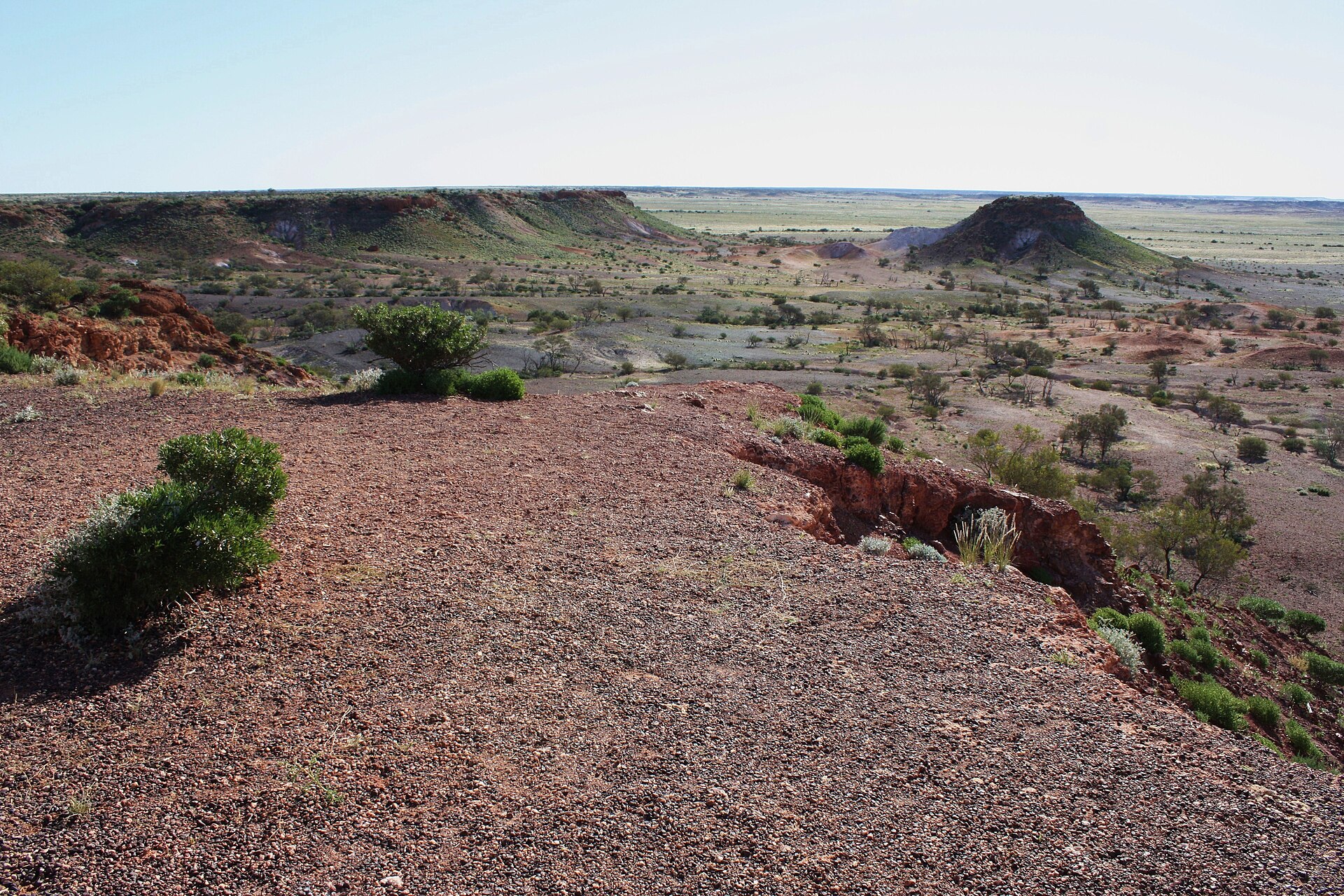
The single best thing to do near Coober Pedy is not underground at all. The Kanku-Breakaways Conservation Park, about 25km north of town, is 14,300 hectares of flat-topped mesas and eroded hills in bands of white, ochre and rust, rising from the gibber plains. At sunset, when the colours deepen and the plain turns gold, it is one of the great outback views in the state.
Some practical details matter here:
- Entry permit: A$13.50 per vehicle or A$11.20 concession, bought through the District Council of Coober Pedy (there is an online permit on the council’s website, or ask at the visitor centre). Entry is free for Coober Pedy residents and Antakirinja Matu-Yankunytjatjara people.
- Road: the access road is an unformed dirt road. After rain it may close or become four-wheel-drive only, so check conditions first.
- Fire: wood fires are banned all year, and the park closes on Catastrophic fire danger days.
- Respect: the whole park is an Aboriginal heritage site. Stay on the tracks and at the lookouts.
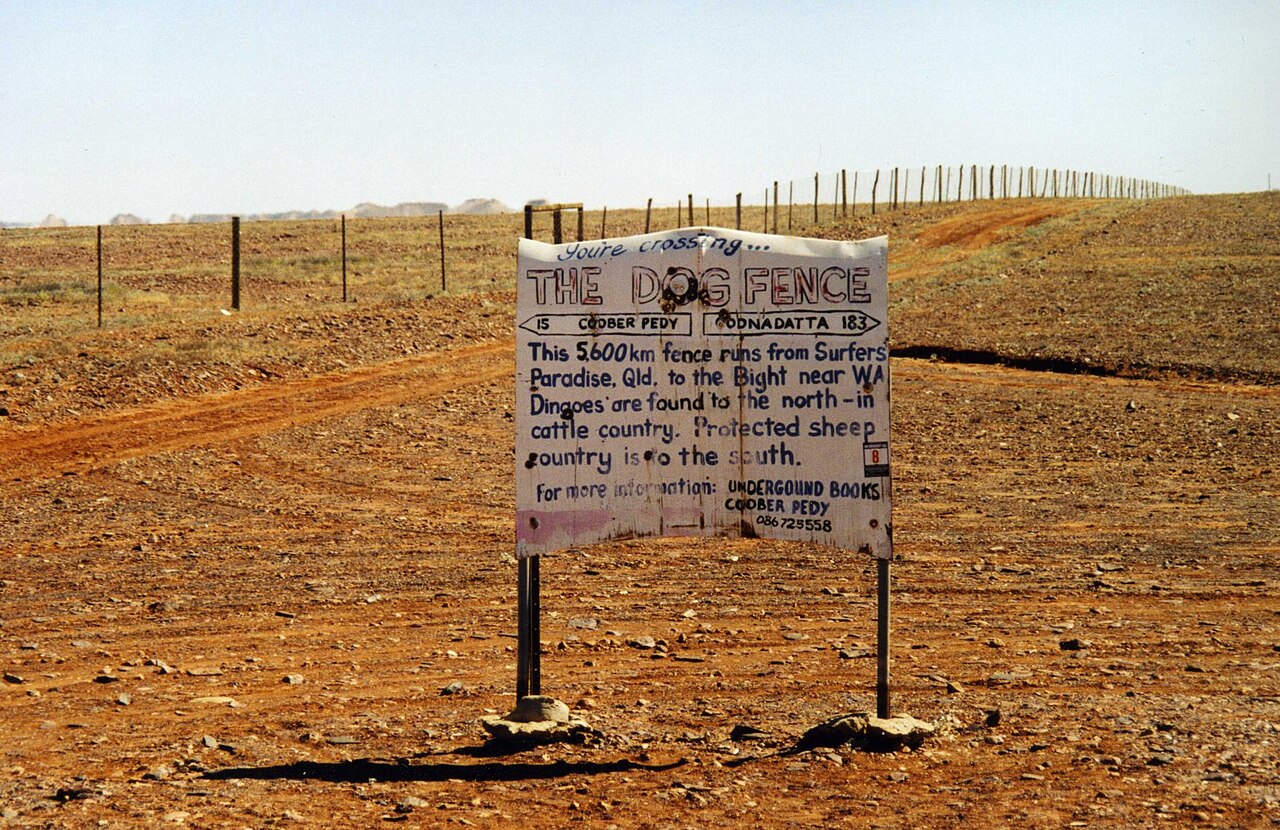
The visitor site’s suggested loop runs about 70km round trip: out to the Breakaways, east along the hills to the Dog Fence, and back across the Moon Plain, which is the local name for the flat, stony gibber plains. The Dog Fence itself is a plain mesh fence, 2m high and more than 5,300km long across three states, built to keep dingoes north of the sheep country. There is nothing to “do” at it, but standing beside a fence that crosses most of a continent is oddly moving.
If your hire car is not allowed on dirt, or you would rather not drive it, a sunset tour solves both problems. Only licensed operators can run commercial trips into the park, and the council lists them on its Kanku-Breakaways page.
Noodling, Golf and the Drive-In
Noodling for opal
“Noodling” means sifting through mine tailings by hand for opal the miners missed, and it is how many visitors try their luck. There is a public noodling area in town. You do not need a permit as long as you are not on a pegged claim and you are not using a pick, shovel or other digging tool; mining with tools needs a precious stones prospecting permit. Trespassing on a pegged claim can earn you a fine, so stick to the public area. Bring a hat, water and low expectations: the odds of finding anything valuable are slim, but small chips of colour do turn up, and the kids will not care either way.
The golf course
The Coober Pedy Opal Fields Golf Club has run its course since 1976, and it offers an unusual desert course, as much a novelty as a sport and a good story to take home.
The drive-in
The Coober Pedy Drive-In was built in 1965 and launched a monthly Retro Classics program in late June 2026. Check the drive-in’s own site (cooberpedydrivein.org.au) for what is on before you plan an evening around it.
Coober Pedy Tours
Tours make a lot of sense here, especially if you arrived by coach or plane. The visitor centre’s directory lists:
- Oasis Tours: a town and mine tour and a sunset Breakaways tour, each about three hours.
- Mail Run Tours: a run with the outback mail through Oodnadatta and William Creek, in small groups of up to four. Expect long distances on dirt roads.
- Noble Tours and Stuart Range Outback Tours, both of which run local trips.
- Wrightsair: scenic flights.
Prices and days change, so check each operator or book through the visitor centre. Our verdict: a town tour is optional if you have a car, but a sunset Breakaways tour is worth it even if you do, simply because someone else drives the dirt road back in the dark.
Staying Underground in Coober Pedy
Sleeping underground is the main reason many people come, and it is better than it sounds. The rooms are dead quiet, completely dark with the lights off, and the temperature does not change. The only real downside is that there are no windows, which some people find claustrophobic.
| Where | What it is |
|---|---|
| Desert Cave Hotel | A hotel with underground rooms and a restaurant |
| Lookout Cave Underground Motel | An underground motel cut into the hill |
| The Underground Motel | Underground motel rooms |
| Down To Erth B&B | A small underground B&B |
| Underground B&B | Another dugout B&B |
The Desert Cave Hotel’s restaurant serves breakfast from 7am to 10am, lunch from 12pm to 2pm and dinner from 5:30pm to 9pm. Room rates at all of these move with the season, so check the hotels’ own sites. Not every room in town is underground, either: several places offer a mix of above-ground and underground rooms, so ask specifically for an underground one when you book.
When to Go
The Bureau of Meteorology’s long-term averages for its Coober Pedy station tell the story plainly.
| Month | Mean max | Mean min |
|---|---|---|
| January | 36.4°C | 20.6°C |
| February | 35.7°C | – |
| June | 18.8°C | – |
| July | 18.7°C | 6.3°C |
Temperature averages from the 1965–1994 record. Rainfall is tiny: an average of 158.0mm a year (1921–2017), with February the wettest month at 22.5mm and July the driest at 7.5mm.
- April to October: the best time. Days are warm to mild and nights cold, sometimes very cold in June and July, which is when an underground room feels like a luxury. This is also when Tom’s mine runs its tours.
- November to March: hot. Mid-30s is the average high, and heatwaves go well past that. Underground sights stay comfortable, but the Breakaways, noodling and the drive itself are hard work, and some businesses cut their hours or close.
For the bigger picture across the state, our best time to visit Adelaide guide covers the seasons in the south.
Staying Safe Around the Opal Fields
The town’s warning signs are not a joke. The opal fields around Coober Pedy are riddled with old shafts, many unmarked and unfenced, and they go straight down a long way.
- Stay on roads and tracks outside town. Never walk backwards to line up a photo, and never wander across the fields at dusk.
- Keep children close and on paths in any mining area.
- Respect pegged claims. They are private, and miners take trespass seriously.
- Heat: in the hotter months, do outdoor things early or late, drink far more water than usual and wear a hat.
- Remote driving: tell someone your plans if you head off the highway, carry water, and do not drive dirt roads after rain.
A Two-Day Coober Pedy Plan
Day 1: Start at the visitor centre for a map and your Breakaways permit, then walk to Umoona for the free museum and the 10am mine tour. After lunch, see the underground churches and Faye’s. In the late afternoon, drive (or join a tour) to the Kanku-Breakaways for sunset, then come back over the Moon Plain before dark.
Day 2: Old Timers Mine in the morning, while it is cool, then the noodling area. Spend the hot middle of the day underground: lunch, a nap, or a book in your room. Finish with the Big Winch lookout at sunset and dinner in town. If you have a third day and a taste for dirt roads, the Mail Run is the one to book.
And to complete the opal story back in Adelaide, the South Australian Museum on North Terrace has an Opal Fossils Gallery with opalised fossils from Coober Pedy and Andamooka.
Frequently Asked Questions
How far is Coober Pedy from Adelaide?
About 846km by road, almost all of it on the sealed Stuart Highway north of Port Augusta. Plan a full day or break the trip.
Can you fly from Adelaide to Coober Pedy?
Yes. Rex flies between Adelaide and Coober Pedy, with one-way fares from A$309 in November 2026. Check Rex’s timetable for flight days first.
Is Coober Pedy worth visiting?
Yes, if you have time to do it properly. It is a unique town, and sleeping underground and seeing the Breakaways at sunset are memorable. It is not worth it as a rushed one-night dash, and in summer the heat makes the outdoor half of the trip hard work.
What is the best time to visit Coober Pedy?
April to October. Average highs in January are about 36°C, while July averages a much more comfortable 18.7°C.
Do you need a permit for the Breakaways?
Yes. Entry to the Kanku-Breakaways Conservation Park is A$13.50 per vehicle (A$11.20 concession), bought through the District Council of Coober Pedy online or at the visitor centre.
Can you stay underground in Coober Pedy?
Yes. The Desert Cave Hotel, several underground motels and a couple of dugout B&Bs all offer underground rooms. Ask specifically for one when you book.
Does The Ghan stop at Coober Pedy?
Only The Ghan Expedition, which runs from Darwin to Adelaide over four days and spends a full day there. The regular Ghan between Adelaide and Darwin does not stop at Coober Pedy.
Can you find opal in Coober Pedy?
You can try. The public noodling area lets you sift tailings by hand without a permit, as long as you use no digging tools and stay off pegged claims.
Related Adelaide Guides
- South Australia road trips from Adelaide
- Adelaide to Flinders Ranges road trip
- The Flinders Ranges from Adelaide
- The Ghan from Adelaide
- Driving in South Australia
- Car rental in Adelaide
- Aboriginal culture in Adelaide
- National parks near Adelaide
Photo Credits
The Coober Pedy sign with a blower truck: “Coober Pedy Australia.jpg” by Thomas Schoch, via Wikimedia Commons, CC BY-SA 2.5.
Opal mine spoil heaps: “Opal mine shafts, Coober Pedy – panoramio.jpg” by Eric Spenle, via Wikimedia Commons, CC BY 3.0.
Serbian Orthodox church interior: “Serbian Orthodox Church in Coober Pedy.jpg” by Robert Link, via Wikimedia Commons, CC BY-SA 2.0.
Umoona Opal Mine and Museum: “Coober Pedy, South Australia – Opal Mine & Museum.jpg” by Rob Chandler, via Wikimedia Commons, CC BY 2.0.
Dugout home entrance: “Coober Pedy – Underground house.jpg” by Lodo27 from Moscow, Russia, via Wikimedia Commons, CC BY-SA 3.0.
The Dog Fence near Coober Pedy: “Dogfence.jpg” by Schutz, via Wikimedia Commons, CC BY-SA 3.0.