Well before 7am on the second Saturday of November, King William Street looks like the morning after a very orderly campout. Picnic rugs and folding chairs line both kerbs, thermoses are doing the rounds, and children are on their knees in the middle of the road drawing reindeer in chalk on the bitumen, which for one morning a year is encouraged. The Adelaide Christmas Pageant, officially the National Pharmacies Christmas Pageant, has been opening the festive season here since 1933, and a few weeks later the Adelaide Hills town of Lobethal takes over with a fortnight of Christmas lights that has been drawing visitors since the 1950s.
This guide covers both: the 2026 Pageant date and how the morning runs, where to sit, what to bring, getting in and out of the city, and the Pageant’s surprisingly good history, then the Lights of Lobethal, with when to go, how to avoid sitting in a queue of cars for an hour, and how to make an afternoon of it in the Hills. Details were checked against the Pageant’s official website in October 2026. Lobethal’s 2026 dates had not been announced at the time, so check before you plan around them. For the wider season, including New Year’s Eve, see our Christmas and New Year in Adelaide guide.
The Pageant and the lights at a glance
| Christmas Pageant | Lights of Lobethal | |
|---|---|---|
| When | Saturday 14 November 2026 | About two weeks in December, ending just before Christmas (7 to 22 December in 2024) |
| Time | Sets off around 9:30am; Father Christmas arrives at about 11:30am | After dark, which in mid-December means after about 9pm |
| Where | City centre, from South Terrace to Beehive Corner at the top of Rundle Mall | Lobethal, Adelaide Hills, about 40km from the city |
| Cost | Free | Free; donations go to local causes |
| Getting there | Train, tram or bus into the city; roads around the route close | Car or coach tour, about 45 minutes from Adelaide |
| Best for | Families with children under ten, and anyone who grew up with it | A summer evening walk, kids in pyjamas, a Hills dinner first |
| If you can’t be there | Live on Channel 9 and 9Now from 10:30am | Nothing replaces walking the streets, so pick a weeknight |
When is the Adelaide Christmas Pageant?
The 2026 Pageant is on Saturday 14 November 2026. Traditionally it is held on the second Saturday of November, and if that date falls on Remembrance Day, 11 November, it moves to the Saturday before or after. On that pattern, 2027 would fall on Saturday 13 November, but treat that as a guess until the organisers announce it.
In 2025 the Pageant set off from South Terrace at 9:30am, and Father Christmas arrived at the end of the route, in Rundle Mall, at about 11:30am. Expect the same rhythm in 2026: a morning event, finished by lunch, with the city full of families for the rest of the day. Mid-November weather in Adelaide is usually warm rather than hot, with afternoons in the mid-twenties, but a properly hot Pageant day is entirely possible and the sun is fierce by 10am.
How the Pageant morning works
The route
The Pageant winds through the city centre from South Terrace to the top of Rundle Mall, and the exact route is published on the official website in the weeks before. King William Street is the heart of it. Since 1959 the floats have assembled at South Terrace and headed north along it, and it is where the biggest crowds gather.
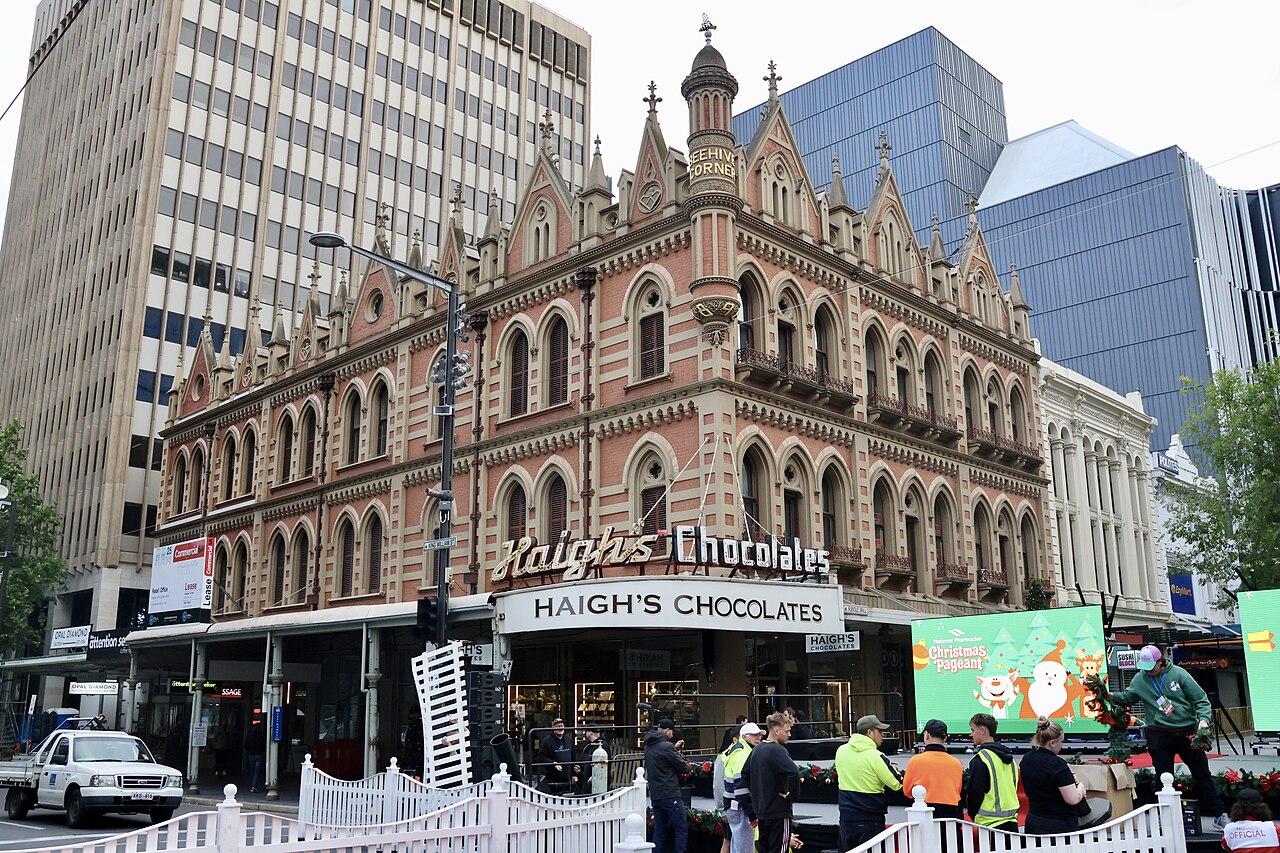
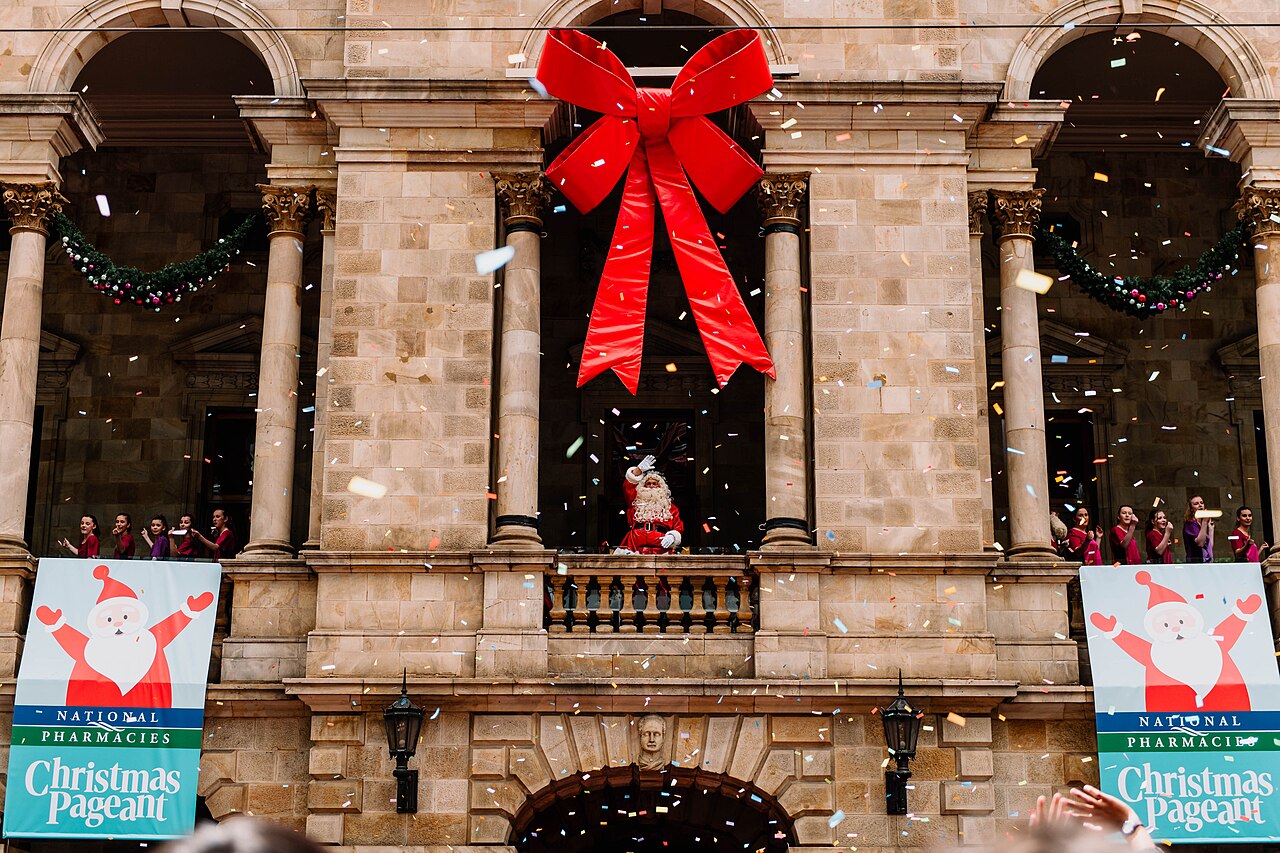
The finish changed in 2025. For years the climax was Father Christmas waving from the balcony of the Adelaide Town Hall. He is now delivered to Beehive Corner, where Rundle Mall meets King William Street, and then walks down Rundle Mall to the National Pharmacies store. The floats themselves do not go down the Mall. The organisers’ reasoning is partly sentimental: from 1933 to 1974, Father Christmas made his way down Rundle Street, as the Mall then was, to the Magic Cave at John Martin’s department store. It also puts every family in town at the door of the city’s biggest shopping precinct on the first weekend of serious Christmas shopping, which is presumably not a coincidence.
What you will see
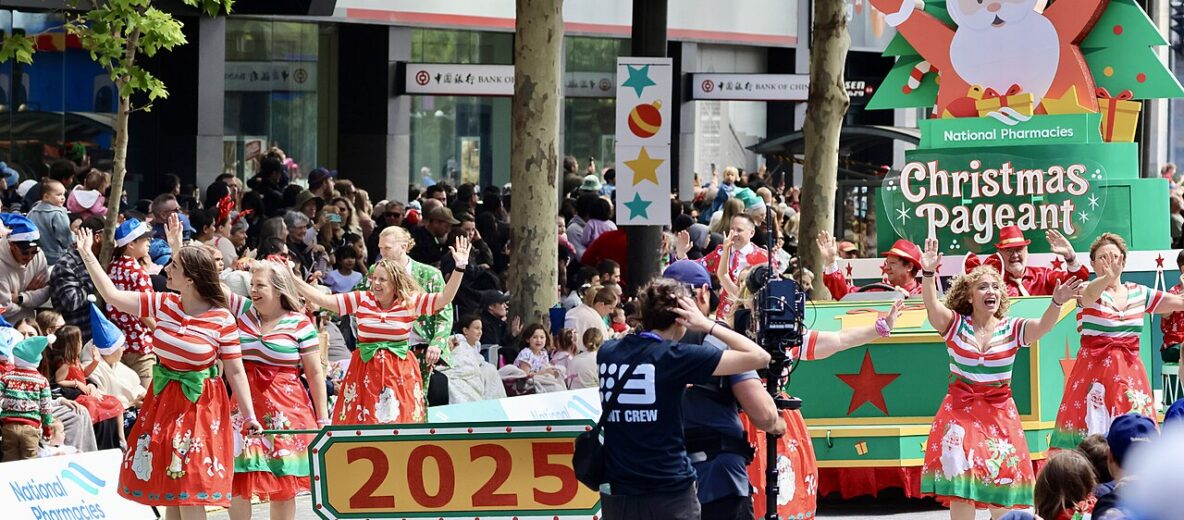
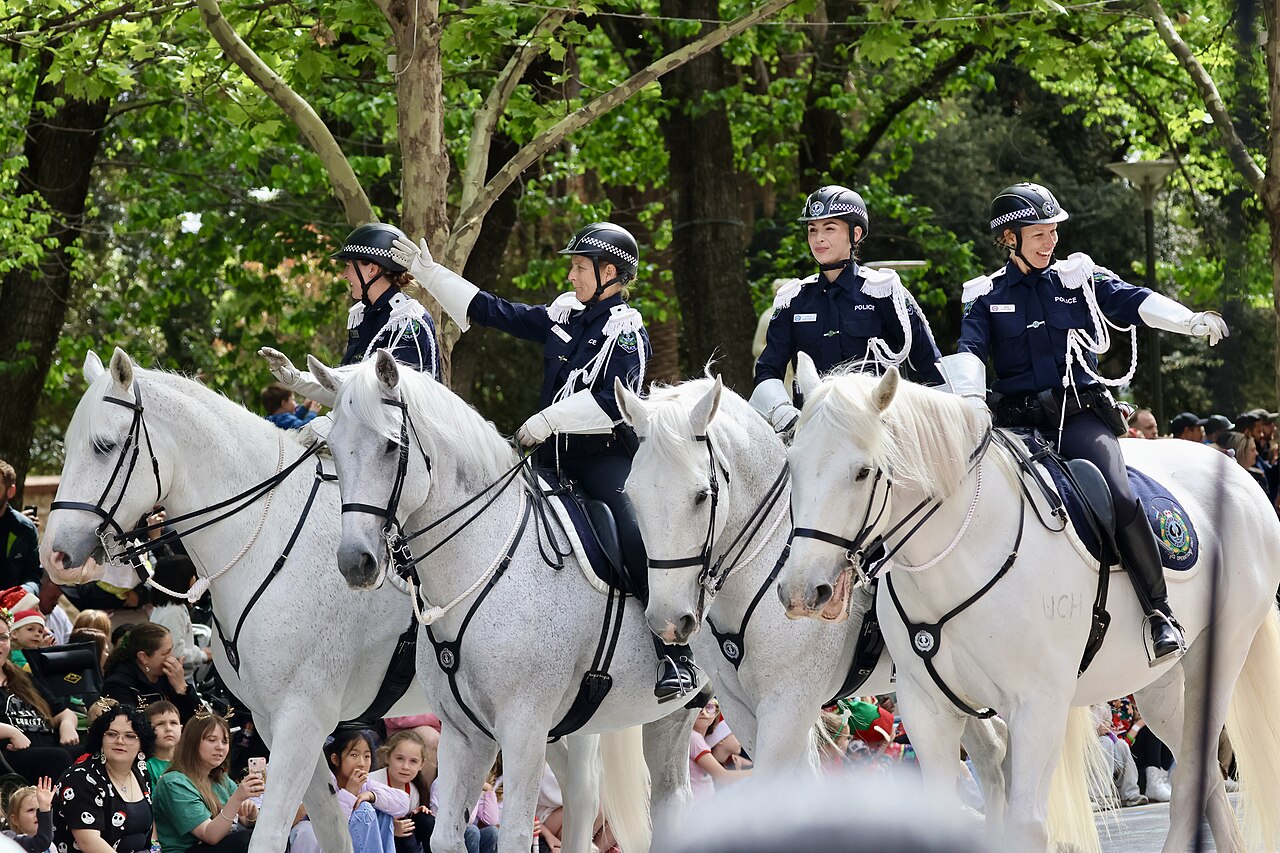
Dozens of floats, interspersed with marching bands, dancers, clowns and costumed characters. Some favourites return year after year, and new floats and sets have been added every year since 1938. The characters are played by staff of National Pharmacies, the current naming-rights partner. The SA Police take part too, from the mounted officers on their white horses to the police band, and the whole thing runs for around two hours from the first float to Father Christmas.
It is a parade rather than a show, which is worth saying for anyone who has not grown up with it. Nothing is staged for your seat in particular; the floats roll past and keep going. The appeal is in the sheer number of people, the familiarity of it, and the faces of very small children seeing Father Christmas go past.
Where to watch the Pageant
Every stretch of the route gets the whole Pageant, so the question is really about crowds, shade and how early you want to leave. A few principles:
- Near the start, it arrives early and leaves early. At the South Terrace end the first floats reach you soon after 9:30am, and you can be heading for breakfast while people at the other end are still waiting for Father Christmas.
- Near the finish, the crowds are thickest. The last stretch towards Beehive Corner is where everyone wants to be for Father Christmas’s arrival, and it fills first. Only choose it if seeing the finale matters more than comfort.
- Shade is worth more than a perfect angle. You may be sitting for three or four hours by the time the Pageant ends. A spot under the street trees on King William Street is worth a slightly worse view.
- Stay behind the blue line. The Pageant has painted a blue “honour line” along its route since 1958 to show spectators where the parade space begins. Kerbside spots are the front row; standing room behind the seated rows is where latecomers end up.
- Know where the toilets are before the Pageant reaches you. Leaving a front-row spot with a toddler in the middle of the parade is a special kind of stress.
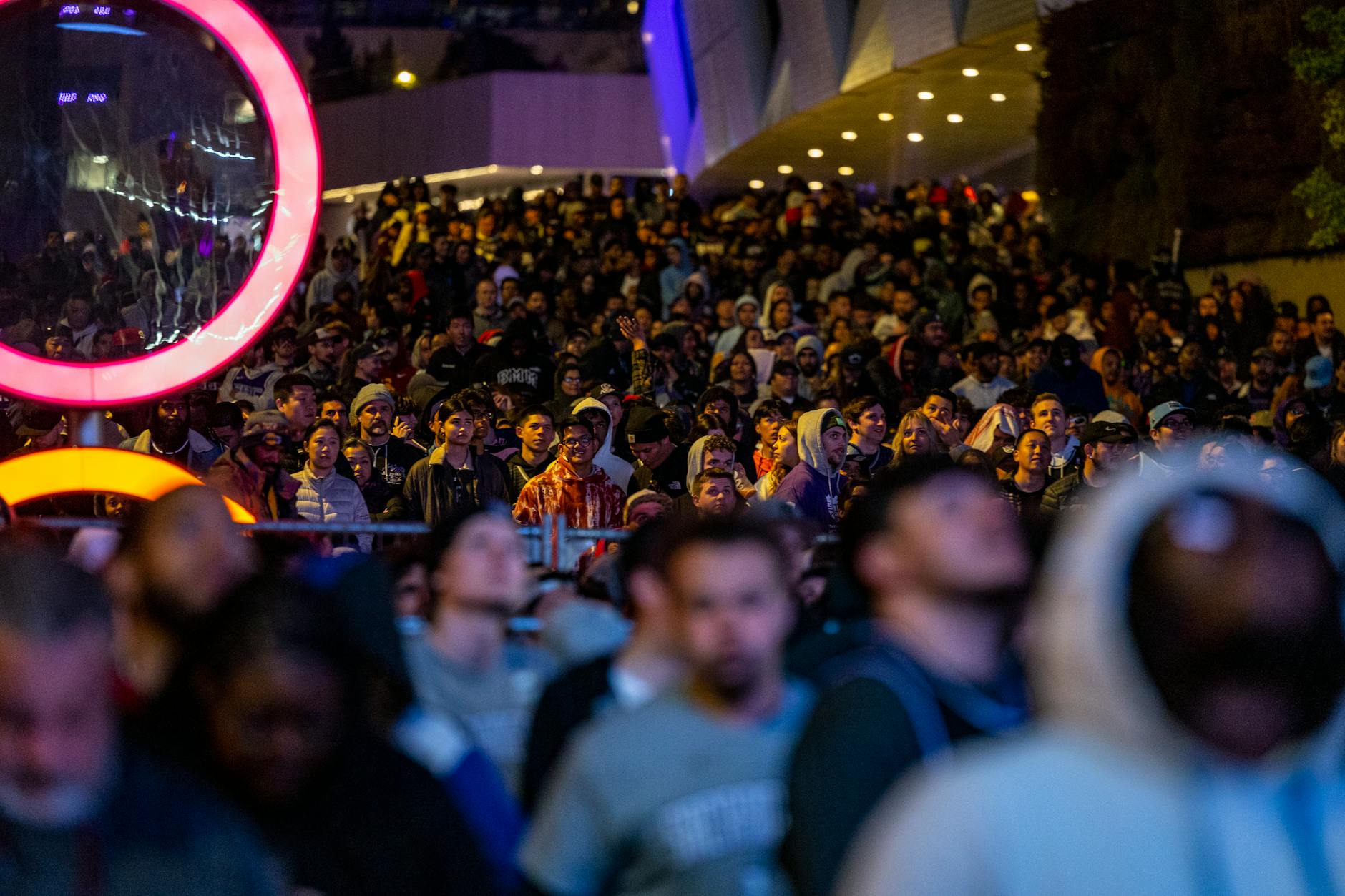
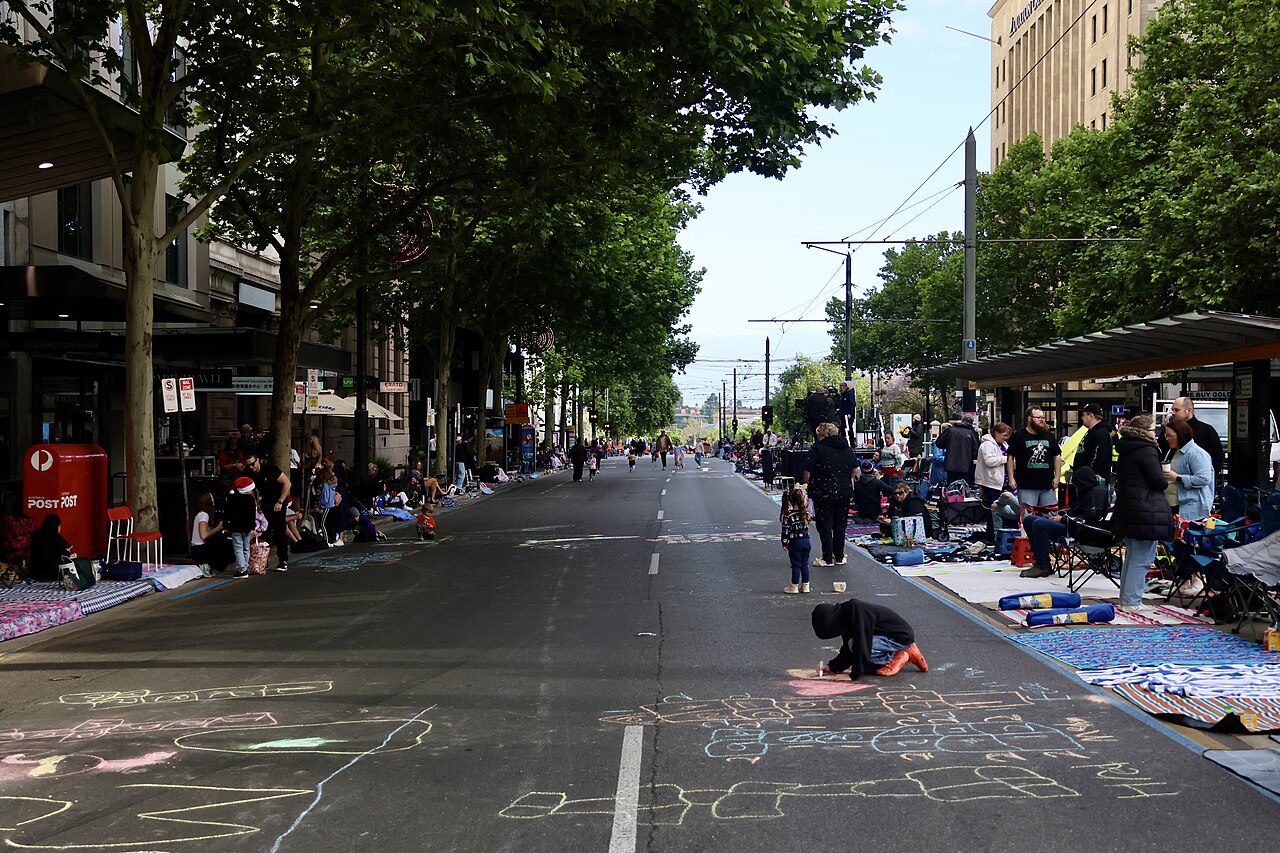
How early is early? Kerbside spots on the popular stretches are claimed hours before the 9:30am start, and the Pageant’s own website runs an “early bird survival guide” for the dedicated. The photo of King William Street above was taken at 6:20am, and it was already filling. If you want a front-row spot for small children, plan to be in place by 7am at the latest, and earlier near the finish; if you are happy two or three rows back, you can arrive closer to the start. The chalk-drawing tradition, which dates from 1988, exists precisely because so many children are sitting on the road for so long.
What to bring
- Hats, sunscreen and plenty of water. The sun does the damage long before the Pageant ends.
- A picnic rug, cushions or low chairs. Tall chairs in the front rows will not make you friends.
- Breakfast and snacks, especially if you are arriving at dawn.
- A packet of chalk for the children.
- A permanent marker and a photo of your child taken that morning (see below).
- A light jacket. Early mornings in November can be cool, even on a hot day.
Lost children, accessibility and groups
The organisers ask every parent or carer to take a photo of their child on their phone on the morning, so that if the child goes missing, police can see exactly what they look like and what they are wearing. Police officers along the route carry wristbands for parents to write their details on; they are also available at National Pharmacies merchandise stands and crossing points. Bring your own permanent marker.
For groups, Rudolph’s Community Site on Wakefield Street is a reserved viewing area for regional schools and kindergartens, community and disability organisations, and special schools. It is accessible only with an official pass arranged in advance, has accessible toilets nearby and a bus drop-off zone, and because spots are reserved, groups can arrive later in the morning. Applications go through the Pageant organisers by email.
Getting to the city on Pageant morning
Do not drive into the city. Roads around the route close early, the remaining streets fill fast, and getting out again at lunchtime with everyone else is miserable. Trains, trams and buses all run into the city centre, but expect changes to tram and bus services around the route while it is closed, and check Adelaide Metro’s Pageant-day notices before you leave. Our public transport guide explains the network and how to pay.
If you are visiting, stay in or near the city centre and walk. Pageant weekend is busy in Adelaide, so book early; our guide to the best hotels in the Adelaide CBD has options within walking distance of the route.
Watching from home
The Pageant is broadcast live on Channel 9 and 9Now from 10:30am, and replays are available on demand on 9Now afterwards. If you are interstate, it streams on 9Now: 10:30am in Adelaide is 11am in Sydney and Melbourne, 10am in Brisbane and 8am in Perth.
After the Pageant
Once Father Christmas has walked down Rundle Mall, the city is yours for the afternoon. The Mall is the obvious next stop, especially for anyone who planned to start their Christmas shopping, and Haigh’s has traded at Beehive Corner since 1915 if anyone has earned a Haigh’s chocolate. For lunch, the Adelaide Central Market is a short walk away, or take a picnic to the Botanic Garden at the eastern end of North Terrace and let the children run off three hours of sitting still.
Is the Christmas Pageant worth it?
For families with children under about ten, yes, without hesitation. It is free, it is joyful, and watching a four-year-old see Father Christmas for the first time beats most things a city can offer. Go early, sit in the shade, and bring more water than seems sensible.
For adults without children, it depends on your tolerance for crowds and nostalgia. If you are in Adelaide that weekend, wander down for half an hour to soak up the atmosphere, then go and get breakfast while the rest of the city is lining King William Street. It is not worth planning a trip around unless you have children, or a childhood of your own here to revisit.
What is not worth it: driving into the city, arriving at 9:25am and expecting to see much, or choosing the crowded finish with small children for the sake of a glimpse of Father Christmas you could have had in the shade at the other end.
A short history of the Christmas Pageant
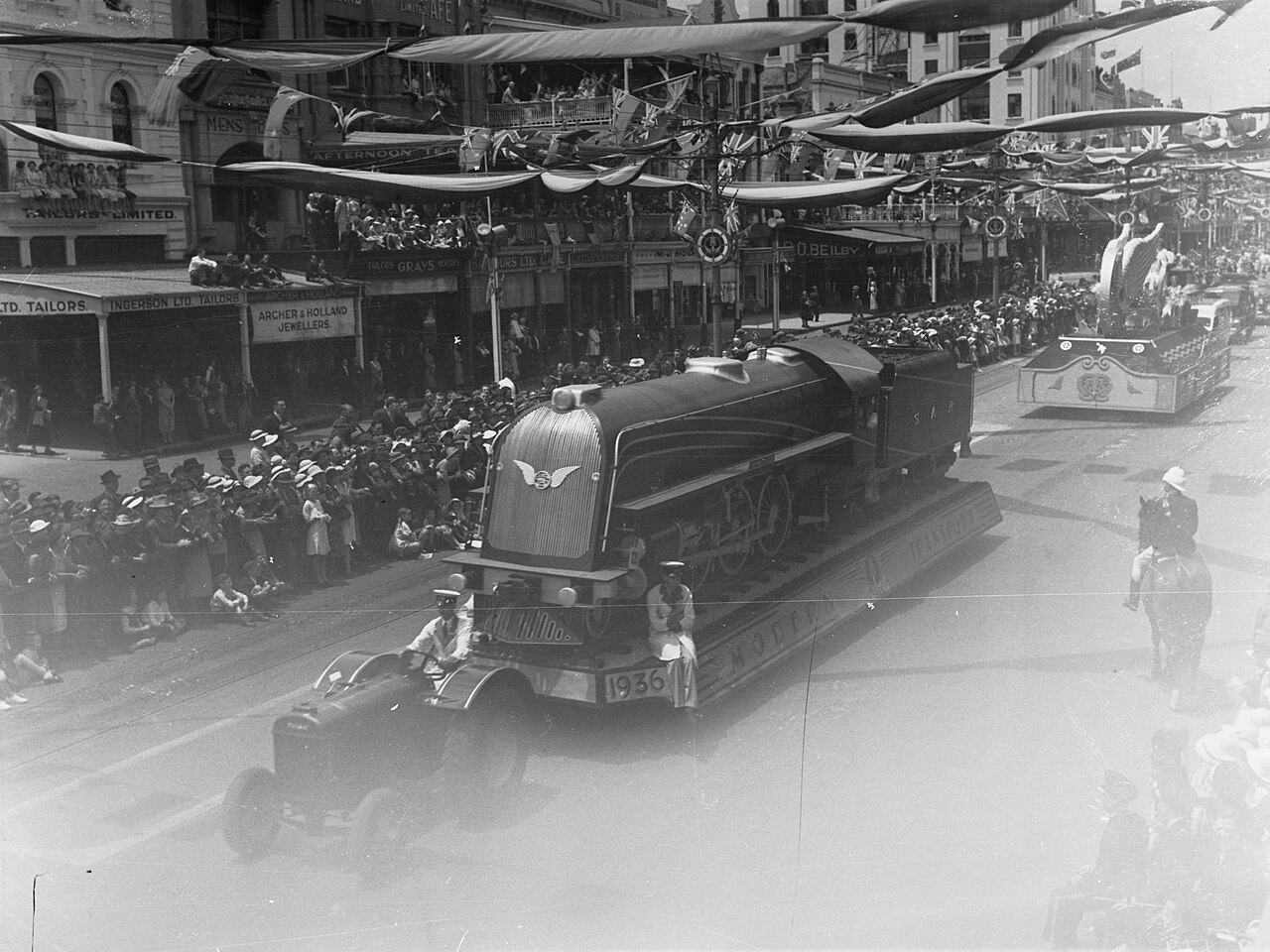
The Pageant grew out of a shop. In 1896 Edward Waterfield Hayward, owner of the John Martin & Co department store on Rundle Street, created the Magic Cave, a Christmas fantasy world inside the store for children. In 1933, in the depths of the Great Depression, his grandson Edward Hayward, known as Mr Bill and later Sir Edward, staged the first Christmas Pageant to escort Father Christmas to the Magic Cave. It had about eight floats and four bands, ran for around 40 minutes from Angas Street to John Martin’s, used costumes partly made of crepe paper, and was staffed entirely by John Martin’s employees. Around 200,000 people came to watch.
It has been a fixture almost ever since. A few milestones from the Pageant’s own timeline:
- 1935: the first Lord Mayor’s Christmas appeal float, raising money for children in need.
- 1941 to 1944: no Pageant during the Second World War.
- 1945: the Victory Christmas Pageant celebrated the war’s end, with the first radio broadcast.
- 1958: the first blue honour line was painted on the streets to manage the crowds.
- 1959: the floats began assembling at South Terrace and travelling up King William Street.
- 1960: the wettest Pageant on record, and very nearly cancelled.
- 1961: Prime Minister Robert Menzies attended, the only prime minister to have done so.
- 1969: crowds reached 500,000 as television broadcasts spread its reach interstate.
- 1983: the Golden Pageant marked 50 years; Sir Edward Hayward died just weeks before it.
- 1988: the chalk-drawing tradition began.
- 1993: the 60th Pageant featured 72 sets, 1,600 participants and a crowd of 400,000.
- 1996: John Martin’s sold the Pageant to the South Australian Government. It is now owned by Events South Australia, part of the South Australian Tourism Commission.
- 2010: the Pageant crowd set a Guinness World Record for the largest group of carol singers.
- 2025: Father Christmas’s finish moved from the Adelaide Town Hall to Beehive Corner.
Naming rights have changed hands over the years, which is why older Adelaideans may still call it the John Martin’s Pageant or the Credit Union Christmas Pageant. Everyone else just calls it the Pageant.
The Lights of Lobethal
A few weeks after the Pageant, the season moves up into the Hills. Lobethal is a town of around 2,000 people in a creek valley in the Adelaide Hills, and every December its residents and businesses cover their houses, gardens, shopfronts and fences in Christmas lights. It has drawn visitors from across the state since the 1950s, and it is often described as the biggest residential Christmas lights festival in the southern hemisphere. Whether or not that is true, it is certainly the one every South Australian family seems to have a memory of.
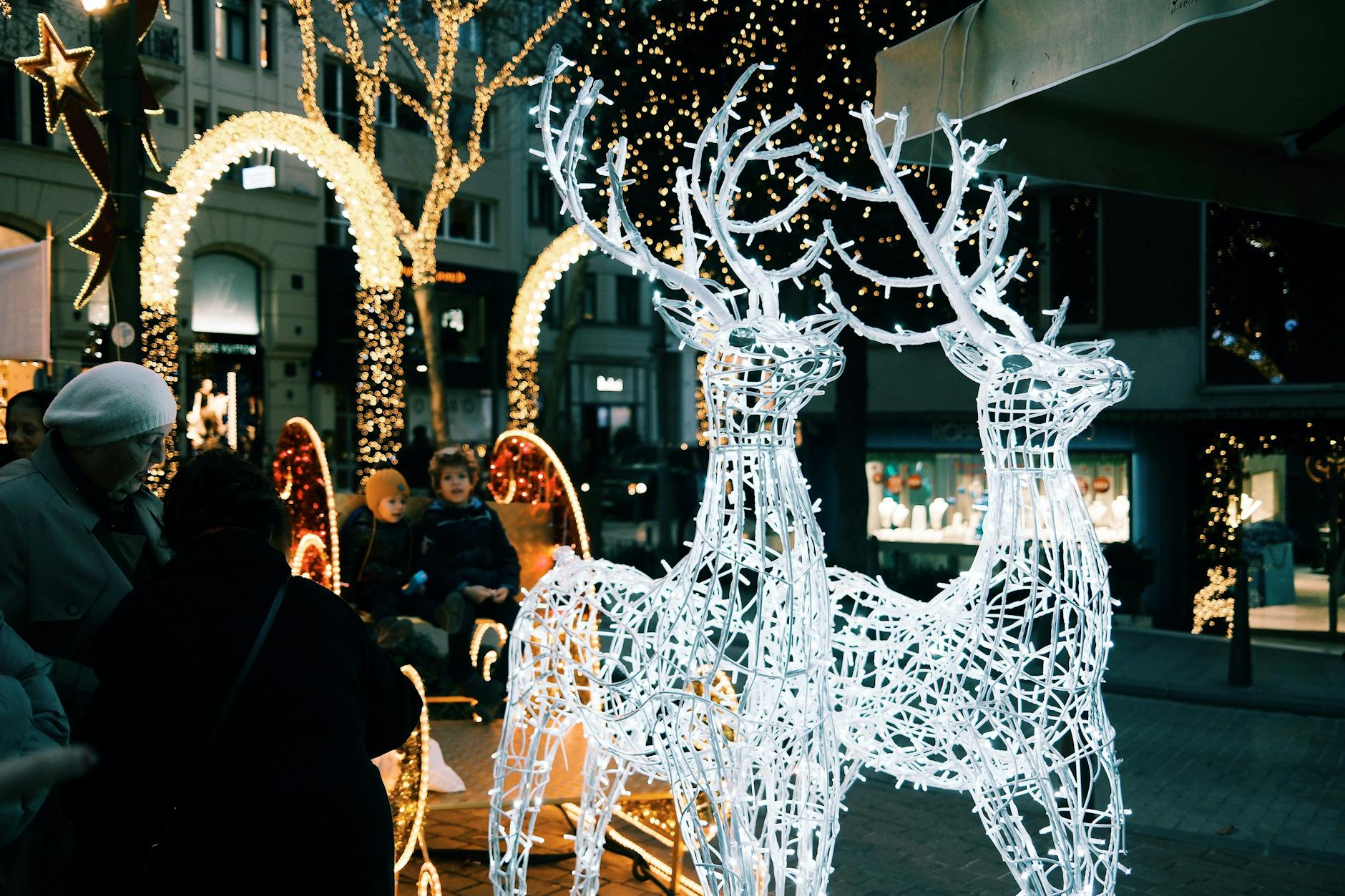
What makes it work is that it is not a theme park. These are people’s homes: some go full inflatable-reindeer, some do a tasteful string of white lights along the verandah, a few streets coordinate, and the effect builds as you walk. Children in pyjamas are pushed around in prams, families stop to chat to the owners of the best displays, and donation tins collect for local causes.
When the lights are on
The festival runs for roughly two weeks in December, usually from the first or second weekend until a couple of days before Christmas. In 2024 it ran from 7 to 22 December. The 2026 dates had not been announced when we checked in October, so look them up on the festival’s website before you plan. Opening night has traditionally been marked with a small-town Christmas pageant of Lobethal’s own.
The bigger practical point is the time. Adelaide in December has some of the longest evenings of the year, with sunset between about 8:20pm and 8:30pm, and the lights do not really work until it is properly dark, which means after about 9pm. Families with small children often arrive at dusk and then wait it out; plan for a late night or accept that the first hour will be twilight.
Getting to Lobethal
Lobethal is about 40km from the city centre, or roughly 45 minutes’ drive via the South Eastern Freeway and the Hills towns beyond it. From Hahndorf it is about 20 minutes. There is no train, and public transport to the Hills in the evening is not a realistic option for most visitors, so it is a car, a taxi you have booked to come back for you, or one of the evening coach tours that several Adelaide operators run in December. The coach tours cost more than driving yourself but take care of the parking problem, which on a Saturday is significant.
Traffic, parking and how to see it properly
This is where most disappointing Lobethal nights go wrong. On weekends, especially the last weekend before Christmas, the roads into town clog up as everyone arrives at once just after dark, and you can spend a long time inching along in a queue of cars with the children asking whether it has started. Some visitors try to see the lights from the car, which is the worst way to do it.
- Go on a weeknight. Monday to Thursday is far calmer than Friday or Saturday.
- Arrive before dark. Park while it is still light, have dinner or a picnic, and be on foot when the lights come on.
- Walk it. The best displays are in the residential streets, and you see them properly on foot.
- Bring a jacket. The Hills are noticeably cooler than the city after dark, even in December.
- Carry some cash for the donation tins and any community food stalls.
- Be a good guest. Stay on the footpath, keep the noise down late in the evening, and remember people live here.
Is Lobethal worth the drive?
Midweek, on foot, after 9pm: yes, it is one of the loveliest things to do in South Australia in December, and children remember it. On a Saturday night, seen through a windscreen from a queue of cars, it is a test of patience. The difference is almost entirely planning. If a weekend is your only option, arrive before dark and expect company.
About the town
Lobethal is worth a look by daylight too. It was settled in 1842 by Prussian Lutheran migrants who arrived with Pastor Gotthard Fritzsche, and its name, from the Book of Chronicles, means “valley of praise”. The original village was laid out as a Silesian-style Hufendorf, with cottages strung along a single street and long strips of farmland running back from each one, and traces of that layout survive. St John’s Lutheran Church, built in 1845, has been recognised as the oldest Lutheran church building in Australia. The town later became the centre of the Adelaide Hills’ wool industry, and its old woollen mill buildings now house smaller businesses.
Make a day of it in the Hills
The best way to do Lobethal is as the finale of a Hills day rather than a long drive for one hour of lights. Spend the afternoon in Hahndorf, Australia’s best-known German settlement, or work through a few Adelaide Hills cellar doors while someone else drives; have an early dinner in one of the Hills towns; then arrive in Lobethal as the sun goes down. Our Adelaide Hills day trip guide has more ideas, and if you would rather not drive back down the freeway late at night, see our pick of Adelaide Hills accommodation.
Christmas lights and festive Adelaide beyond the Pageant
The Pageant and Lobethal are the two big ones, but they are not the whole season. In 2025 the giant Christmas tree was already up in Victoria Square by Pageant morning, Rundle Mall dresses for Christmas, and the city’s decorations come on through November and December. Our Christmas and New Year in Adelaide guide covers the city decorations, Christmas Day itself, and where to watch the fireworks on New Year’s Eve.
Remember, too, that Christmas here is a summer one. December afternoons are often hot, the beaches are full, and lunch on the day is as likely to be prawns as roast turkey. Our guide to Adelaide in summer covers the weather and how to handle the heat.
Christmas Pageant and Lobethal FAQ
When is the Adelaide Christmas Pageant in 2026?
Saturday 14 November 2026. It is traditionally held on the second Saturday in November, unless that falls on Remembrance Day.
What time does the Christmas Pageant start?
In 2025 it set off from South Terrace at 9:30am, and Father Christmas arrived in Rundle Mall at about 11:30am. Check the official website for 2026 timings closer to the day.
Where does the Christmas Pageant finish?
At Beehive Corner, where Rundle Mall meets King William Street. Father Christmas then walks down Rundle Mall to the National Pharmacies store. The floats do not go down the Mall.
Is the Christmas Pageant free?
Yes, it is free to watch from anywhere along the route. The reserved Rudolph’s Community Site on Wakefield Street is for pre-arranged school, community and disability groups.
Can I watch the Christmas Pageant on TV?
Yes. It is broadcast live on Channel 9 and 9Now from 10:30am Adelaide time, with replays on 9Now.
When are the Lights of Lobethal in 2026?
The 2026 dates had not been announced in October. The festival usually runs for about two weeks in December, ending just before Christmas; in 2024 it ran from 7 to 22 December.
What time do the Lobethal lights come on?
After dark. In December that means after about 9pm, as sunset is between about 8:20pm and 8:30pm.
How far is Lobethal from Adelaide?
About 40km, or roughly 45 minutes’ drive from the city centre, and about 20 minutes from Hahndorf.
Related Adelaide Guides
- Christmas and New Year in Adelaide — the whole festive season, including New Year’s Eve.
- Adelaide Events & Festivals — the full calendar, month by month.
- Rundle Mall — where the Pageant ends and the Christmas shopping begins.
- Adelaide with Kids — family planning for the rest of your stay.
- Adelaide Hills Day Trip — towns, food and wine before the lights.
- Hahndorf Day Trip — the Hills’ German village.
- Adelaide in Summer — what December to February is like.
- Royal Adelaide Show — the city’s other great family institution, every September.
Photo Credits
King William Street on Pageant morning, 2025: “2025 Adelaide Christmas Pageant – 012.jpg” by Yu Chu Chin, via Wikimedia Commons, CC BY-SA 4.0.
Beehive Corner on Pageant morning, 2025: “2025 Adelaide Christmas Pageant – 008.jpg” by Yu Chu Chin, via Wikimedia Commons, CC BY-SA 4.0.
SA Police mounted officers, 2025: “2025 Adelaide Christmas Pageant – 036.jpg” by Yu Chu Chin, via Wikimedia Commons, CC BY-SA 4.0.
The locomotive float, 1936: “Floats in John Martin's Christmas Pageant, King William Street, Adelaide, 7 November 1936 (HTSA GN09923).jpg” by South Australian state government photographer, via Wikimedia Commons, Public domain.
Father Christmas at the Adelaide Town Hall, 2019: “Father Christmas at the 2019 National Pharmacies Christmas Pageant.jpg” by E1S2A34, via Wikimedia Commons, CC BY-SA 4.0.
Dancers and the Pageant float, 2025 (featured image): “2025 Adelaide Christmas Pageant – 055.jpg” by Yu Chu Chin, via Wikimedia Commons, CC BY-SA 4.0.