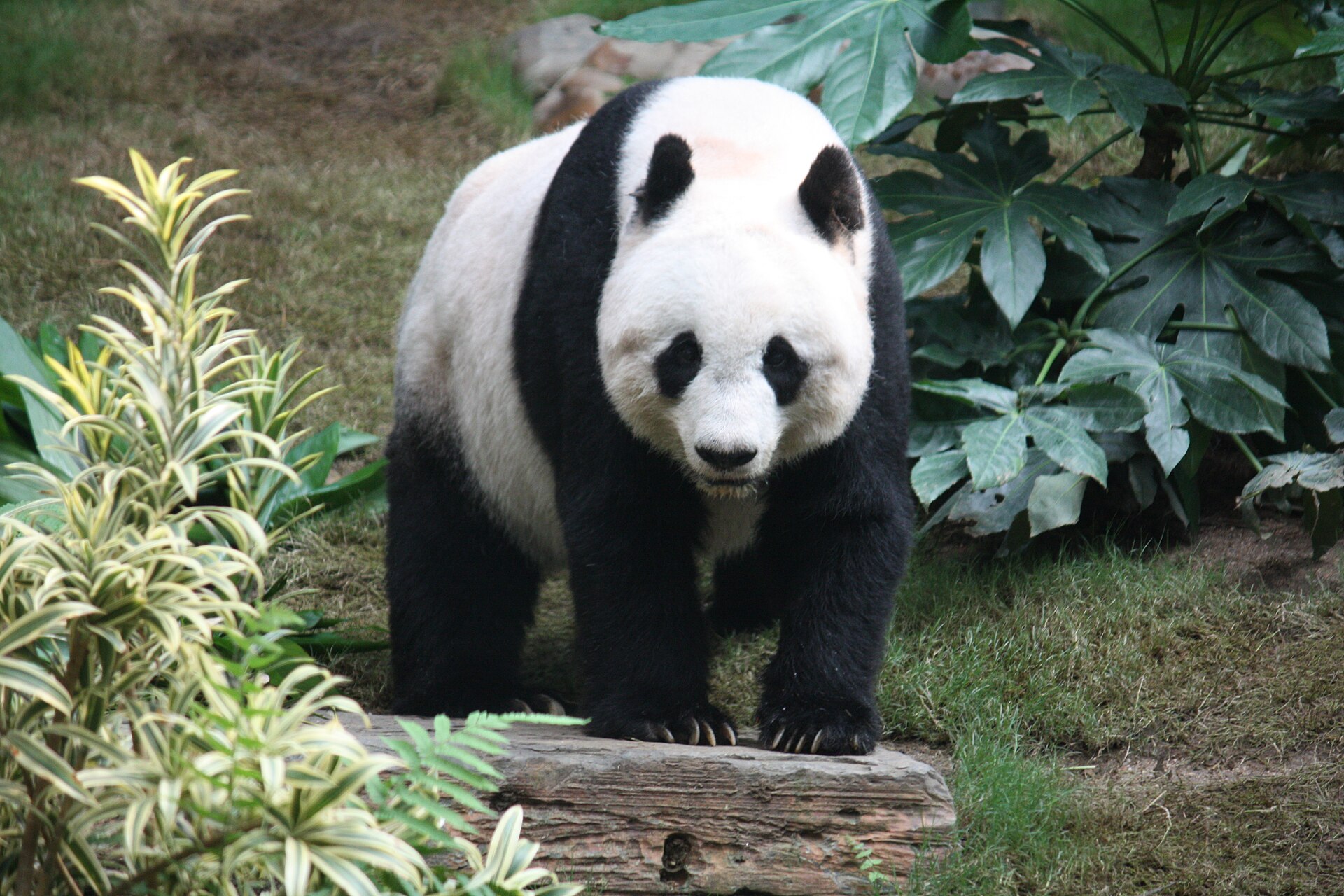
There is a particular noise a giant panda makes when it is working through a stalk of bamboo — a slow, wet, unhurried crunching that carries further than you expect — and hearing it in the middle of an Australian capital city is genuinely strange. The Adelaide Zoo pandas are the only giant pandas in Australia and among only a handful in the southern hemisphere, which makes a fifteen-minute walk from North Terrace the single easiest place on this side of the world to stand two metres from one.
Xing Qiu and Yi Lan arrived from China at the end of 2024 and went on public display on 21 January 2025, taking over the Bamboo Forest enclosure from Wang Wang and Fu Ni, who had held it since 2009. This guide covers who they are, when they are actually awake, what a visit costs, how to get there, what else is worth your time at the zoo, and an honest answer on whether the pandas alone justify the ticket. Prices and times were checked in September 2026 — confirm the current ones on Zoos SA’s own site before you go, because both move.
Quick facts
| Who | Xing Qiu (male) and Yi Lan (female) |
| Arrived | End of 2024; on public display 21 January 2025 |
| Where | Bamboo Forest enclosure, Adelaide Zoo, Frome Road |
| Predecessors | Wang Wang and Fu Ni, 2009-2024 |
| Status | The only giant pandas in Australia |
| Adult zoo entry | Around A$45-50, includes the pandas |
| Walk from North Terrace | About 10-15 minutes through Botanic Park |
| Time needed | 20-40 minutes at the enclosure; 2-3 hours for the zoo |
Meet Xing Qiu and Yi Lan
Xing Qiu is the male, born around 2020. His name translates roughly as “Star Autumn”. Yi Lan is the female, born around 2021, and her name carries a sense of idle blissfulness — which anyone who has watched a panda spend forty minutes lying on its back eating will recognise as well chosen.
They came to Adelaide under an agreement with the China Wildlife Conservation Association, the same framework that placed pandas in Edinburgh, Washington and elsewhere. Like all giant pandas outside China, they remain the property of the People’s Republic; the arrangement is a loan with a conservation and research component attached, and any cubs born here would ultimately return to China.
The pair are young and are intended as a future breeding pair, which is the long game Zoos SA is playing. Giant panda reproduction is notoriously difficult — females are receptive for only a two-to-three-day window once a year, gestation is unpredictable because of delayed implantation, and a newborn cub weighs about 100 grams, roughly a thousandth of its mother’s weight and about the size of a stick of butter. Wang Wang and Fu Ni tried for fifteen years without producing a cub, which tells you how hard it is.
They are housed separately for most of the year, as adult giant pandas are essentially solitary in the wild and will fight if kept together outside the breeding window. Expect to see them in adjacent yards rather than side by side.
Wang Wang and Fu Ni: the pandas before
If you visited Adelaide between 2009 and 2024, the pandas you saw were Wang Wang and Fu Ni. They arrived for what was originally a ten-year stay, had it extended twice, and became genuinely embedded in the city — Fu Ni’s phantom pregnancies were local news events. They returned to China at the end of 2024 after fifteen years, both well into panda middle age.
Their legacy is the enclosure itself and a very large amount of accumulated husbandry knowledge, which is why Adelaide was in a position to take a young pair rather than starting from nothing. Locals will still occasionally call the exhibit “Wang Wang’s place”.
The Bamboo Forest enclosure
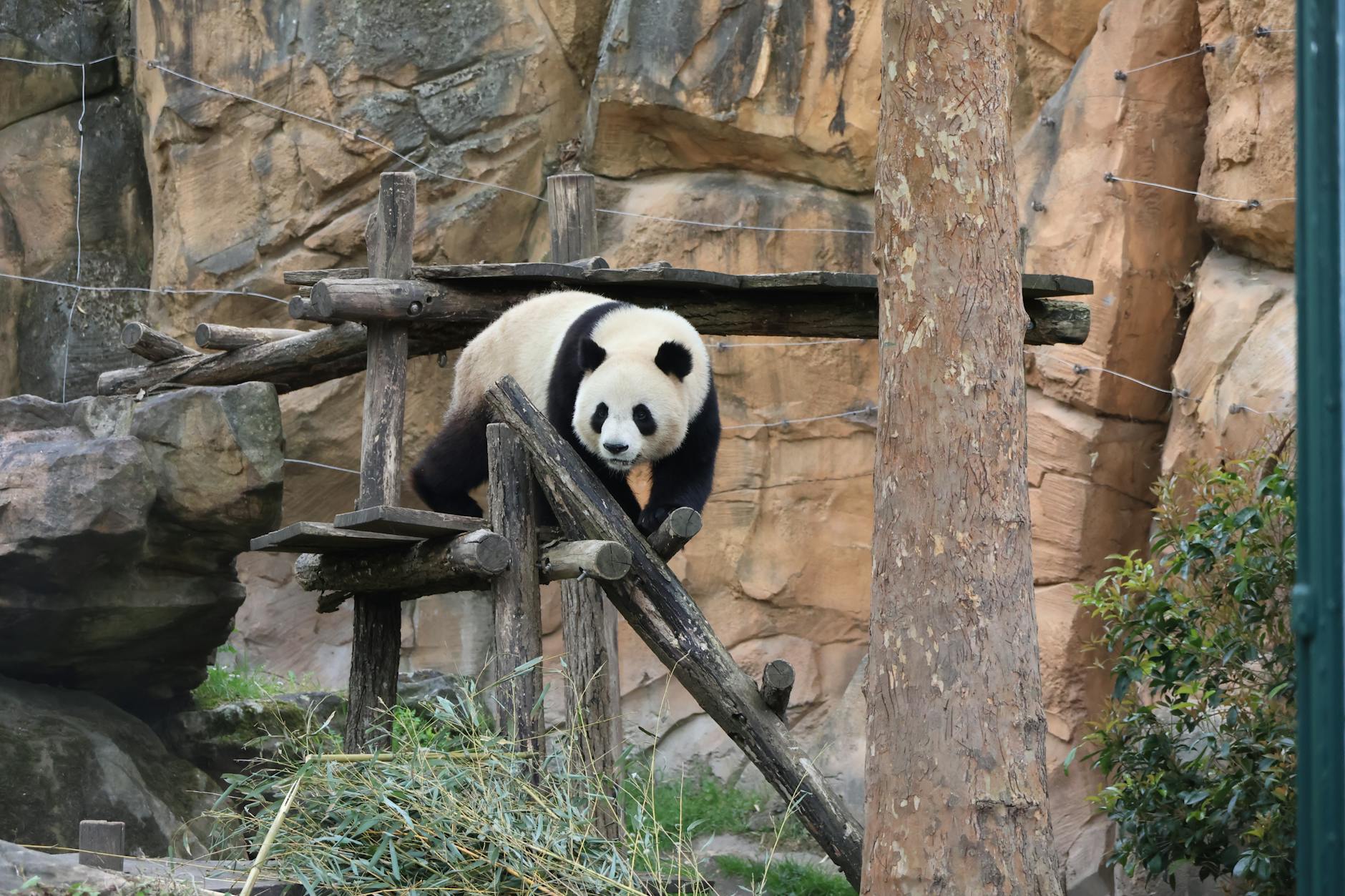
The Bamboo Forest was purpose-built for pandas and is one of the better panda enclosures outside China. It has indoor and outdoor yards, climate control for the indoor spaces — an important detail in a city that hits 40°C, given pandas evolved in cool, damp mountain forest — and viewing that gets you close without glass in every direction.
Practically, that means on a hot Adelaide afternoon the pandas may well be inside where it is cool, and you will see them through glass. On a mild morning they are usually out. Neither is a problem; it just changes the photograph.
When to go, and when they are actually awake
This is the single most useful thing on this page: go in the morning.
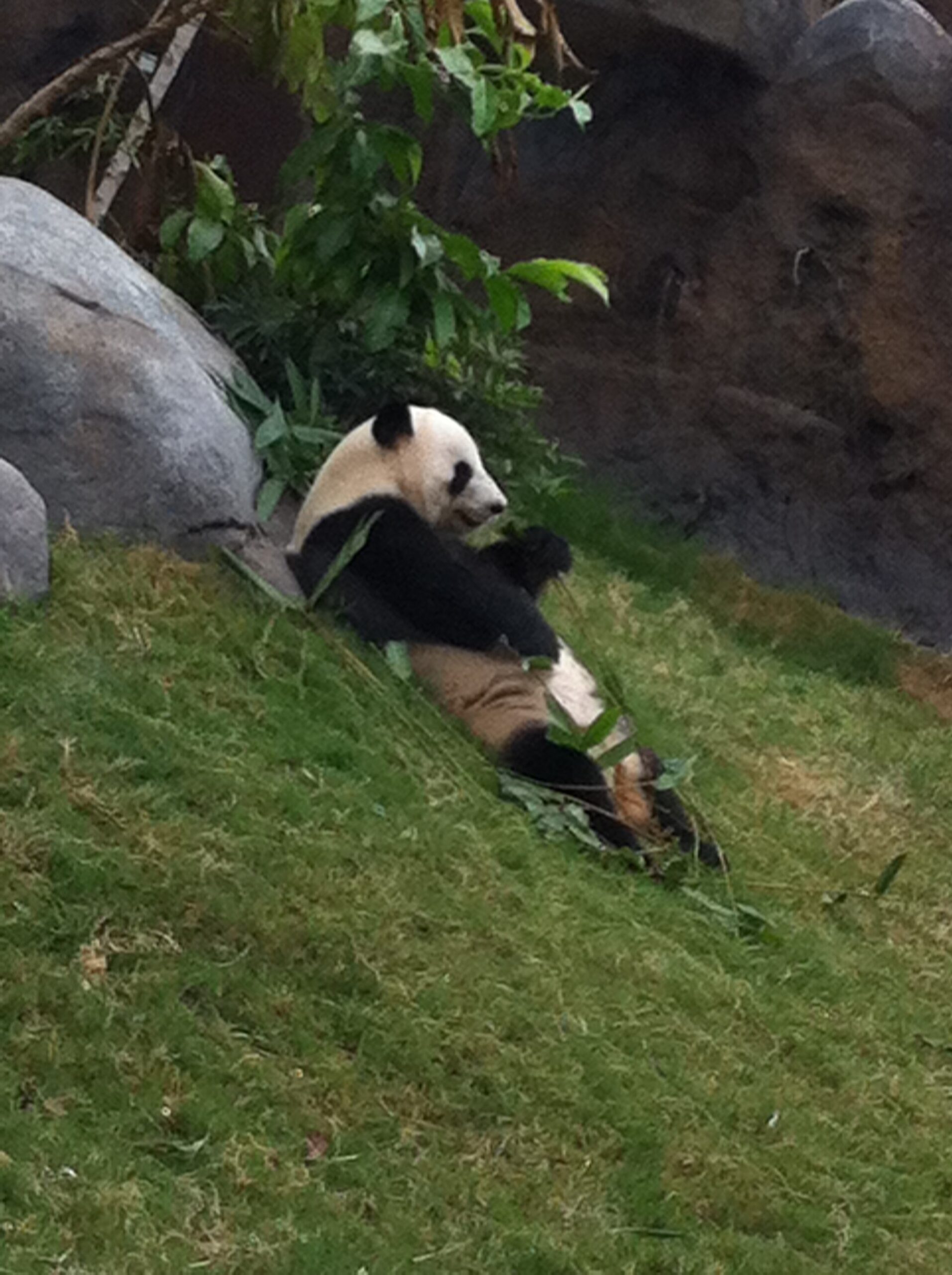
Giant pandas sleep a great deal — often ten hours or more across the day — and are at their most active around feeding. Bamboo is so poor in nutrition that a panda has to eat enormous quantities of it, and the cycle tends to be a long feed, a long sleep, and repeat. Morning feeds put them upright, using their paws, working through stalks, and that is what you came to see. By early afternoon there is a decent chance you are looking at a large monochrome bundle asleep in a tree fork.
Check the keeper talk times at the gate when you arrive — Zoos SA schedules them daily and they change. A keeper talk at the Bamboo Forest is worth planning your visit around, both because there is usually food involved and because the keepers answer questions properly.
Other timing notes: the zoo is quietest on weekday mornings outside school holidays, and busiest in the first two hours of a weekend and throughout January. In summer, be at the gate when it opens; by noon both you and the pandas will want to be indoors.
Tickets and cost
Panda viewing is included in general zoo admission — there is no separate panda ticket. Adult entry runs around A$45-50, children less, and family passes bring the per-head cost down considerably. Booking online in advance is usually a few dollars cheaper than the gate and guarantees entry on a busy day.
Two things worth knowing. A Zoos SA membership pays for itself in roughly two visits and also covers Monarto Safari Park an hour east, so if you are in South Australia for a week and interested in both, do the sums. And close-encounter experiences are sold separately and sell out — if one is running for the pandas during your visit, book it well ahead rather than hoping on the day.
For how the ticket fits into a wider budget, see our Adelaide trip cost guide.
Getting there
Adelaide Zoo is on Frome Road, in Botanic Park on the northern edge of the CBD, and it is genuinely walkable from the city — ten to fifteen minutes from the eastern end of North Terrace, through the Botanic Garden or along Frome Road. That is the nicest approach and it costs nothing.
Otherwise: the free City Connector bus stops nearby, several Adelaide Metro routes run along Frome Road and North Terrace, and there is metered parking on Frome Road and Plane Tree Drive that fills early on weekends. Driving is the worst option, as it usually is in this city — see our getting around Adelaide guide.
A good combination for half a day: the Adelaide Botanic Garden first, which is free and immediately adjacent, then the zoo, then walk back down to North Terrace.
What else is at the zoo
Adelaide Zoo opened in 1883 and is the second-oldest zoo in Australia, which shows in the best possible way — mature trees, heritage buildings, and a scale that can be walked properly in a couple of hours rather than trudged. It holds around 2,500 animals across roughly 250 species.
Beyond the pandas, the things people single out are the Sumatran tigers, the Malayan tapirs, the giraffes, the Nepalese red pandas — a genuinely charming consolation prize if the giant pandas are asleep — and the walk-through bird aviaries. There is also a strong Australian native section with koalas, kangaroos and a nocturnal house. Our full Adelaide Zoo guide covers the rest of the site, the food options and how to route a visit with children.
Accessibility
Adelaide Zoo is one of the more accessible attractions in the city. Paths are sealed with gentle gradients throughout, wheelchairs and mobility scooters are available to hire free of charge if booked ahead, and there is a Changing Places facility on site. Zoos SA also publishes a sensory guide for autistic visitors and people with sensory sensitivities, which flags the loud and crowded parts of the site.
The Bamboo Forest viewing areas are step-free. As always, confirm specifics with the zoo directly before travelling, since facilities and hire availability change.
Why there are pandas in Adelaide at all
Giant pandas exist outside China only through bilateral loan agreements, a practice that goes back to the 1950s and became widely known after the 1972 pair sent to Washington. Since the 1980s the arrangement has been a paid loan rather than a gift, with the fees directed to conservation programmes in China and any cubs remaining Chinese property.
The conservation case has substance behind it. Wild giant panda numbers have risen from a low point in the 1980s to roughly 1,800 today, and in 2016 the IUCN moved the species from Endangered to Vulnerable — one of the more genuinely successful large-mammal recoveries anywhere, driven mostly by habitat protection and reserve creation in Sichuan, Shaanxi and Gansu. Zoo populations contribute research, genetics and, frankly, the public attention that funds the rest.
The critique is worth stating too: pandas are expensive to keep, the enclosures and the bamboo supply chain cost far more than the equivalent for most species, and reasonable people argue the money would save more animals elsewhere. Adelaide’s counter-argument is that Wang Wang and Fu Ni measurably lifted the zoo’s visitor numbers and funding for fifteen years, which paid for a great deal of other work.
Six things to know about giant pandas before you go
- They are bears. Not raccoons, not a separate family — genuine Ursidae, with the digestive system of a carnivore and the diet of a herbivore, which is why they need so much bamboo.
- They have a sixth digit. An enlarged wrist bone functions as an opposable pseudo-thumb, letting them grip a stalk. Watching one strip bamboo is watching that bone at work.
- Bamboo is a terrible food. Low in nutrients and hard to digest, so a panda has to eat tens of kilograms a day and spend most of its waking hours doing it.
- They do not hibernate, unlike most bears — the food supply does not allow the fat reserves needed.
- Cubs are astonishingly small. About 100 grams at birth, blind, pink and hairless. The black-and-white pattern develops over the following weeks.
- They are quieter than they look. Adult pandas bleat, honk and chirp rather than roar, which is disconcerting the first time you hear it.
The honest verdict
Are the pandas worth the ticket on their own? If you have seen giant pandas at Chengdu, Edinburgh, Washington or Berlin — no. Adelaide’s enclosure is good but it is not a step up on those, and A$45-50 for two animals that may be asleep is a lot.
If you have not seen a giant panda before, or you are travelling with children, or you are anywhere in Australia and this is the only opportunity on the continent — yes, clearly. And in either case the ticket buys you a whole zoo, not just the pandas, and Adelaide Zoo is a genuinely good one: old, shady, walkable and unhurried, in a parkland setting ten minutes from the middle of the city.
The mistake to avoid is arriving at 2pm on a hot January afternoon expecting a performance. Go at opening, check the keeper talk times, and give the enclosure two visits — once when you arrive and once before you leave. Between them you will almost certainly see a panda awake.
Frequently asked questions
Does Adelaide Zoo still have pandas?
Yes. Xing Qiu and Yi Lan arrived from China at the end of 2024 and went on public display on 21 January 2025, replacing Wang Wang and Fu Ni. They are the only giant pandas in Australia.
What happened to Wang Wang and Fu Ni?
They returned to China at the end of 2024 after fifteen years in Adelaide, having arrived in 2009 on what was originally a ten-year loan that was extended twice.
How much does it cost to see the pandas at Adelaide Zoo?
Panda viewing is included in general admission — around A$45-50 for an adult, less for children, with family passes available. There is no separate panda ticket. Booking online is usually cheaper than the gate.
What is the best time of day to see the pandas?
Morning, close to opening. Pandas sleep for much of the day and are most active around feeding times. Check the keeper talk schedule at the gate when you arrive and plan around it.
How long do you need at Adelaide Zoo?
Twenty to forty minutes at the Bamboo Forest, and two to three hours for the whole zoo. Half a day is comfortable if you combine it with the Botanic Garden next door.
How do I get to Adelaide Zoo from the city?
Walk. It is ten to fifteen minutes from the eastern end of North Terrace, through the Botanic Garden or along Frome Road. The free City Connector bus and several Metro routes also serve it, and there is limited metered parking on Frome Road.
Will the Adelaide pandas have cubs?
That is the intention — Xing Qiu and Yi Lan are young and are described as a future breeding pair. Giant panda breeding is extremely difficult, with a receptive window of only a few days a year, and it is not something to plan a visit around.
Are there giant pandas anywhere else in Australia?
No. Adelaide Zoo is the only place in Australia with giant pandas, and one of very few in the southern hemisphere.
Related Adelaide Guides
- Adelaide Zoo Guide — the whole site, tickets, food and routing.
- Adelaide Botanic Garden — free, and immediately next door.
- Monarto Safari Park — the open-range sister site an hour east.
- Cleland Wildlife Park — koalas and kangaroos in the Adelaide Hills.
- Adelaide Wildlife Experiences — everything from dolphin swims to sea lions.
- Adelaide with Kids — building a family day around the zoo.
- North Terrace — the walk in, and what else is on it.
- Things to Do in Adelaide — the wider list.
Photo Credits
A giant panda in a zoo enclosure: “Grosser Panda.JPG” by J. Patrick Fischer, via Wikimedia Commons, CC BY-SA 3.0.
A giant panda feeding on bamboo: “Ailuropoda melanoleuca Giant Panda5.JPG” by Laslovarga, via Wikimedia Commons, CC BY-SA 3.0.