On a Saturday afternoon in July, the footbridge over the River Torrens carries a slow red-and-blue river of people from the city side to the northern parklands, and the noise from Adelaide Oval reaches the Botanic Garden a kilometre away. Two hours earlier the same bridge was empty. That transformation — a quiet, orderly city turning into a very loud one for three hours and then folding itself back up — is the thing to understand about sport in Adelaide. It is not a background hum the way it is in Melbourne. It arrives in concentrated bursts, and when it arrives it takes over the parklands, the pubs on O’Connell Street and every tram heading north.
This guide covers what you can actually go and watch across the year: AFL and cricket at Adelaide Oval, A-League football at Coopers Stadium, basketball and netball at the Adelaide Entertainment Centre, the Adelaide 500 through the East Parklands, the Tour Down Under in the Hills, LIV Golf at a private club that opens its gates once a year, and the handful of sports you can play yourself without a membership. It also covers the parts that are honestly not worth your money. Prices were checked in September 2026 and are given in Australian dollars — treat them as the right order of magnitude rather than the number you will see at the checkout, because every code repriced for the 2026-27 season.
The Adelaide sporting year at a glance
Adelaide’s calendar has an unusual shape. Summer belongs almost entirely to cricket and motorsport, autumn is a four-day AFL takeover, winter is footy every weekend, and spring is the quiet gap where the city gets its parklands back. If you are choosing when to come purely for the sport, the two densest windows are late December to mid-January and the second week of April.
| When | What | Where | Typical entry (A$) |
|---|---|---|---|
| Mid-January | Santos Tour Down Under | City streets and the Adelaide Hills | Free roadside |
| Oct-Mar | Adelaide 36ers (NBL) | Adelaide Entertainment Centre | 30-70 |
| Oct-May | Adelaide United (A-League) | Coopers Stadium, Hindmarsh | 25-45 |
| Dec-Jan | Test cricket and Big Bash | Adelaide Oval | 25-70 |
| Late Feb | LIV Golf Adelaide | The Grange (Kooyonga from 2027) | 60-120 grounds |
| 8-11 April 2026 | Gather Round (AFL) | Adelaide Oval and regional grounds | 30-90 |
| Apr-Jul | Adelaide Thunderbirds (Super Netball) | Adelaide Entertainment Centre | 25-55 |
| Mar-Sep | AFL home games, Crows and Power | Adelaide Oval | 30-90 |
| Late Nov | Adelaide 500 (Supercars) | East Parklands street circuit | 80-250 multi-day |
Two things fall out of that table straight away. The cheapest world-class sport in the city is free — you can stand on a Hills roadside in January and watch a WorldTour peloton go past close enough to hear the freewheels. And the most expensive thing on the list is a motor race that runs for four days, which is why the multi-day pass is the only sensible way to buy it.
Adelaide Oval: the centre of everything
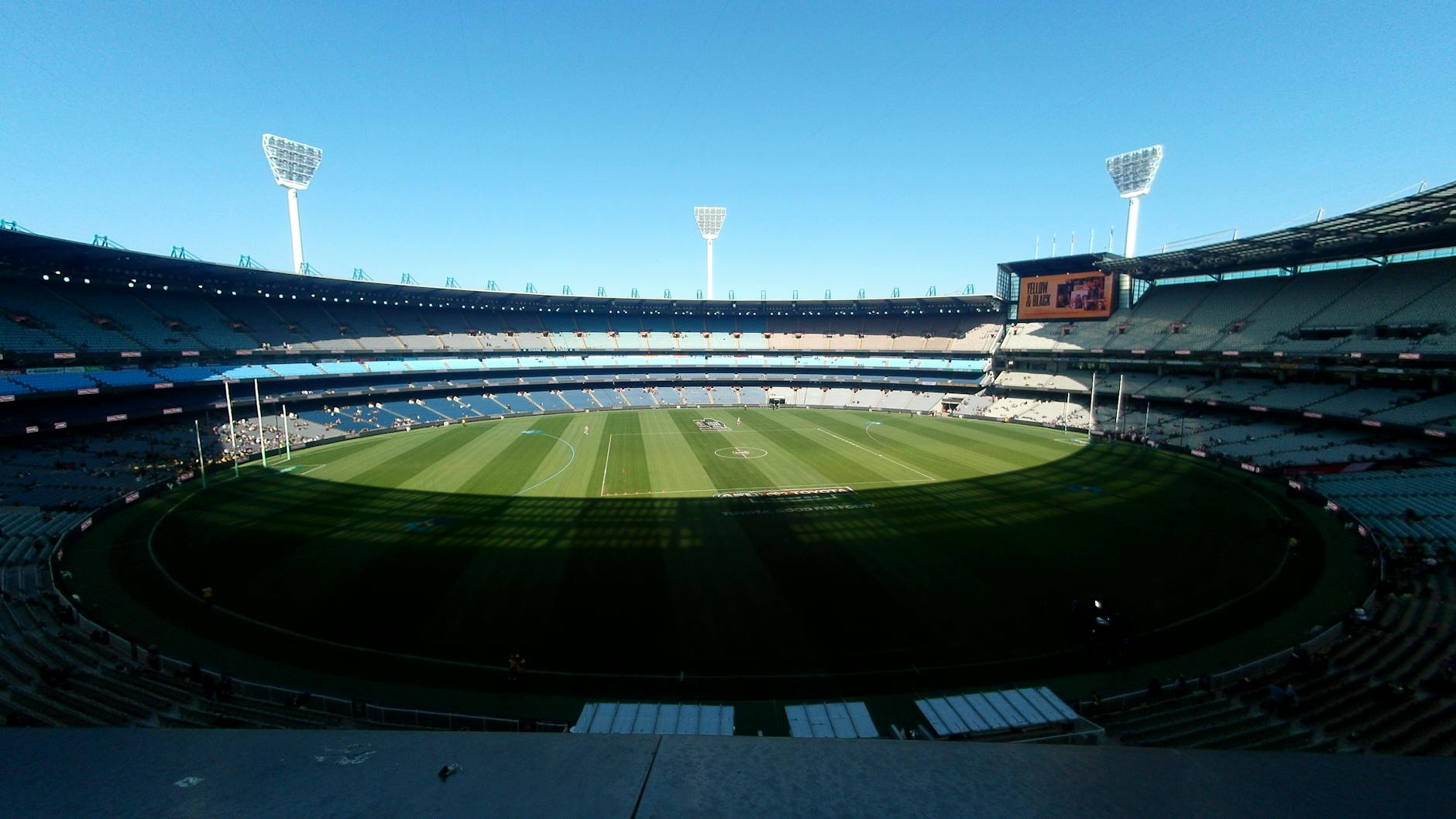
Adelaide Oval is the reason the city punches above its size on the sporting map. It holds a bit over 50,000, sits in the parklands between the River Torrens and North Adelaide, and is a ten-to-fifteen-minute walk from almost anywhere in the CBD grid. The 2013-14 redevelopment rebuilt three grandstands but left the northern mound, the Moreton Bay figs and the 1911 scoreboard alone, which is why it still photographs like a cricket ground rather than a bowl.
It hosts more codes than any other venue in South Australia: home AFL matches for both the Adelaide Crows and Port Adelaide Power, Test cricket, one-day internationals and T20s, Adelaide Strikers Big Bash games, occasional Socceroos and rugby fixtures, and a growing list of stadium concerts. If you are in Adelaide for more than three days between March and February, something is on there. If you want the RoofClimb, the museum or a behind-the-scenes walk on a non-match day, that is a different experience entirely and we cover it in the Adelaide Oval tours guide.
AFL: two clubs, one ground, very different crowds
Australian rules football is the state religion, and Adelaide is the only city with two AFL clubs sharing a single stadium. The Adelaide Crows wear navy, red and gold and draw the broader suburban crowd. Port Adelaide Power wear black, white and teal, carry a much older club history out of the Port, and bring the more partisan away-end atmosphere. The Showdown — the twice-yearly derby between them — is the hardest ticket of the home-and-away season and the one to aim for if you only see one game.
Home games run from March to August, usually Friday night, Saturday afternoon or Saturday twilight. A general admission ticket is the cheap way in and lands you on the northern mound or in the upper reaches of the Riverbank Stand; expect around A$30-40 for an adult. A reserved seat runs roughly A$45 to A$90 depending on the level and the opponent. Members get first call on the good seats, so a big Friday-night fixture can look sold out to the public while plenty of seats sit unused — a frustration locals complain about too.
The ground is loud but not hostile. Crows and Power supporters sit together across most of the stadium rather than in segregated ends, and the vocabulary is more sarcastic than aggressive. Bring a jumper for a night game in June: Adelaide’s winter evenings settle around 8-10°C and the Riverbank Stand catches the wind off the Torrens.
Cricket: the best-looking Test ground in the country
The Adelaide Test is the summer institution. For the 2026-27 season, Australia hosts New Zealand at the Oval from 17 to 21 December 2026 — the traditional pre-Christmas slot. Day-night Tests with the pink ball have been an Adelaide speciality since 2015, and if the fixture you are looking at is a day-nighter, the two hours around sunset are the best value in Australian sport: the lights come up, the pink ball starts to move, and the northern mound fills with people who have been there since eleven.
A single day’s Test ticket typically runs A$40-60 for an adult, with children often free or heavily discounted on days four and five. Day three is usually the fullest; day five may not happen at all, and tickets for it are priced accordingly. If you want a full day with a picnic and shade, the mound at the northern end is the local’s choice — you sit on grass, you can move, and it costs the least.
The Big Bash is the other cricket to know about. Adelaide Strikers home games at the Oval in BBL|16 include Sydney Thunder on 23 December 2026, the traditional New Year’s Eve fixture against the Melbourne Stars on 31 December with post-match fireworks, Melbourne Renegades on 6 January 2027, Hobart Hurricanes on 12 January and Perth Scorchers on 16 January. Tickets sit in the A$25-35 range for adults and family passes are genuinely cheap. The New Year’s Eve game sells out first every year and is the best night out on this list if you have children with you — see our guide to Christmas and New Year in Adelaide for how it fits with everything else happening that week.
Getting there, and what to do afterwards
Do not drive. Parking around the parklands is limited, expensive and slow to clear afterwards, and the walk from the CBD across the Torrens footbridge takes twelve minutes from Rundle Mall. If you are coming from further out, the free City Connector and the tram network get you to North Terrace and you walk from there — the free tram zone covers the whole city stretch, and the wider network is set out in our Adelaide public transport guide. On major event days Adelaide Metro runs extra trains and buses, and your event ticket often includes travel; check the fine print on the ticket rather than assuming.
Afterwards, the crowd splits two ways. North Adelaide’s O’Connell Street pubs fill within ten minutes of the final siren and stay full. The CBD side empties toward Leigh Street, Peel Street and the east end of Rundle Street, which is a better bet if you want to eat rather than stand. Our guides to Adelaide pubs and the laneway bars both cover the walk-up options that will still seat you at 6pm on a match day.
Gather Round: the AFL’s festival of footy
Once a year the entire AFL competition relocates to South Australia for a weekend. Gather Round 2026 runs 8-11 April, with all 18 clubs playing nine games over four days — some at Adelaide Oval, others at regional grounds in the Barossa, Mount Barker and Norwood. The Crows open against Carlton on the Thursday night and Port Adelaide close it against St Kilda on the Sunday.
The part most visitors miss is that the free component is excellent. The Macca’s Footy Festival at Elder Park runs all four days at no cost: a 150-metre zipline over the Torrens, a merch store, player appearances, food trucks and licensed bars, with the river and the Festival Centre as a backdrop. There is also a 4km fan run, “Run 4 Your Club”, at 8am on the Saturday. If you are in town that weekend without a match ticket, Elder Park is a genuinely good afternoon rather than a consolation prize.
Accommodation is the pinch point. The city books out months in advance for Gather Round and rates roughly double. If you are planning around it, look at North Adelaide, which puts you a short walk from the Oval, or accept a base in Glenelg and use the tram. Our overview of where to stay in Adelaide sets out the trade-offs by area.
Football at Coopers Stadium
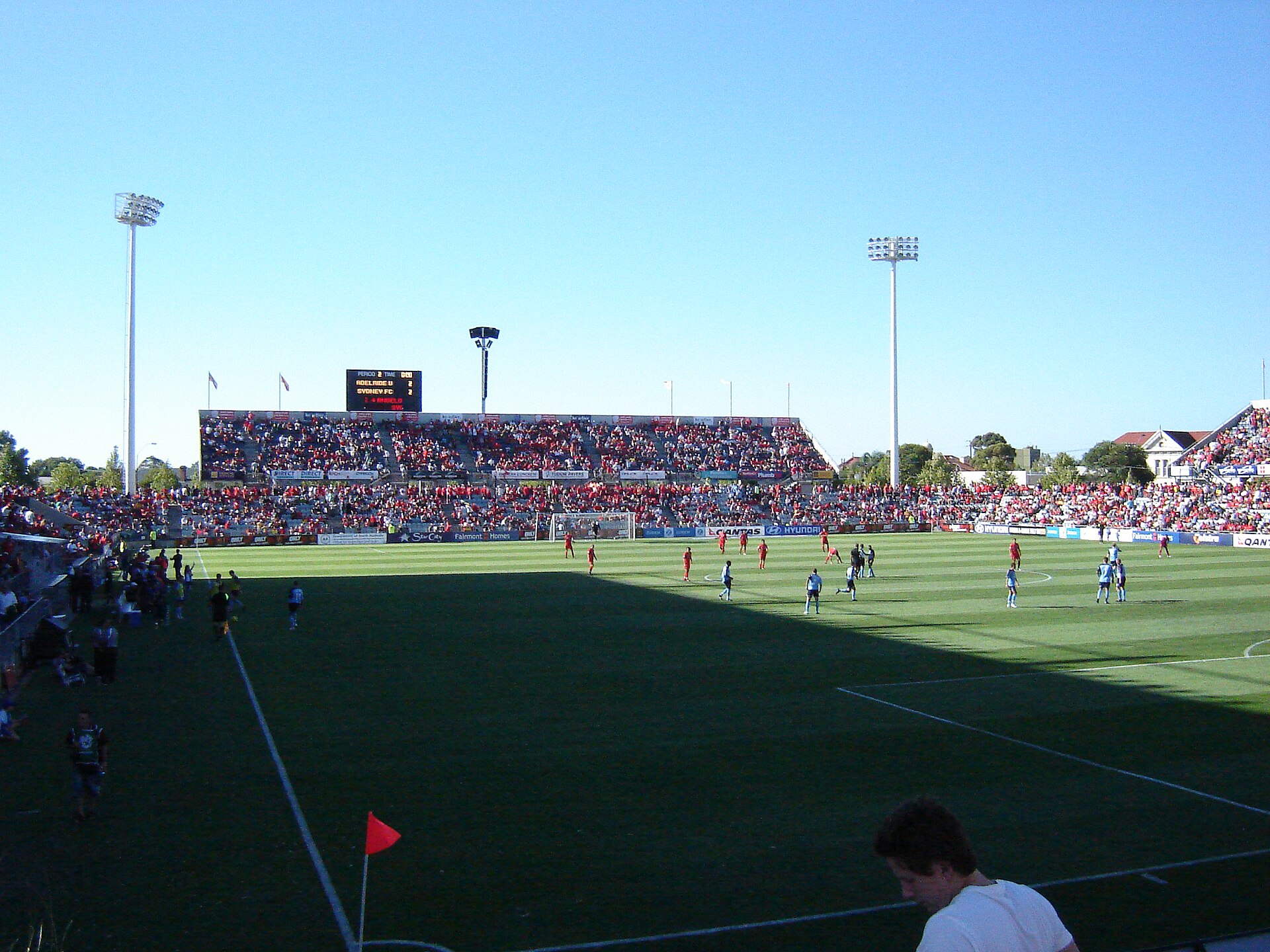
Adelaide United play at Coopers Stadium — most locals still call it Hindmarsh — at 34 Holden Street, about 3km north-west of the CBD. It holds 16,500 with roughly 15,000 seated, and it is one of the few purpose-built rectangular football grounds in Australia. That matters more than the capacity: there is no athletics track and no cricket outfield between you and the game, so a A$28 general admission ticket in the corner gives you a view that would cost four times as much at a converted stadium.
The A-League Men and A-League Women seasons run roughly October to May, with most home games on a Friday or Saturday night. Ticketing runs through Ticketek via the club’s own membership site. The Red Army occupies the northern end and generates the noise; if you want atmosphere, buy into that end, and if you have small children with you, don’t — the family sections along the western side are quieter and better sightlined.
Getting there is straightforward: Bowden railway station on the Outer Harbor line is about a ten-minute walk, and buses run along Port Road. The pubs on Port Road and in Bowden fill before kick-off. This is the most affordable big-time sport in the city and the one visitors most often overlook.
Basketball and netball under one roof
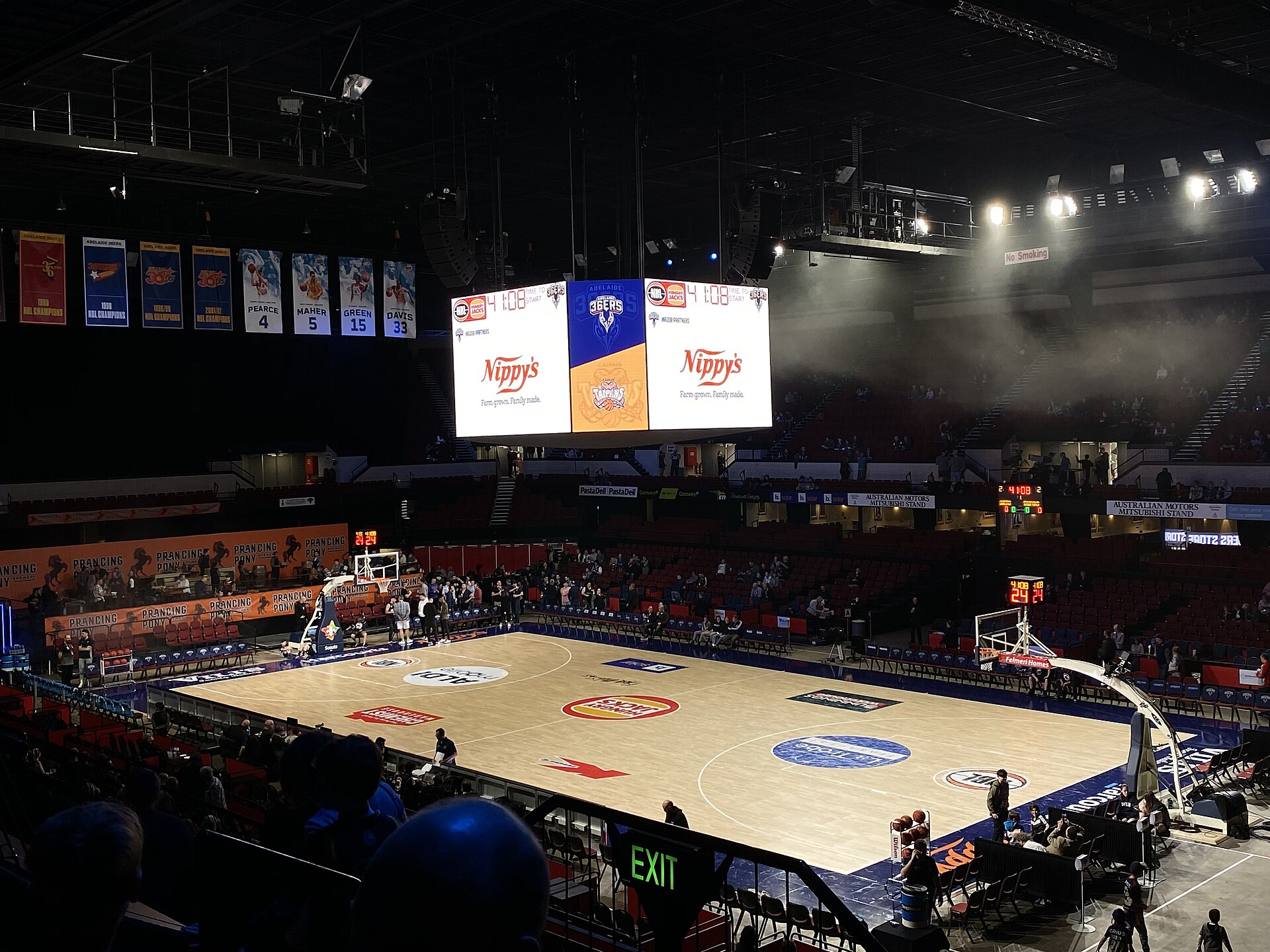
The Adelaide Entertainment Centre on Port Road, Hindmarsh, is the city’s indoor arena and holds around 10,000 in sports configuration. Two teams call it home. The Adelaide 36ers have played there since the 2019-20 NBL season, and their crowd is the loudest indoor crowd in the state — four championship banners hang above the court and the club has a long institutional memory. NBL season runs September to March, and tickets sit around A$30 at the back to A$70 courtside.
The Adelaide Thunderbirds play Super Netball in the same building, roughly April to July, and won the 2026 premiership. Netball crowds in Adelaide are large, young and family-heavy, and the tickets are cheaper — A$25-55 covers most of the house. If you have never been to elite netball, it is a faster and more physical game than television suggests, and it is one of the best-value tickets in the city.
The arena is on the tram line: the Entertainment Centre stop is directly outside, and the tram runs there from the city in about ten minutes. That makes it the easiest venue in Adelaide to get to and from without a car.
Motorsport: the Adelaide 500
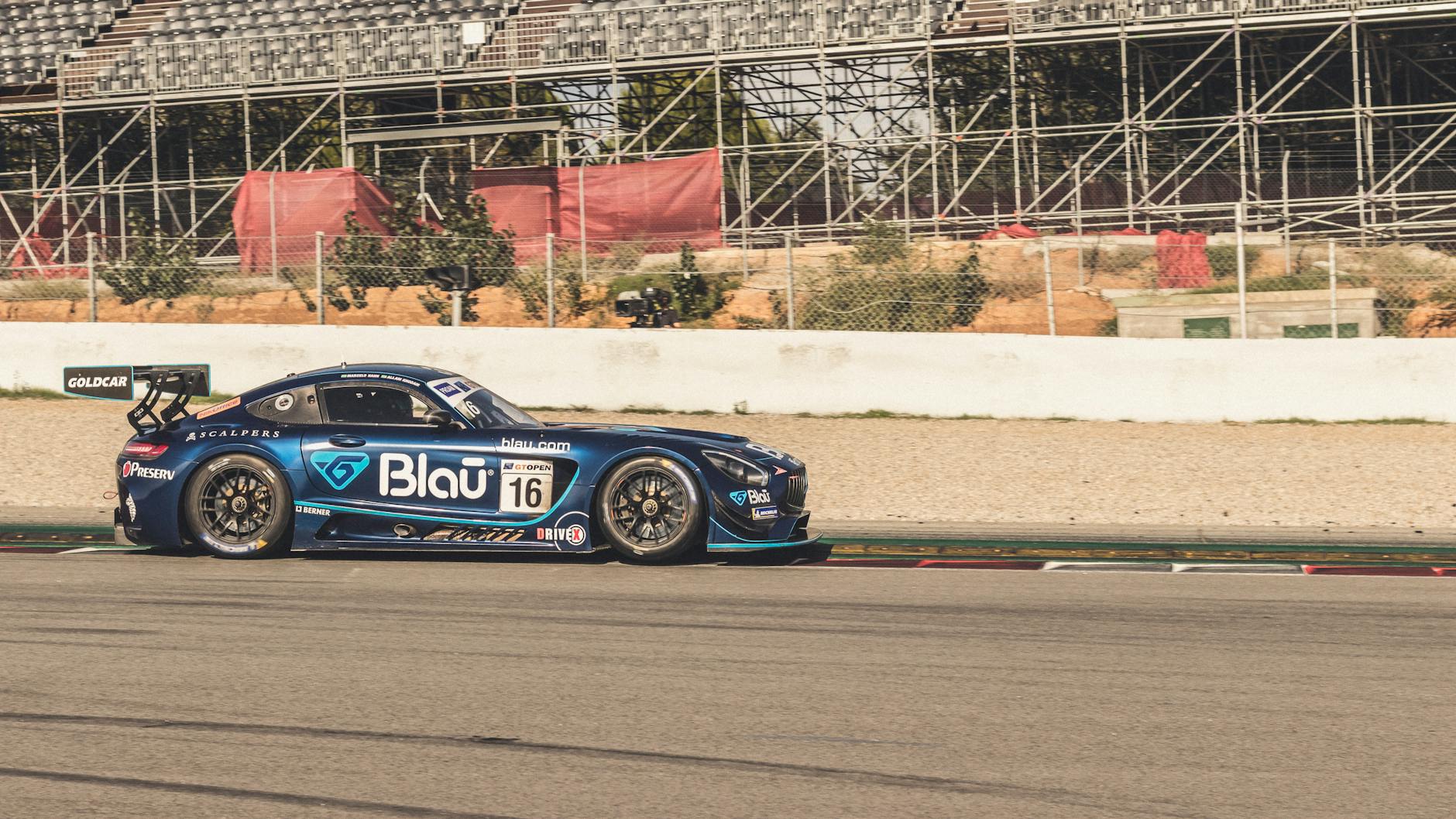
Every late November the East Parklands become a 3.2km street circuit, and Supercars racing takes over a corner of the city for four days. The Adelaide 500 has a long history here — the circuit follows the same broad path as the Australian Grand Prix layout used from 1985 to 1995 — and the noise carries a long way east and north.
Buy the multi-day pass. Single-day tickets exist, but Thursday and Friday are practice and support categories, and the racing you came for is on Saturday and Sunday; a four-day general admission ticket is barely more than two singles and gives you the concerts as well. Expect roughly A$80-120 for four-day general admission and A$180-250 once you add a reserved grandstand seat.
Here is the honest verdict on the grandstands: unless you are buying shade or you have mobility needs, general admission is better. The circuit is walkable in full, the viewing mounds at Turn 8 and the Senna Chicane are excellent, and moving around the track over four days shows you more of the racing than a fixed seat ever will. What a grandstand does buy you is a guaranteed spot in late-November heat, which in Adelaide can mean 35°C, and that is a real consideration rather than a soft one. Our dedicated Adelaide 500 guide goes through the ticket tiers, the concert line-ups and where to actually stand.
Cycling: the Tour Down Under
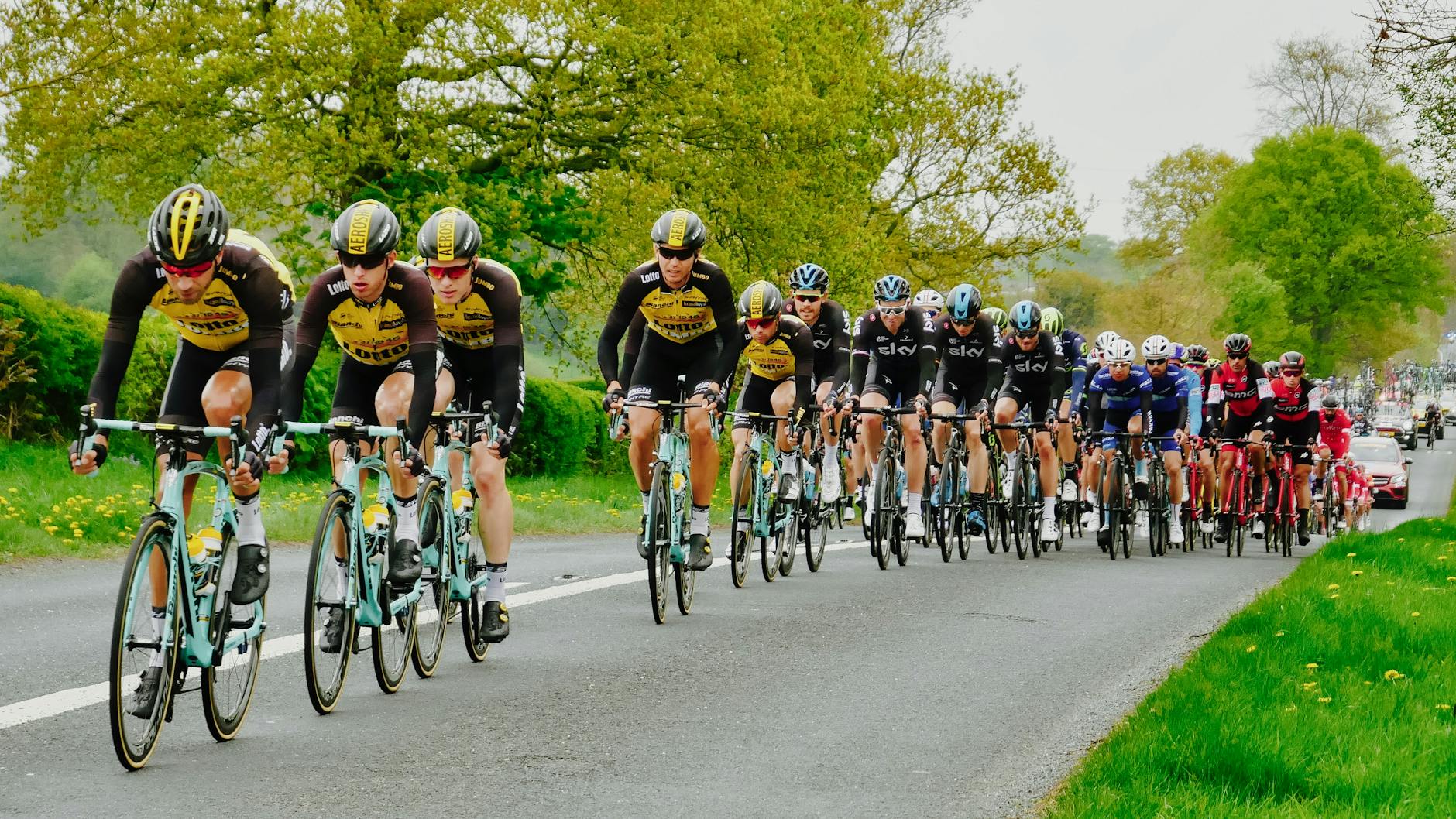
The Santos Tour Down Under opens the men’s UCI WorldTour calendar every January, with the women’s race running alongside it. Stages start and finish in Hills towns and coastal suburbs — Stirling, Willunga, Victor Harbor, Glenelg, Campbelltown — with a criterium in the city streets to bookend it. Willunga Hill is the climb everyone knows, and the crowd on the switchbacks there is the closest Australian cycling gets to a European mountain stage.
All of it is free to watch. You pick a corner, you wait, and a WorldTour peloton goes past at close range twice if the stage does a circuit. Bring water, a hat and sunscreen — January in Adelaide is hot and the Hills roadsides have very little shade. Hospitality packages exist and are perfectly pleasant, but you are paying for catering and a marquee, not for a better view of the race. The Tour Down Under guide has the stage-by-stage detail and the best free vantage points, and if the racing makes you want to ride yourself, our Adelaide cycling guide covers hire, the Torrens Linear Park path and the Hills climbs the pros use.
Golf: a world-class sandbelt you mostly cannot play
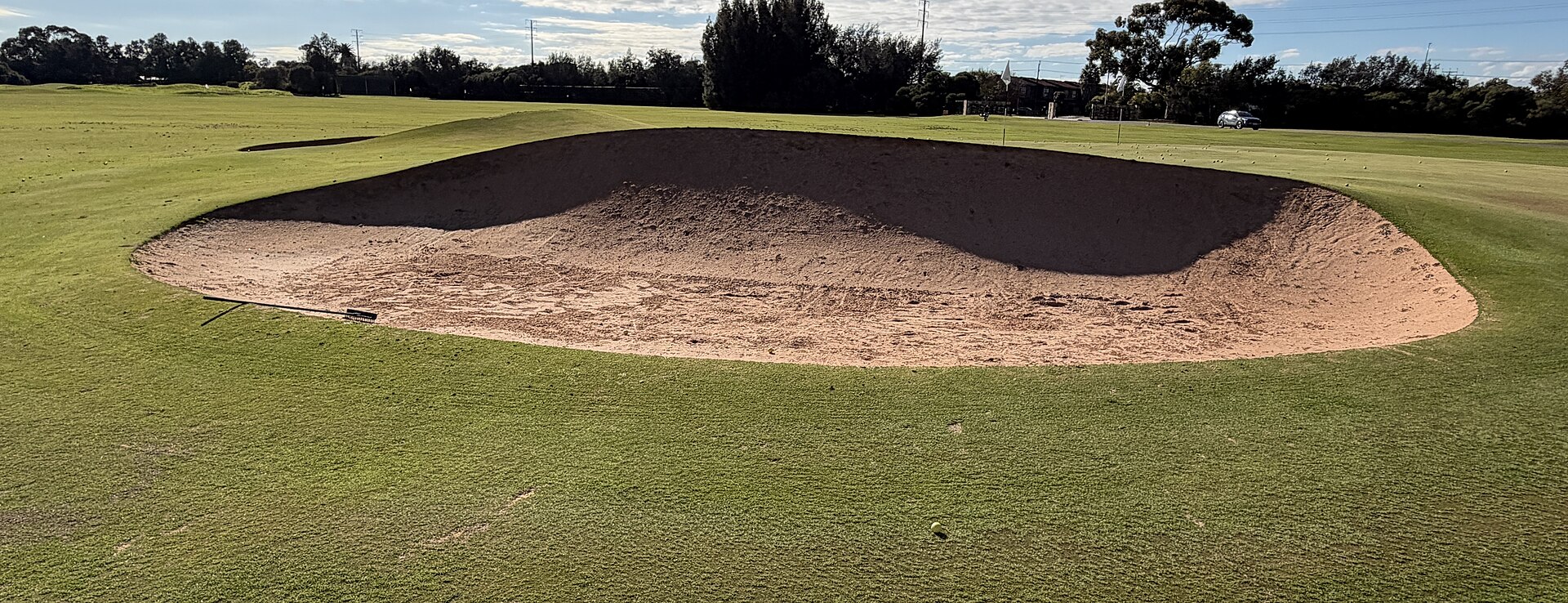
Adelaide’s western suburbs sit on a sand belt that rivals Melbourne’s, and the two best courses on it — Royal Adelaide, founded in 1892 and one of only six Australian courses in the World Top 100, and Kooyonga, minutes from the airport and a multiple Australian Open host — are both private. Visitors can sometimes play through a member introduction or an overseas-visitor arrangement, but you cannot simply book a tee time online, and it is worth being clear about that before you plan a golfing trip around them.
What you can play is North Adelaide Golf Course: 54 holes in the northern parklands, established 1890, publicly owned and open to anyone. Green fees are modest, clubs can be hired, and the location — a fifteen-minute walk from the CBD, with the city skyline on one side and North Adelaide’s terraces on the other — is unmatched for a municipal course anywhere in Australia. It is not a championship test. It is a genuinely good, cheap round in the middle of a capital city.
LIV Golf Adelaide is the one week when the gates open. It ran at The Grange through 2026 and moves to Kooyonga Golf Club for 2027 — check the venue before you book anything, because this is the detail that dates every article written about it. The event debuted in 2023, has twice been voted the world’s best golf event, draws 260,000-plus over the week and claims A$217 million-plus in economic contribution. It uses a shotgun start, so every hole is live at once and there is no waiting for a marquee group to come around.
Ticketing runs in tiers. The Grounds Pass gets you all holes, the Fan Village and the post-round concerts, with under-12s free alongside a paying adult. Grounds Plus adds elevated viewing, the shaded Oasis area and a first drink. Above that sit hospitality options — The Watering Hole, Barossa, Birdie Shack and Ripper Point. The Watering Hole at the par-three 12th is the party hole and is worth the upgrade if that is what you want from a day’s golf; if you actually want to watch golf, it is the last place you should stand.
Horse racing and the rest of the calendar
Morphettville is the main metropolitan racecourse, about 9km south-west of the city and on the Glenelg tram line, with the Adelaide Cup carnival in March as its headline meeting. The Adelaide Cup public holiday on the second Monday in March exists because of it, which tells you something about the city’s priorities.
The more interesting meeting is at Oakbank in the Adelaide Hills over the Easter long weekend. The Oakbank Easter Racing Carnival is a jumps-racing and picnic tradition set in a natural amphitheatre, and it functions as much as a Hills social event as a race meeting. If you are in the Hills at Easter it is worth building a day around — combine it with the towns covered in our Adelaide Hills day trip guide.
Beyond that: the SANFL — South Australia’s state-level Australian rules competition — plays through winter at suburban grounds, entry is a few dollars, and it is the most authentic footy you will see. Port Adelaide’s Alberton Oval and Norwood Oval both have grandstands older than most Australian stadiums. Our Port Adelaide guide covers the wider precinct if you want to make a day of it.
Playing rather than watching
Adelaide is unusually easy to be active in, mostly because the parklands ring the entire CBD and nobody built on them. A visitor with a spare morning has real options.
- Cycling — the Torrens Linear Park path runs from the sea to the Hills foothills, is flat, sealed and largely traffic-free, and hire bikes are widely available in the city.
- Swimming and surfing — the metropolitan beaches are calm and shallow for swimming; for actual waves you go south to Middleton, Goolwa or Waitpinga, which our Adelaide surfing guide covers in detail.
- Hiking and trail running — Waterfall Gully to Mount Lofty is the classic, a steep 3.9km each way; Morialta has three waterfalls and better shade. See the Adelaide hiking trails guide.
- Golf — North Adelaide Golf Course, as above, plus a long list of suburban public courses.
- Tennis and lawn bowls — the Memorial Drive courts sit beside Adelaide Oval, and most suburbs have a bowls club that will happily take a walk-up group.
- Kayaking and rowing — the Torrens through the city is calm and hireable; our River Torrens guide has the operators.
What is not worth the money
A few honest calls, because the alternative is a page that recommends everything equally.
- Adelaide 500 grandstand seats, unless you need shade or a fixed seat. General admission plus a willingness to walk shows you more racing for less.
- Tour Down Under hospitality. The race is free and the roadside view is the good one. Buy the package for the lunch, not the sport.
- Premium seating at the Oval bought speculatively. Stadium Club and the Level 3 Eastern Grandstand venues — the Rick Davies Bar, the John Halbert Bistro, Bespoke Wine Bar & Kitchen — are excellent, but they are geared to members and corporate bookings. A casual visitor is usually better off with a reserved seat and the pub afterwards.
- Match-day parking near any of these venues. Between the price and the twenty minutes you will spend leaving, public transport wins every time.
- Resale tickets for anything except a Showdown or a sold-out BBL game. Adelaide crowds are big but the venues are rarely at absolute capacity, and prices on the door are usually better than the secondary market.
Practical notes for a match day
Buying tickets
Ticketek is the only authorised ticketing agent for Adelaide Oval, and Adelaide United ticket through it as well. Supercars and LIV Golf sell through their own event sites. Buy from those channels: South Australia has consumer protections around ticket resale, but recovering money from an overseas reseller is still a bad afternoon.
Bags, food and drink
Adelaide Oval allows small bags subject to search, and permits sealed water bottles and, for cricket, some food brought in — the exact allowance changes by event, so check the event page rather than a general policy page. Alcohol cannot be brought in anywhere. Venue food is standard stadium fare at standard stadium prices; eating beforehand at the Central Market or on Gouger Street costs less and is considerably better.
Weather
Adelaide is the driest capital in Australia and the sun is fierce from November to March. A summer day at the cricket or the 500 needs a hat, sunscreen and more water than you think. Winter footy is the opposite problem: evenings drop toward 8°C, the Riverbank Stand is exposed, and the walk back across the footbridge is windy. Our best time to visit Adelaide guide breaks the year down month by month.
Going with children
Big Bash cricket and Super Netball are the two easiest events to take children to: short, loud, family-priced and finished by 10pm. AFL works from about age seven. The Adelaide 500 is loud enough that under-tens need ear protection, which the event sells but which is cheaper to bring. Our Adelaide with kids guide covers the wider picture.
Frequently asked questions
What is the biggest sporting event in Adelaide?
By attendance and economic impact, LIV Golf Adelaide and the Adelaide 500 compete for the title, with LIV drawing 260,000-plus across its week. By cultural weight, it is Gather Round — four days in April when the entire AFL competition plays in South Australia and the city fills.
Can I watch sport in Adelaide on a budget?
Yes, and better than in most Australian cities. The Tour Down Under is free at the roadside. SANFL football costs a few dollars. Big Bash and A-League tickets start in the mid-twenties, and Adelaide Oval general admission on the northern mound is around A$30-40 for AFL. Our Adelaide on a budget guide has more in the same vein.
Which AFL team should I support if I am visiting?
If you want the bigger, broader, more suburban crowd, that is the Adelaide Crows. If you want the older club history, the harder edge and the better away support, that is Port Adelaide. Locals will not mind either choice; they will mind if you say you support both.
How do I get to Adelaide Oval from the city?
Walk. It is ten to fifteen minutes from most of the CBD grid, across the River Torrens footbridge from Elder Park. From further out, take the tram or a City Connector bus to North Terrace and walk from there. Driving is the worst of the options.
Is the Adelaide Oval RoofClimb worth doing?
It is a genuinely good experience, but it runs separately from match days and it is a different sort of visit — booking, safety briefing, harness, a guided walk along the roof. We cover it properly in the Adelaide Oval tours guide rather than here.
When does the AFL season run in Adelaide?
The home-and-away season runs from March to August, with finals in September. Both Adelaide clubs play eleven home games each at Adelaide Oval, so across a winter weekend there is usually at least one AFL match in the city.
Can visitors play Royal Adelaide or Kooyonga?
Not casually. Both are private member clubs. Visitor play is generally possible only through a member introduction or a formal overseas-visitor arrangement made well in advance. The public alternative is North Adelaide Golf Course, which anyone can book.
Do I need a ticket for the Tour Down Under?
No. Roadside viewing on every stage is free, including Willunga Hill and the city criterium. Paid options are hospitality packages, and they buy you food and shade rather than a better view.
Related Adelaide Guides
- Adelaide Oval Tours & RoofClimb — the non-match-day experience, tour times and what the museum holds.
- The Adelaide 500 — ticket tiers, the circuit, the concerts and where to stand.
- Tour Down Under — stage guide and free vantage points in the Hills.
- Adelaide Events & Festivals — the full annual calendar beyond sport.
- Adelaide Public Transport — trams, trains, buses and metroCARD.
- Where to Stay in Adelaide — choosing an area around an event weekend.
- Cycling in Adelaide — hire, the Linear Park path and the Hills climbs.
- Things to Do in Adelaide — the wider list for the days between games.
Photo Credits
Adelaide United supporters fill the stands at Coopers Stadium: “HindmarshStadium.JPG” by Nicktwiggy at English Wikipedia, via Wikimedia Commons, CC BY-SA 3.0.
The Adelaide Entertainment Centre in NBL configuration: “Adelaide Entertainment Centre – 36ers setup.jpg” by Dizzie131, via Wikimedia Commons, CC BY-SA 4.0.
A bunker at Royal Adelaide Golf Club, Seaton: “RAGC, Seaton 20260705-105345.jpg” by RegionVisitor90, via Wikimedia Commons, CC BY 4.0.