Twenty minutes after leaving the city on the South Eastern Freeway, the air is a few degrees cooler, the gum trees give way to oaks and liquidambars, and the first village appears: a main street of stone cottages, a hotel with an iron-lace verandah, a bakery with a queue. Keep going and there are nearly twenty more, each with its own character, from a German settlement famous for its bakeries and smallgoods to a former blanket-mill town, a motor museum built around an old flour mill and a giant rocking horse you can climb. The Adelaide Hills towns are the reason most visitors fall for this part of South Australia, and the reason locals keep driving up on Sunday mornings.
This guide goes town by town: what each one is like, what to do there, how far it is from the city, and which ones are worth your time if you only have a day. It also has a calendar of the Hills’ monthly markets, three easy driving loops, and the story of the towns whose German names were wiped off the map in the First World War. Opening hours and prices were checked in October 2026 against Adelaide Hills Tourism and the operators’ own websites, but Hills businesses change hands and hours often, so check before you drive up for one particular café or cellar door.
Adelaide Hills towns at a glance
| Town | Roughly from the CBD | Best for | Don’t miss |
|---|---|---|---|
| Stirling | 20 minutes | Lunch, a market, autumn colour | The fourth-Sunday Stirling Market |
| Crafers | 20 minutes | Mount Lofty and Cleland | Mount Lofty Summit lookout |
| Aldgate and Bridgewater | 25 minutes | Families, pub gardens, creek play | The Bridgewater Mill waterwheel |
| Hahndorf | 30 minutes | German heritage, first-timers | The Cedars, Hans Heysen’s home |
| Uraidla and Summertown | 30 minutes | Cool-climate wine, a pub lunch | The Piccadilly Valley cellar doors |
| Mount Barker | 35 minutes | Saturday shopping, practical base | The Adelaide Hills Farmers Market |
| Woodside | 40 minutes | Cheese, chocolate, wineries | Heritage Park’s cheese and chocolate makers |
| Lobethal | 45 minutes | Heritage mill, beer, Christmas lights | The Onkaparinga Woollen Mill precinct |
| Gumeracha | 45 minutes | Children, cherries in season | The Big Rocking Horse |
| Birdwood | 50 minutes | Car lovers | The National Motor Museum |
| Meadows and Macclesfield | 45–50 minutes | Forest, country fairs, quiet | Kuitpo Forest and Crystal Lake Sculpture Park |
How the Hills fit together
It helps to think of the Hills as four loose clusters rather than one place. The freeway villages, Crafers, Stirling, Aldgate, Bridgewater and Hahndorf, sit along the South Eastern Freeway within half an hour of the city and get most of the visitors. East of them, the Onkaparinga Valley towns, Verdun, Balhannah, Oakbank, Woodside, Lobethal and Nairne, are farming and wine country with a slower pace, with Mount Barker as the region’s working hub. To the north, the Torrens Valley road runs through Gumeracha to Birdwood. And to the south, the dairy towns of Echunga, Meadows and Macclesfield border Kuitpo Forest.
You will not see them all in a day, and you should not try. Pick one cluster, add a cellar door or a walk, and leave the rest for another trip. The Hills reward slowing down: most of the pleasure is in parking the car and wandering a main street.
The freeway villages
Crafers
Crafers is the gateway to the Mount Lofty precinct: Mount Lofty Summit, the Mount Lofty Botanic Garden and Cleland Wildlife Park are all a few minutes away. The village itself is small, with the stylish Crafers Hotel, Jimmies wood-oven pizza and the Atelier gallery of local art and design, but most people use it as the start of a Mount Lofty morning rather than a destination in itself.
Stirling
Just 18km from the city, Stirling is the Hills’ garden village, and the one Adelaideans drive up to for lunch. Settled in 1854, it was first orchards and market gardens; by the late nineteenth century Adelaide’s wealthy families were building summer houses here to escape the heat of the plains, and the town still has some of the state’s most beautiful homes and gardens. In autumn its streets turn red and gold, and it is one of the best places in the state for autumn colour.
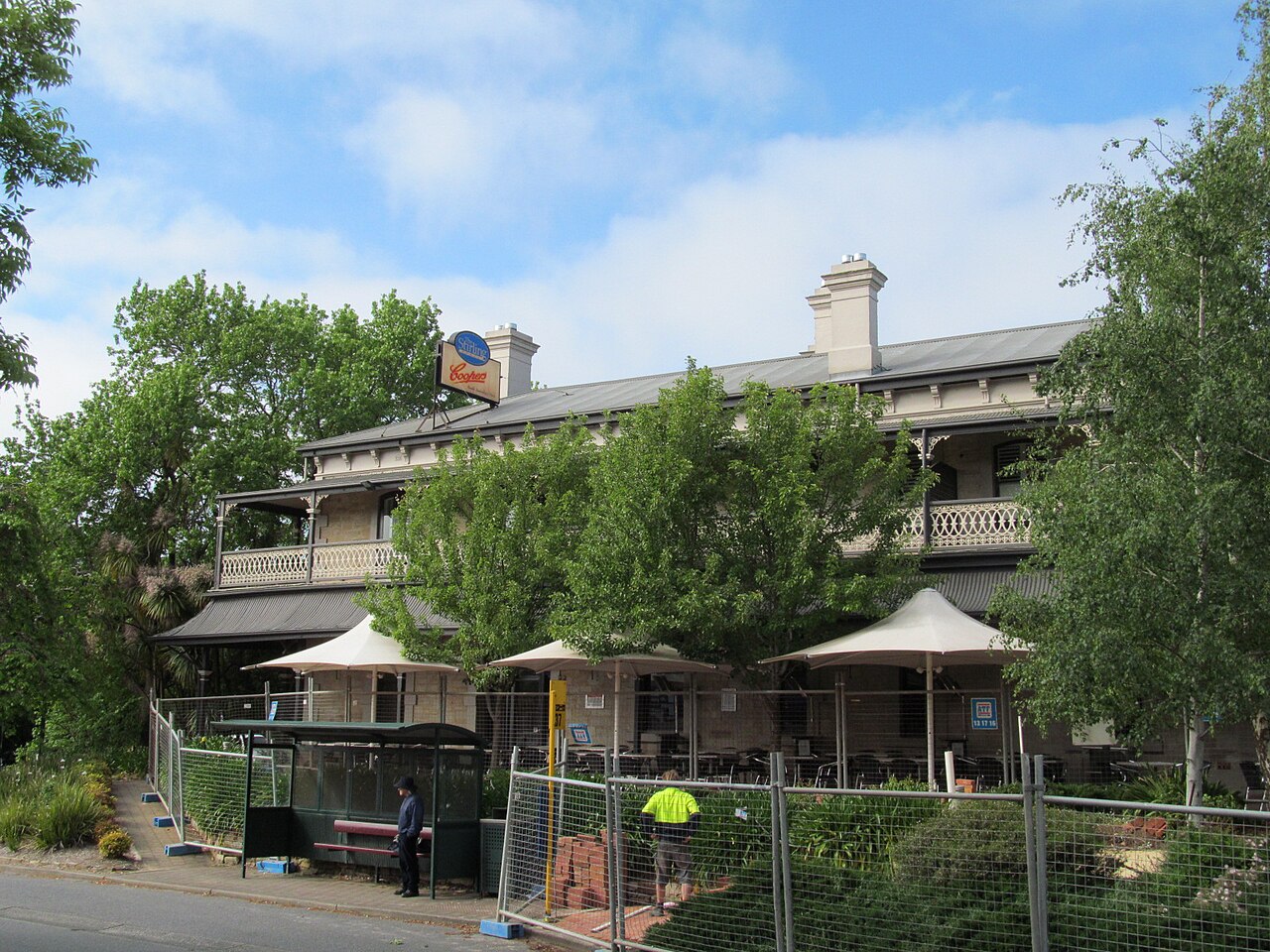
The leafy main street is lined with cafés, restaurants and shops. Local favourites include Matilda’s Bookshop, the Red Cacao chocolateria and the Stirling Hotel. The Stirling Market runs on the fourth Sunday of each month, from 10am to 4pm on Druid Avenue (the December date differs), and from September to April the town’s laneways fill with pop-up stalls and live music at the same time. For a slice of bush, Woorabinda Bushland Reserve is on the edge of town.
The honest verdict: Stirling is not a sightseeing town. There is no single attraction to tick off. It is a place for a long lunch, a browse and a wander, and it is at its best on market Sunday or in April and May, when the trees are turning.
Aldgate
A pretty village just past Stirling, Aldgate is home to Stangate House, a National Trust property with a camellia garden of international significance. The Aldgate Pump Hotel is a family favourite, with a shady beer garden and play equipment, and the village has a handful of good shops and cafés. For a gentle walk, the Aldgate Valley Nature Walk runs to Mylor, and walkers sometimes spot bandicoots along the way.
Bridgewater
Bridgewater is best known for the historic Bridgewater Mill, now a restaurant with tiered decking overlooking its working waterwheel. Next door, the Bridgewater Inn has a shady beer garden above Cox Creek, and just downstream there is a playground that is one of the best spots in the Hills for children to play in a creek, with coffee at The Little Cog café. If you have young children and a sunny afternoon, Aldgate and Bridgewater together are an easy win.
Hahndorf
Founded in 1839 by Prussian Lutheran migrants, Hahndorf is the most visited town in the Hills, and its main street of German pubs, bakeries, smallgoods, cuckoo clocks and craft shops is busy every weekend. Just out of town are Beerenberg Farm, where you can pick strawberries in season, the Hahndorf Farm Barn, Ambleside Distillers, and The Cedars, the home and studio of the landscape painter Sir Hans Heysen. Go on a weekday morning if you can; by Sunday lunchtime the main street traffic is slow and the pubs are full. We cover it fully in our Hahndorf day trip guide.
The Piccadilly Valley and the eastern ridges
Uraidla and Summertown
Half an hour east of the city, Uraidla is home to the historic Uraidla Hotel and The Uraidla Brewery, which makes its beer inside the Uraidla Republic café and bakery. The Uraidla Hills Produce Market runs on the first and third Sundays of each month. Neighbouring Summertown, in the Piccadilly Valley, has some of the Hills’ best cool-climate cellar doors, including Ashton Hills and Greenhill Wines, whose café looks out over the vines. This is the area for pinot noir and chardonnay; our Adelaide Hills wine guide has the cellar doors in detail.
Norton Summit
Settled in 1837, Norton Summit is one of the oldest towns in South Australia, set among apple and cherry orchards above the eastern suburbs. The Scenic Hotel lives up to its name, with views back over Adelaide, and the town is on the doorstep of Horsnell Gully and Morialta Conservation Park, whose waterfalls are best in winter and spring. Marble Hill, the ruined former summer residence of the state’s governors, opens for open days and events.
Lenswood
Lenswood is a patchwork of vineyards and apple, pear and cherry orchards, with cellar doors that make the most of the views. In autumn a handful of orchards host the Pick a Pink Lady Weekend, when you can pick your own apples.
The Onkaparinga Valley
Verdun and Balhannah
Verdun is barely a village, but the Stanley Bridge Tavern, established in 1853, is a classic Hills pub, and Grunthal Brew makes craft beer and gin. Balhannah, a few minutes on, has the Balhannah Hotel, Kidman Flower Co., a native flower farm with shed-door sales and arranging classes, and two well-known cellar doors just out of town, Nepenthe and Shaw + Smith.
Oakbank
Oakbank is famous for one weekend a year: its Easter racing carnival, the largest picnic horse-race meeting in the southern hemisphere. The rest of the year it is a quiet village with a heritage walk that takes in a 160-year-old oak, the Karkoo Nursery café, and the start of the Amy Gillett Pathway, a 17km sealed path to Mount Torrens for cycling, walking and horse riding.
Woodside
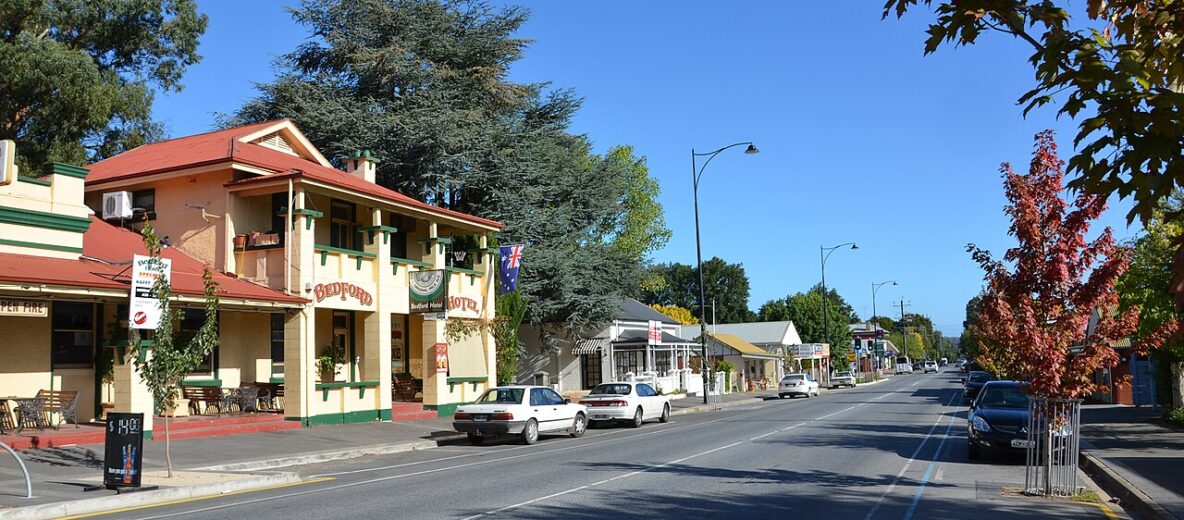
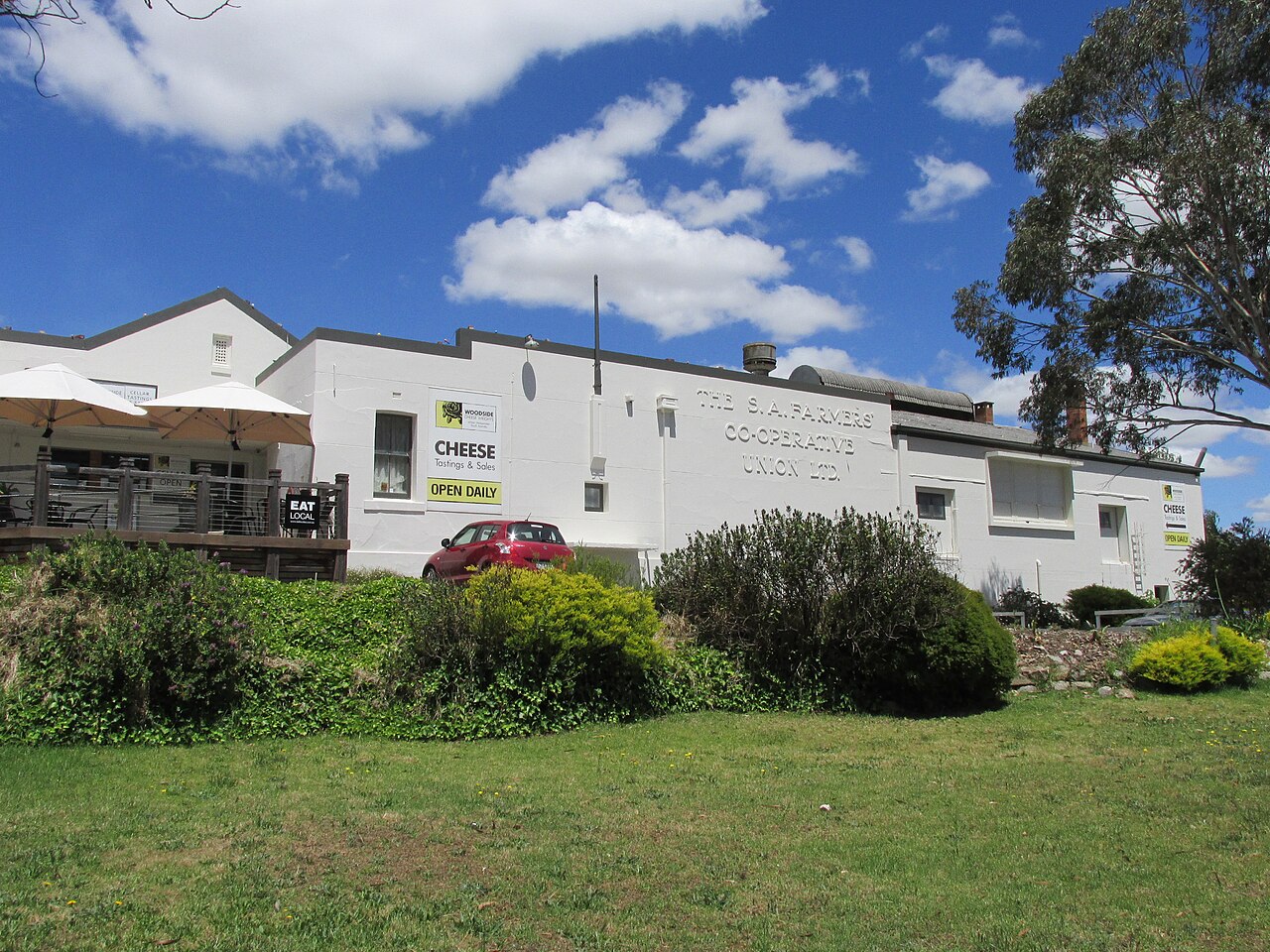
Woodside is the Hills’ food stop. Just off the main street, Heritage Park, a former dairy factory, houses Woodside Cheese Wrights and Melba’s Chocolates and Confectionery, which between them can fill an hour and a car boot. Around town there are pubs, galleries, antique and second-hand shops, and nearby cellar doors include Bird in Hand, Petaluma, Barristers Block and Artwine. A country market runs on the third Saturday of the month. Woodside is not pretty in the way Hahndorf is, but for many locals it is the better stop: less crowded, and the cheese is very good.
Lobethal
Lobethal’s skyline is the saw-tooth roof of the state heritage-listed Onkaparinga Woollen Mill, once the old blanket factory and now home to the Lobethal Bierhaus brewery and restaurant and the Fabrik Arts and Heritage Hub. Settled in 1842 by Prussian Lutherans, the town has St John’s Lutheran Church, built in 1845 and recognised as the oldest Lutheran church building in Australia, and Lobethal Bushland Park for walks through stringybark woodland. Every December, the Lights of Lobethal turn the whole town into a Christmas lights display, a tradition more than 60 years old; see our Christmas Pageant and Lights of Lobethal guide for how to see it without spending an hour in traffic.
Nairne and Hay Valley
Nairne’s heritage-protected main street has a handful of shops and cafés, colourful murals telling the town’s history, and Tin Shed Distilling Co., which makes whisky, gin and rum. Byethorne Park has a lakeside picnic spot. Just out of town in Hay Valley, on the way to Woodside, is Lot 100, a shared site for craft beer, cider, spirits and juice, with a restaurant and joint cellar door. It is one of the easiest ways to taste a lot of the Hills in one stop, though ownership of its businesses has shifted in recent years, so check what is open; our breweries and distilleries guide has the background.
Mount Torrens and Littlehampton
Mount Torrens, at the far end of the Amy Gillett Pathway, is a small heritage town with one of the Hills Sculpture Trail’s stone sculptures and the mud-brick cellar door of Lobethal Road Wines. Littlehampton, next to Mount Barker, has a pub, a café and Four Oaks Farm, which runs trail rides, a riding school and farm visits for children.
Mount Barker
The Hills’ biggest town is a working regional centre rather than a postcard village, with supermarkets, a cinema complex and new housing estates. It earns its place on a visitor’s list for the Adelaide Hills Farmers Market, held every Saturday morning, the UKARIA Cultural Centre’s chamber music concerts, the SteamRanger Heritage Railway, and the boardwalks of Laratinga Wetlands. Drive up Mount Barker Summit for a panorama over the district. If you are staying in the Hills on a budget, Mount Barker is the practical base.
The north: the Torrens Valley
Gumeracha
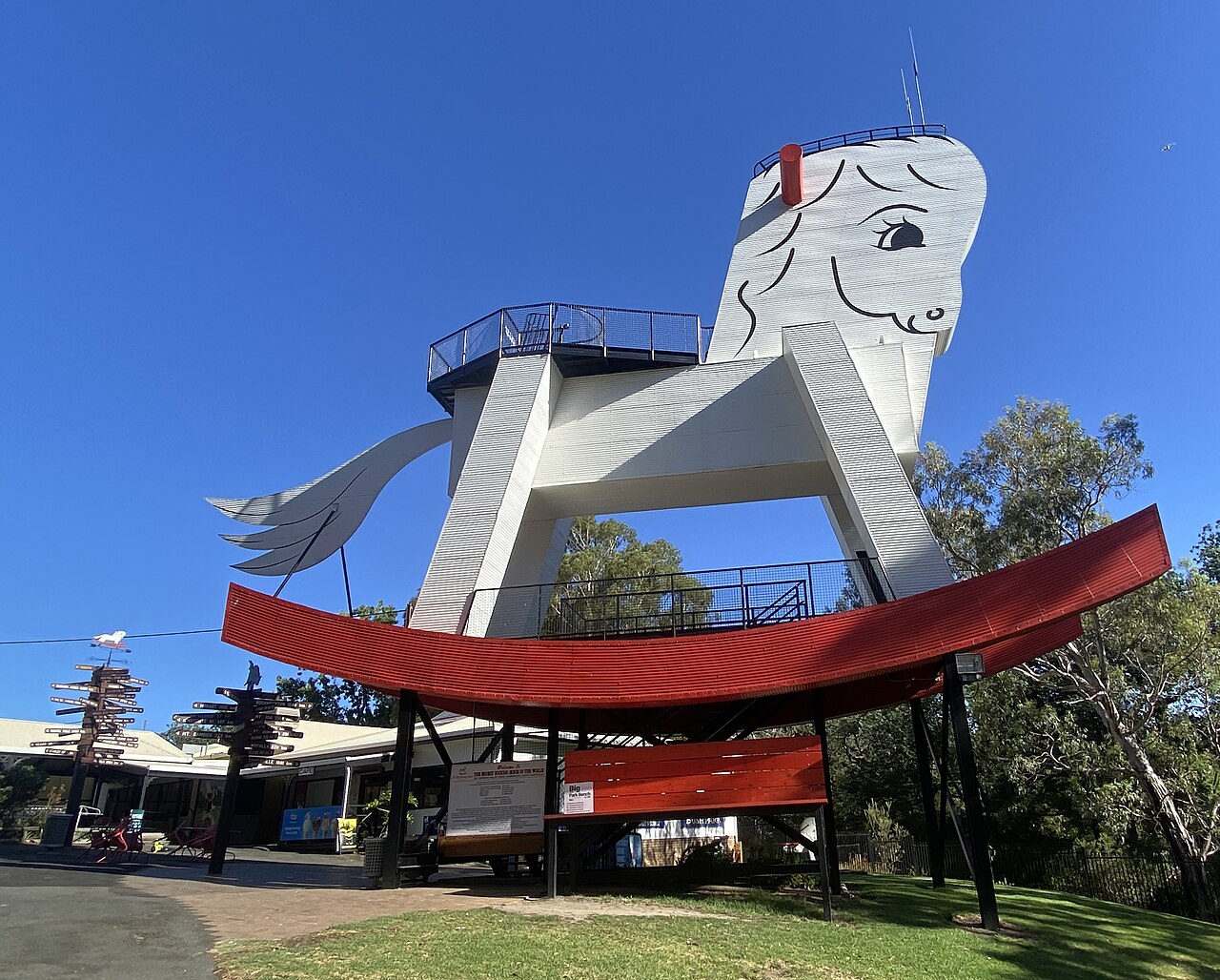
Gumeracha sits in the Torrens Valley among vineyards, olive groves and orchards, with shed-door cherry sales in season. Its landmark is the Big Rocking Horse at The Toy Factory, which sells wooden toys and lets you climb the horse for a view over the valley. It is the sort of “big thing” Australians either love or roll their eyes at, and children are firmly in the first camp. Nearby at Cudlee Creek, Gorge Wildlife Park has Australian and exotic animals, including koala holding.
Birdwood
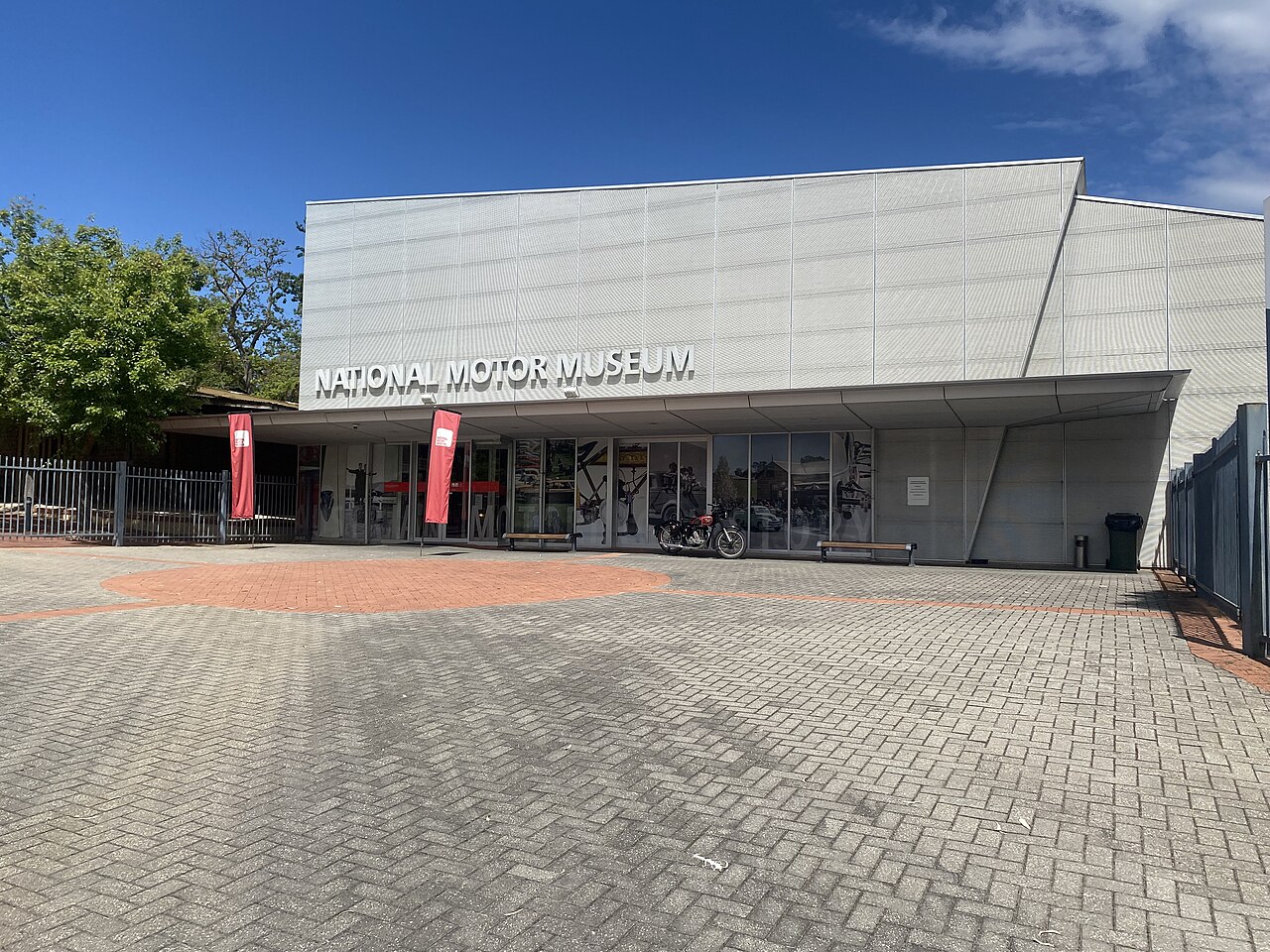
Birdwood began as a German Lutheran settlement in 1848, built a flour mill in 1855, and drew new arrivals when gold was found in the area in 1870. Its big draw today is the National Motor Museum, run by the History Trust of South Australia in and around the historic mill, with hundreds of vintage and classic vehicles and the memorabilia of Australia’s love affair with the car, from petrol bowsers and tin signs to maps and toys. It is open daily from 10am to 5pm, closed on Christmas Day and on days of catastrophic fire danger. Entry costs A$23.50 for adults, A$18.50 concession, A$9.50 for children (under-5s free), and A$57.50 for a family of two adults and up to three children. The museum is also the finishing point of the RAA Bay to Birdwood vintage and classic car run.
Beyond the museum, Birdwood has the Top of the Torrens art gallery, Treasures on Torrens for vintage wares, and the Blumberg Hotel, which still carries the town’s original name. The honest verdict: if you are not interested in cars, Birdwood is a long way to go for a pub lunch. Combine it with Gumeracha and Lobethal, though, and the northern loop makes a very good day.
The south: dairy country and forest
Echunga
Echunga has a gold-fossicking past, told along the Jupiter Creek Heritage Trail, plus a heritage walk, a golf course and the historic Hagen Arms pub. In February the All British Day brings out British cars and motorcycles. At nearby Biggs Flat, Jurlique runs farm tours explaining the plants behind its skincare.
Meadows
Meadows is a dairy town with historic buildings, antique shops, a hotel and bakeries, the Cheese Factory Studio Gallery, and the gateway to Kuitpo Forest, with camping, bushwalking, cycling, horse riding and the Heysen Trail. The Meadows Country Fair is held in October and there is an Easter Fair too, while the country market runs on the second Sunday of each month. Cellar doors nearby include Karrawatta and Magpie Springs, which has an art gallery.
Macclesfield
Established in 1839 on the Angas River, Macclesfield has Crystal Lake Sculpture Park, a good picnic spot that hosts a biennial sculpture event, the two-acre Macclesfield ANZAC Memorial Gardens, a weekly Sunday market, two pubs and the Longview Vineyard cellar door.
Mylor
Mylor is a small village with a country market on the first Sunday morning of each month, the Tupelo Grove nursery for gardeners, and Warrawong Wildlife Sanctuary, where hundreds of native animals live, including the elusive platypus.
The towns that lost their names
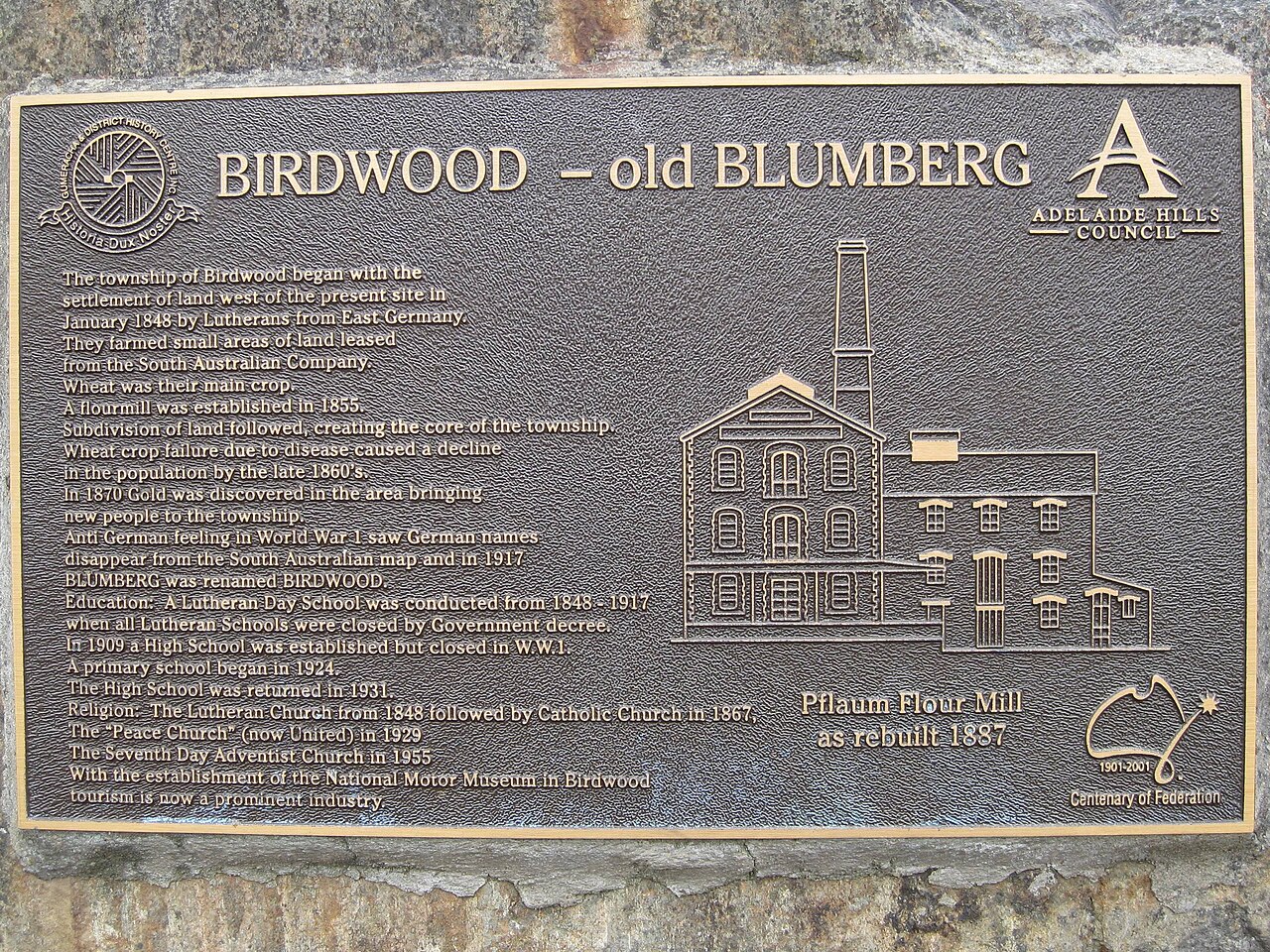
Many Hills towns were founded by German-speaking Lutherans, and in the First World War that became a problem. Anti-German feeling saw dozens of German place names across South Australia replaced. Hahndorf became Ambleside, which is why a Hahndorf distillery is now called Ambleside Distillers. Lobethal became Tweedvale, and old photographs of the woollen mill are captioned “Onkaparinga Woollen Mills, Tweedvale”. Grunthal became Verdun, after the French battlefield. And Blumberg became Birdwood, after General Sir William Birdwood, who commanded the Anzacs at Gallipoli; the plaque outside the National Motor Museum dates the change to 1917.
Some names came back. Hahndorf and Lobethal were restored in 1935, but Birdwood and Verdun kept their wartime names, which is why Birdwood’s pub is still the Blumberg Hotel and Verdun’s brewery is called Grunthal Brew.
The Adelaide Hills markets calendar
Time a visit around a market and you get the best of a town. These are the regular markets listed by Adelaide Hills Tourism; check each market’s own page before you go, as dates shift around public holidays and Christmas.
| Market | When |
|---|---|
| Adelaide Hills Farmers Market, Mount Barker | Every Saturday morning |
| Macclesfield Sunday market | Every Sunday |
| Mylor country market | First Sunday morning of the month |
| Uraidla Hills Produce Market | First and third Sundays |
| Meadows country market | Second Sunday |
| Woodside country market | Third Saturday |
| Stirling Market, Druid Avenue | Fourth Sunday, 10am to 4pm (different date in December) |
Three easy loops
The freeway villages (half a day)
Crafers for the view from Mount Lofty Summit, Stirling for coffee and a wander, Aldgate and Bridgewater for lunch by the creek, then Hahndorf in the afternoon, when the lunch crowds thin. Back on the freeway, you are in the city in half an hour.
The Onkaparinga Valley (a full day)
Verdun and Balhannah in the morning, a cellar door or two around Woodside and Balhannah, cheese and chocolate at Woodside’s Heritage Park, lunch at Lot 100 in Hay Valley, and Lobethal’s mill precinct in the afternoon. Book a driver or a tour if you are tasting.
The north (a full day)
Up through the Torrens Gorge to Gumeracha and the Big Rocking Horse, on to Birdwood for the National Motor Museum, then back via Lobethal and the Onkaparinga Valley. It is the loop for car lovers and families with children.
Getting to and around the Hills
A car gives you the most freedom, and the drives are part of the pleasure. Our guide to driving in South Australia covers the roads, and car rental in Adelaide the options. Hills roads are winding and narrow in places, wildlife is out at dawn and dusk, and if you are visiting cellar doors, someone needs to stay sober or you need a tour; our wine tours guide has the operators.
Public transport works for the freeway corridor: Adelaide Metro buses run from the city up to Crafers, Stirling, Aldgate, Bridgewater, Hahndorf and Mount Barker, and there are on-demand buses within Mount Barker, Littlehampton and Nairne. Check the Adelaide Metro journey planner for times; services are less frequent at weekends. Beyond the freeway corridor, towns like Woodside, Lobethal, Gumeracha and Birdwood are realistically car or tour territory. Cyclists have the Amy Gillett Pathway between Oakbank and Mount Torrens, and plenty of serious road riders tackle the climbs.
When to go, and fire safety
Autumn, April and May, is the most beautiful season, when the exotic trees of Stirling, Aldgate and the valley towns turn red and gold; our guide to Adelaide in autumn has more. Spring brings blossom in the orchards and lambs in the paddocks. Winter is crisp and often wet, with fires lit in the pubs and the waterfalls at their best. Summer is cooler than the city, but it is also bushfire season.
Take that seriously. The Adelaide Hills is one of the most fire-prone landscapes in Australia. On days of extreme or catastrophic fire danger, avoid travelling into bushland and check the CFS before you go; parks close, and even the National Motor Museum shuts on catastrophic days. The CFS Bushfire Information Hotline is 1800 362 361.
Which Adelaide Hills town should you visit?
- First visit, one afternoon: Hahndorf, on a weekday, then Stirling on the way home.
- Food lovers: Woodside for cheese and chocolate, Lot 100 for drinks, and the Saturday farmers market in Mount Barker.
- Wine: the Piccadilly Valley around Summertown and Uraidla, or the cellar doors around Woodside and Balhannah.
- Families: Aldgate and Bridgewater for the pub gardens and creek play, Gumeracha for the rocking horse, and Birdwood for the cars. Our family day trips guide has more.
- A quiet day away from the crowds: the southern towns of Meadows and Macclesfield, with a walk in Kuitpo Forest.
- Staying over: Stirling or Hahndorf for character, Mount Barker for value; see our Adelaide Hills accommodation guide.
What is not worth it: trying to tick off five towns in a day, driving to Birdwood without an interest in cars, or arriving at a small-town café at 3pm and expecting lunch; many Hills kitchens stop early and some open only from Thursday to Sunday.
Adelaide Hills towns FAQ
What is the prettiest town in the Adelaide Hills?
Stirling and Hahndorf are the usual answers: Stirling for its gardens and autumn colour, Hahndorf for its German heritage main street. Lobethal and Woodside are quieter and have more working-town character.
Which Adelaide Hills town is closest to Adelaide?
Crafers and Stirling, about 20 minutes from the city via the South Eastern Freeway. Stirling is 18km from Adelaide.
Can you visit the Adelaide Hills towns without a car?
Partly. Adelaide Metro buses run up the freeway to Crafers, Stirling, Aldgate, Bridgewater, Hahndorf and Mount Barker. Towns further out, such as Woodside, Lobethal and Birdwood, are best reached by car or on a tour.
When is the Stirling Market?
On the fourth Sunday of each month, from 10am to 4pm on Druid Avenue, with a different date in December.
How much is the National Motor Museum in Birdwood?
A$23.50 for adults, A$18.50 concession, A$9.50 for children and A$57.50 for a family. It is open daily from 10am to 5pm.
Why was Hahndorf renamed?
During the First World War, anti-German feeling led South Australia to replace many German place names. Hahndorf became Ambleside, and the original name was restored in 1935.
What is the best time to visit the Adelaide Hills?
Autumn, in April and May, for the colours, and spring for blossom. Summer is cooler than the city but is bushfire season, so check fire danger ratings before you go.
Related Adelaide Guides
- Adelaide Hills Day Trip — how to plan a day in the Hills.
- Hahndorf Day Trip — the German village in detail.
- Adelaide Hills Wine — the cellar doors worth a stop.
- Adelaide Hills Accommodation — where to stay overnight.
- Adelaide Wine Festivals — including the Hills’ own celebrations.
- Hiking Trails near Adelaide — walks in the Hills and beyond.
- Adelaide Day Trips — every region within easy reach.
- Christmas Pageant & Lights of Lobethal — the Hills at Christmas.
Photo Credits
The Stirling Hotel, 2012: “ADH Stirling hotel Oct 2012.jpg” by Orderinchaos, via Wikimedia Commons, CC BY-SA 3.0.
The old dairy factory in Woodside, 2014: “ADH woodside cheese factory.jpg” by Orderinchaos, via Wikimedia Commons, CC BY-SA 3.0.
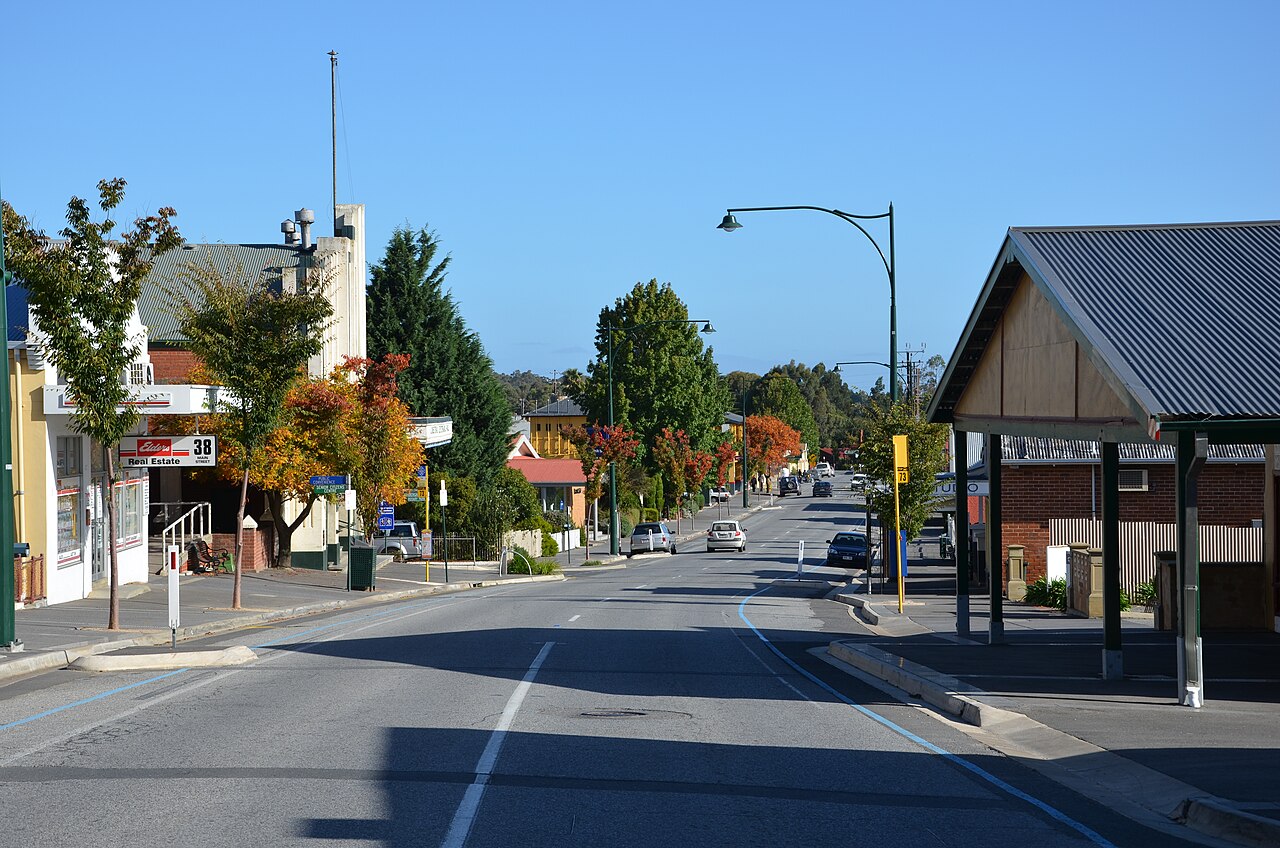
Main Street, Lobethal: “LobethalSA.JPG” by Yeti Hunter, via Wikimedia Commons, CC BY-SA 3.0.
The Big Rocking Horse, 2026: “The Big Rocking Horse, Gumeracha 20260213-092354.jpg” by RegionVisitor90, via Wikimedia Commons, CC0.
The National Motor Museum, 2025: “National Motor Museum, Birdwood 20250109-112247.jpg” by RegionVisitor90, via Wikimedia Commons, CC0.
The Birdwood–Blumberg plaque, 2012: “Birdwood-Blumberg plaque.JPG” by Marionlad, via Wikimedia Commons, CC BY-SA 3.0.
Main street, Woodside (featured image): “WoodsideSA.JPG” by Yeti Hunter, via Wikimedia Commons, CC BY-SA 3.0.